
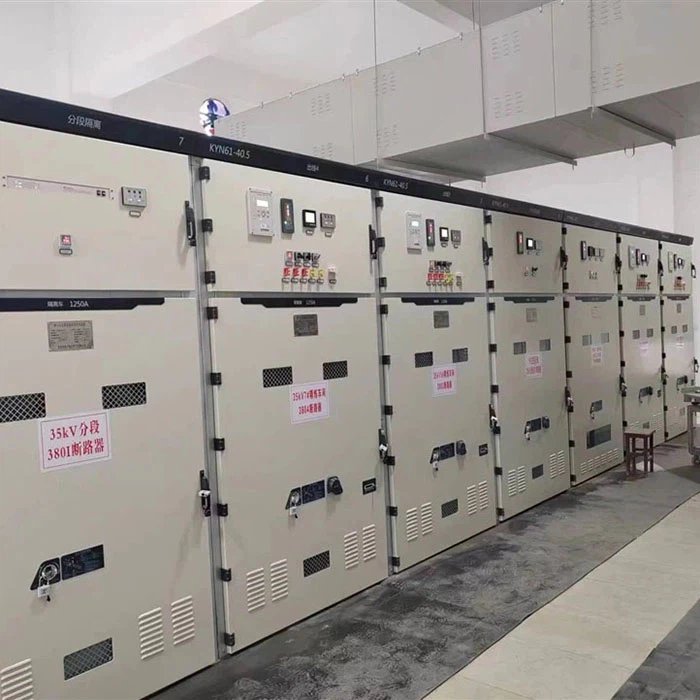
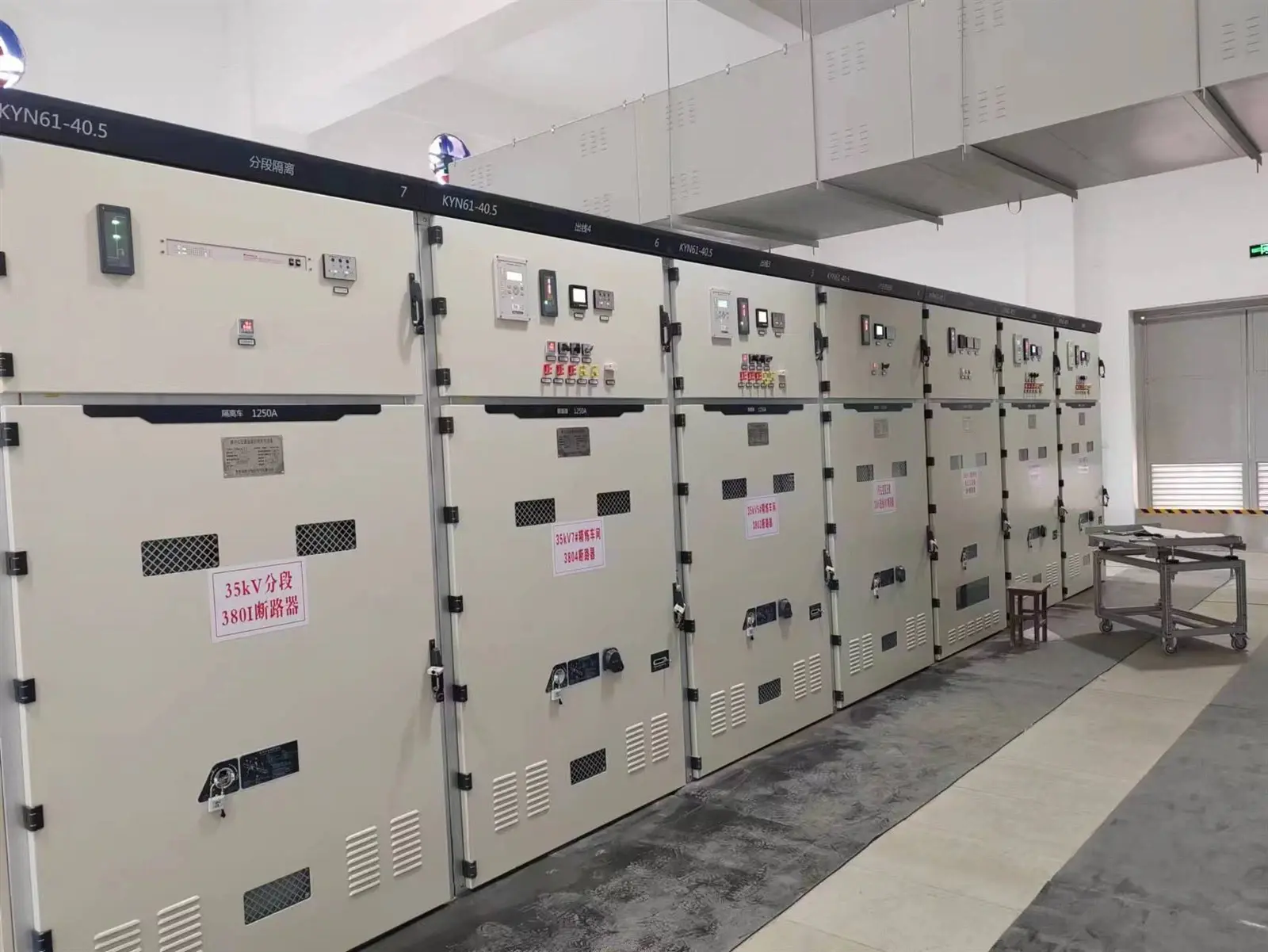
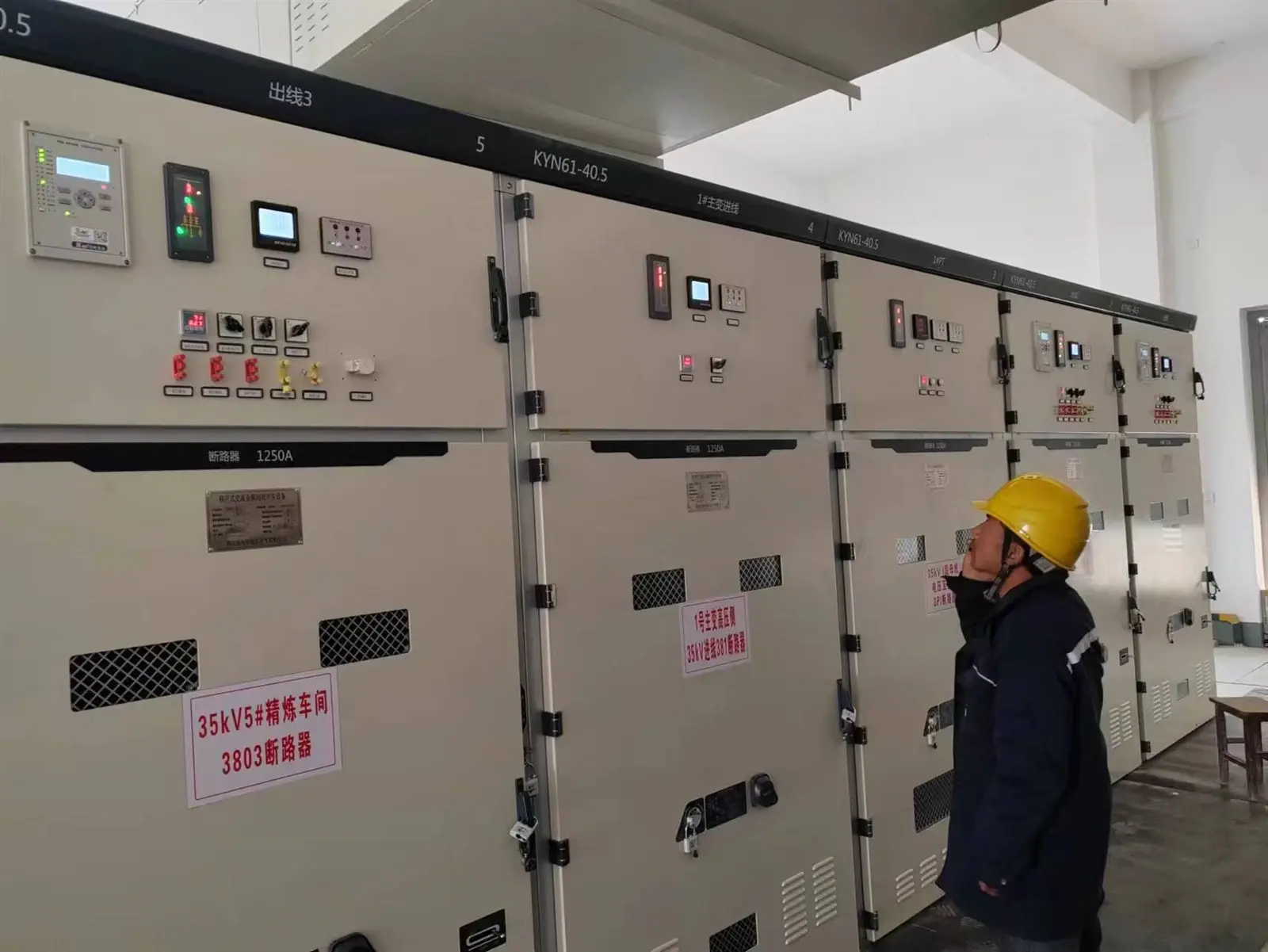
KYN61-40.5 Metal-Enclosed Armored Withdrawable High-Voltage Switchgear

- Free Samples
- Quality Assurance
- 24/7 Customer Service
Product Introduction
Metal-Enclosed Armored Withdrawable High-Voltage Switchgear
KYN61-40.5 Model
Installation and Operation Manual
Contents
1. Main Features/ Overview 2
2. Main Technical Parameters 3
3. Switch Cabinet Structure Description 5
4. External Dimensions of Switch Cabinet 7
5. Structure Diagram of Switch Cabinet 7
6. Switch Cabinet Installation 8
7. Primary Circuit Plans of Switch Cabinet 9
8. Ordering Instructions 12
I. Main Features
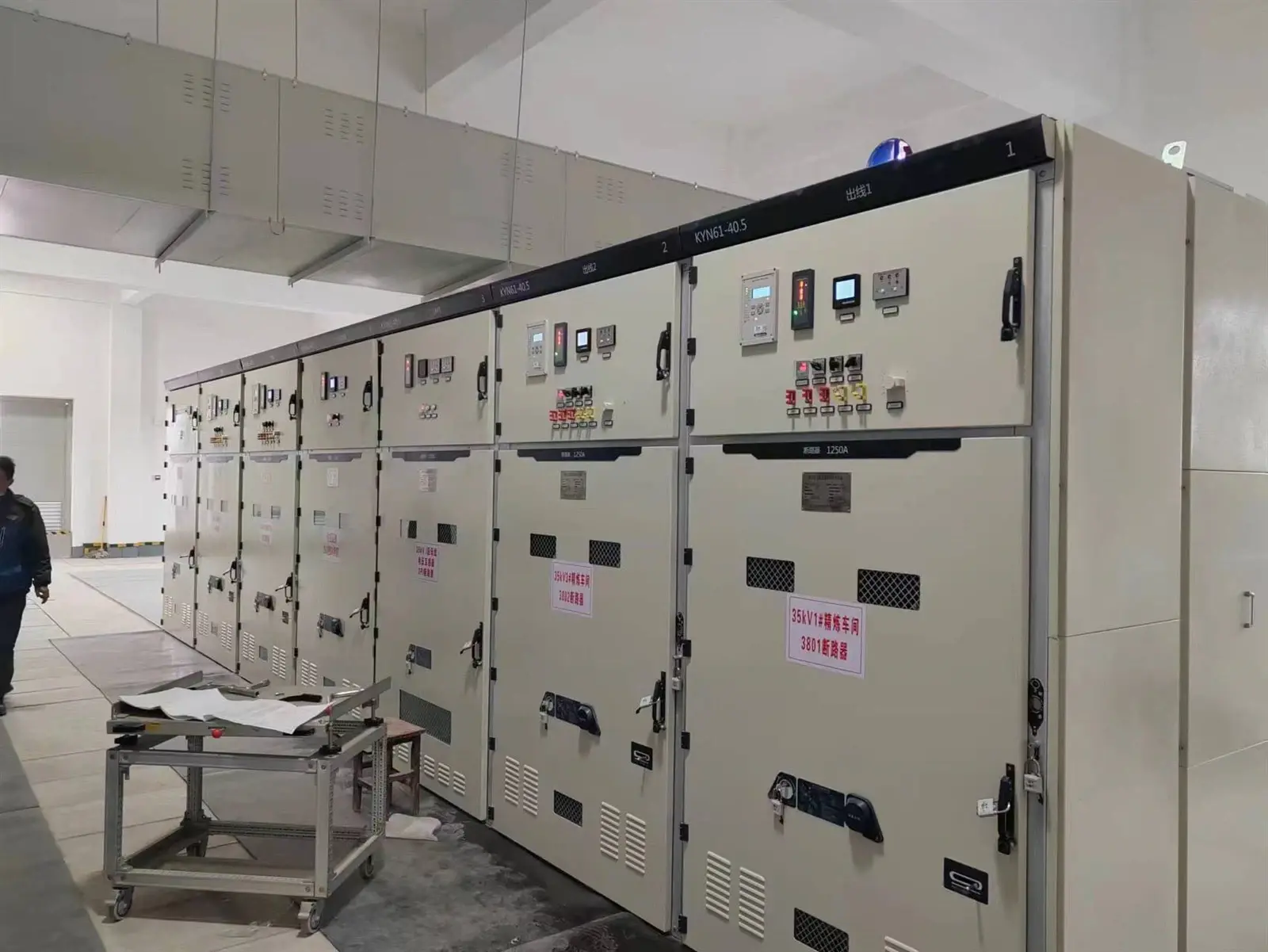
1. The cabinet structure adopts assembled type and the circuit breaker adopts handcart floor type structure;
2. The new composite insulation vacuum circuit breaker is adopted with good interchangeability, simple replacement and other features;
3. The handcart frame is equipped with the feed screw nut feed mechanism and overrunning clutch, which can be used to easily move the handcart and prevent misoperation from damaging the feed mechanism;
4. All operations are carried out when the cabinet door is closed;
5. The interlocking among the main switch, handcart and switch cabinet doors adopts mandatory mechanical locking method and meets the "five-prevention" function;
6. The cable compartment has abundant space, in which multiple cables can be connected;
7. The high speed grounding switch is used for grounding and short circuit of loop;
8. The protection level of the enclosure is IP3X and when the handcart compartment door is opened, the protection level is IP2X;
9. The product complies with GB3906 and DL404 adopts international IEC-298 by reference.
II. Overview
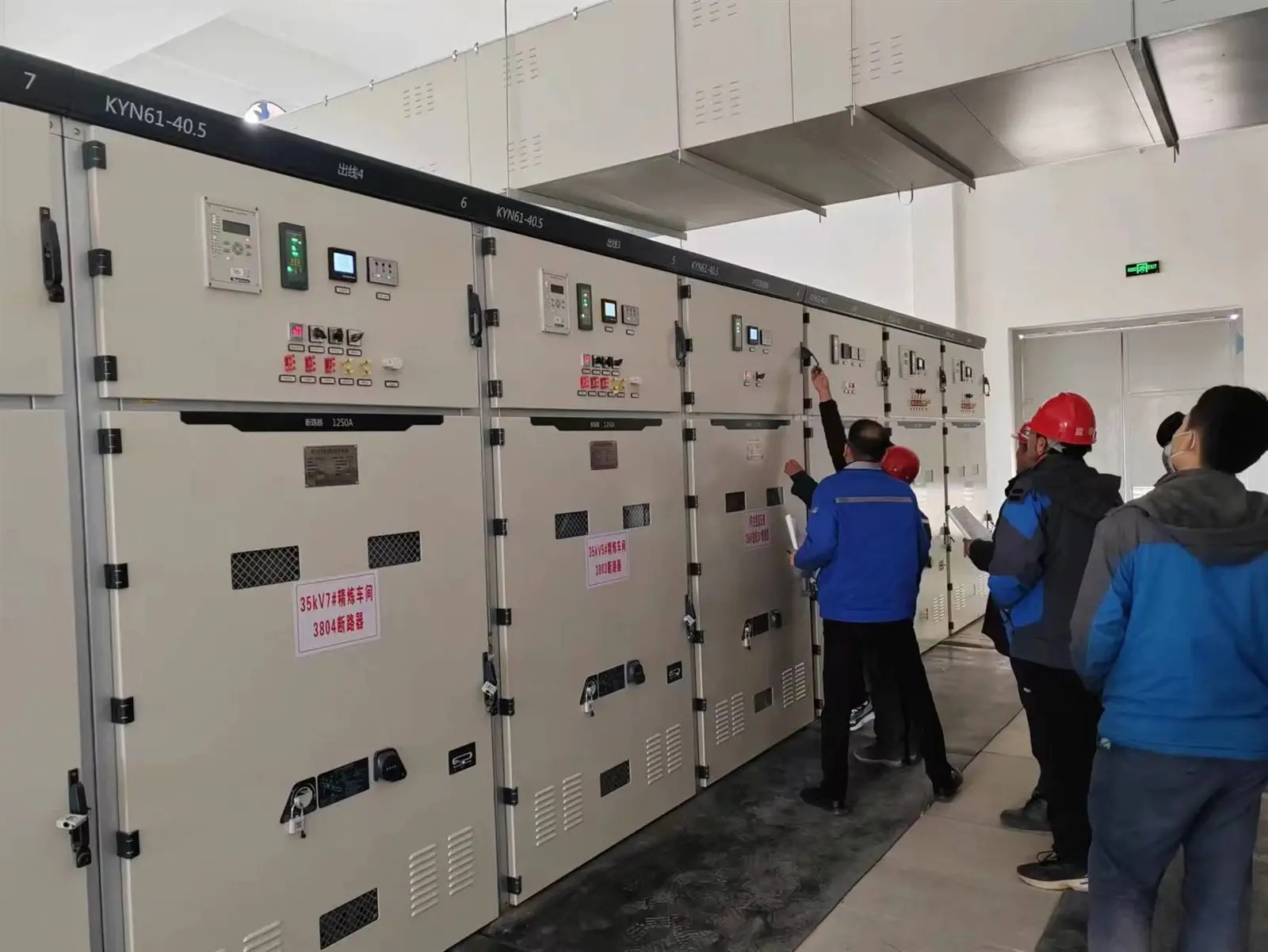
As a complete set of indoor power distribution equipment with three-phase AV 50HZ and the rated voltage of 40.5KV, KYN61-40.5 (Z) armored withdrawable AC metal-enclosed switchgear (hereinafter referred to as the switch cabinet) is used in the power plants, substations and industrial and mining enterprises to receive and distribute the electric energy, to control, protect and detect the circuit and can also be used in the site with frequent operation. The switch cabinet meets international IEC-298, GB3906-91, DL404 and other standards.
Environmental conditions
Ambient temperature: upper limit +40℃, lower limit -40℃, the
average value measured in 24h of not higher than 35℃. Altitude: 1000~4000m.
Relative temperature: daily average value of not higher than 95% and monthly average value of not higher than 90%.
Seismic intensity: not higher than 8° .
Saturated vapour pressure: daily average value of not higher than 2.2kPa and monthly average value of not higher than 1.8kPa.
The sites with no fire, explosion hazards, serious pollution, chemical corrosion and violent vibration
II. Main Technical Parameters
Main Technical Parameters of Vacuum Switch Cabinet
|
Serial No. |
Name |
Unit |
Numerical values |
|
1 |
Rated voltage |
kV |
40.5 |
|
2 |
Rated current |
kA |
630, 1250, 2000, 2500 |
|
3 |
Rated frequency |
Hz |
50 |
|
4 |
Rated short-time withstand current |
kA |
20, 25, 31.5, 40 |
|
5 |
Rated peak withstand current |
kA |
50, 63, 80, 100 |
|
6 |
Rated power frequency withstand voltage |
kV |
95/lmin |
|
7 |
Rated lightning impulse withstand voltage |
kV |
185 |
|
8 |
Rated short-circuit duration |
S |
4 |
|
9 |
Protection level |
IP4X |
Main Technical Parameters of Circuit Breaker
|
Serial No. |
Name |
Unit |
Numerical values |
|
1 |
Rated voltage |
kV |
40.5 |
|
2 |
Rated frequency |
Hz |
50 |
|
3 |
Rated power frequency withstand voltage |
kV |
95/lmin |
|
4 |
Rated lightning impulse withstand voltage |
kV |
185 |
|
5 |
Rated current |
A |
630, 1250, 2000, 2500 |
|
6 |
Rated short-time withstand current |
kA |
20, 25, 31.5, 40 |
|
7 |
Rated short-circuit breaking current |
kA |
20, 25, 31.5, 40 |
|
8 |
Rated peak withstand current |
kA |
50, 63, 80, 100 |
|
9 |
Rated short-circuit duration |
S |
4 |
|
10 |
Opening time |
S |
30≤t ≤60 |
|
11 |
Closing time |
S |
50≤t ≤100 |
|
12 |
Times of rated short-circuit breaking current |
Times |
20 |
|
13 |
Mechanical life |
Times |
10000 |
Main Technical Parameters of Spring Operating Mechanism
|
Name |
Unit |
Numerical values |
|
|
Rated operating voltage |
Opening coil |
V |
DC220/110 AC220/110 |
|
Closing coil |
|||
|
Rated operating current |
Opening coil |
A |
0.96 (220V) 1.05 (220V) |
|
Closing coil |
|||
|
Power of charging motor |
W |
230 |
|
|
Rated voltage of charging motor |
V |
DC220, 110 AC220, 110 |
|
|
Charging time |
s |
≤12 |
|
Structure chart
II. Switch Cabinet Structure
Description
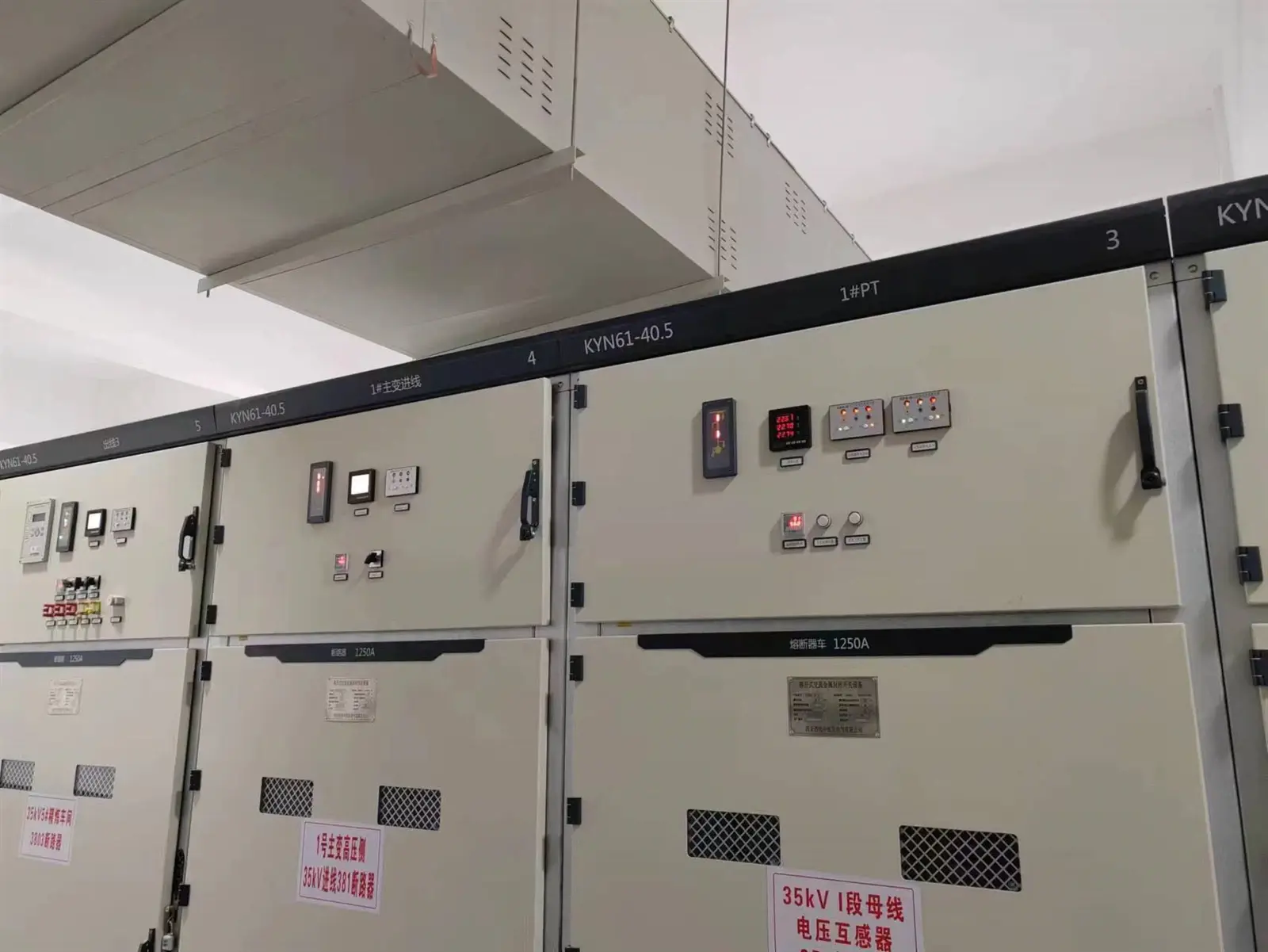
The switch cabinet is designed in accordance with the armored metal-enclosed switchgear standards in GB3906 and IEC298. The overall cabinet is composed of two main parts, a fixed cabinet and a withdrawable part (handcart). The cabinet structure is processed by CNC and combined and formed by using bolting. The internal switch cabinet is divided by metal partitions into the circuit breaker compartment, main bus compartment, cable compartment and relay instrument compartment. The protection level of the enclosure is up to IP4X and the protection level of all compartments is IP2X. All metal structural parts are reliably grounded and the compartments of the main loop system are equipped with separate pressure relief channels to discharge air.
1. Enclosure and partition
The enclosure and partitions of the switch cabinet are bolted by cold rolled steel sheets after processing and bending through the numerical control machine, so the assembled switch cabinet can ensure the unity of the structural dimensions. The switch cabinet is separated into the circuit breaker compartment, main bus compartment, cable compartment and relay instrument compartment, all of which are separated by the grounded mental partitions.
2. Handcart
According to the purpose, the handcart can be divided into circuit breaker handcart, voltage transformer handcart, measurement handcart and isolation handcart, etc. All kinds of the handcarts have the same external dimensions
and the same purposes of handcarts are interchangeable. There are test position/ isolated position and operating position for the handcart in the cabinet. Each position is equipped with an interlocking device to ensure that the handcart cannot be moved freely in the above two positions.
3. Circuit breaker compartment
The specific guide rail is installed in the circuit breaker compartment for the handcart to move. The isolation valve automatically opens or closes when the handcart is moved between the test position and the operating position, thus to ensure that the operating personnel do not touch the charged body. The handcart can be operated when the cabinet door is closed. The position of the handcart in the cabinet and any functional signs on the handcart can be seen through the observation window.
4. Bus compartment
The main bus is led from a switch cabinet to another switch cabinet, fixed with the fixed contact box through the branch small bus and fixed by the bus bushing when through the site plate of the adjacent cabinet. All buses adopt composite insulation method.
5. Cable compartment
In the cable compartment can be installed with PT, grounding switches, lightning arresters and multiple cables.
6. Relay compartment
On the internal plates and panels of the relay compartment can be installed with the control and protective elements, measuring and display instruments, charged monitoring indicators and other secondary components.
7. Interlocking device
The switch cabinet has a reliable interlocking device to effectively protect the safety of the operating personnel and equipment.
l The handcart can only be moved between the test position and the operating position when the grounding switch is in opening position.
l The circuit breaker handcart can only be operated when it is reliably positioned in the test or operating position.
l The secondary plug can not be pulled out when the handcart is in the operating position.
l The handcart cannot be moved from the test position to the operating position when the grounding switch is closed.
l The grounding switch can only be operated when the handcart is in the test position.
8. Grounding device
Inside the cable compartment is set with a 10×40mm2 grounding bus separately, which can run through the adjacent cabinets and is well contacted with the cabinets.
IV. External Dimensions of Switch Cabinet
External dimensions (width × depth × height): 1400 × 2800 × 2600
V. Structure Diagram of Switch Cabinet
A. Relay instrument compartment
B. Bus compartment
C. Circuit breaker compartment
D. Cable compartment
VI. Switch Cabinet Installation
Height of electric apparatus compartment: ≥4500mm;
Distance of the cabinet back to the wall: ≥1200mm;
Flatness of base frame: ≤1mm/m2
The part of the base embedded channel steel above the ground shall not exceed 3mm;
Fixed on the base by bolts or welding method;
The weight of the switch cabinet is about 1400kg;
Operating corridor width of the switch cabinet (single
row): ≥ 1500mm, double rows (face to face) ≥ 2500mm
VII. Primary Circuit Plans of Switch Cabinet
|
Plan No. |
01 |
02 |
03 |
04 |
|
|
Primary circuit diagram |
|
|
|
|
|
|
Main components |
Rated current |
1250~2000 |
|||
|
Circuit breaker ZN85-40.5 |
1 |
1 |
1 |
1 |
|
|
Current transformer LZZB8-35A |
1 |
2 |
3 |
||
|
Grounding switch JN-40.5/31.5 |
0~1 |
0~1 |
0~1 |
0~1 |
|
|
Purpose |
Overhead incoming and outgoing lines |
Overhead incoming and outgoing lines |
Overhead incoming and outgoing lines |
Overhead incoming and outgoing lines |
|
|
Plan No. |
05 |
06 |
07 |
08 |
|
|
Primary circuit diagram |
|
|
|
|
|
|
Main components |
Rated current |
1250~2000 |
|||
|
Circuit breaker ZN85-40.5 |
1 |
1 |
1 |
1 |
|
|
Current transformer LZZB8-35A |
1 |
2 |
3 |
||
|
Grounding switch JN-40.5/31.5 |
0~1 |
0~1 |
0~1 |
0~1 |
|
|
Purpose |
Cable incoming and outgoing lines |
Cable incoming and outgoing lines |
Cable incoming and outgoing lines |
Cable incoming and outgoing lines |
|
|
Plan No. |
09 |
10 |
11 |
12 |
||
|
Primary circuit diagram |
|
|
|
|
||
|
Main component s |
Rated current |
1250~2000 |
||||
|
Circuit breaker ZN85-40.5 |
1 |
1 |
1 |
1 |
||
|
Current transformer LZZB8-35A |
1 |
2 |
3 |
|||
|
Grounding switch JN-40.5/31. 5 |
0~1 |
0~1 |
0~1 |
0~1 |
||
|
Purpose |
Left (right) communication |
Left (right) communication |
Left (right) communication |
Left (right) communication |
||
|
Plan No. |
13 |
14 |
15 |
16 |
|
|
Primary circuit diagram |
|
|
|
|
|
|
Main components |
Rated current |
1250~2000 |
|||
|
Circuit breaker ZN85-40.5 |
1 |
1 |
1 |
1 |
|
|
Current transformer LZZB8-35A |
1 |
2 |
3 |
||
|
Grounding switch JN-40.5/31.5 |
0~1 |
0~1 |
0~1 |
0~1 |
|
|
Purpose |
Left (right) communication |
Left (right) communication |
Left (right) communication |
Left (right) communication |
|
|
Plan No. |
17 |
18 |
19 |
20 |
|
|
Primary circuit diagram |
|
|
|
|
|
|
Main components |
Rated current |
1250~2000 |
|||
|
Circuit breaker ZN85-40.5 |
1 |
1 |
1 |
1 |
|
|
Current transformer LZZB8-35A |
1 |
2 |
3 |
||
|
Grounding switch JN-40.5/31.5 |
0~1 |
0~1 |
0~1 |
0~1 |
|
|
Purpose |
Overhead incoming and outgoing lines |
Overhead incoming and outgoing lines |
Overhead incoming and outgoing lines |
Overhead incoming and outgoing lines |
|
|
Plan No. |
21 |
22 |
23 |
24 |
|
|
Primary circuit diagram |
|
|
|
|
|
|
Main components |
Rated current |
1250~2000 |
|||
|
Circuit breaker ZN85-40.5 |
1 |
1 |
1 |
1 |
|
|
Current transformer LZZB8-35A |
1 |
2 |
3 |
||
|
Grounding switch JN-40.5/31.5 |
0~1 |
0~1 |
0~1 |
0~1 |
|
|
Purpose |
Cable incoming and outgoing lines |
Cable incoming and outgoing lines |
Cable incoming and outgoing lines |
Cable incoming and outgoing lines |
|
|
Plan No. |
25 |
26 |
27 |
28 |
|
|
Primary circuit diagram |
|
|
|
|
|
|
Main components |
Rated current |
1250~2000 |
|||
|
Voltage current |
2 |
3 |
Dry type transformer |
||
|
Fuse RN2-35 |
3 |
3 |
3 |
RN1~35 |
|
|
Lightning arrester |
3 |
||||
|
Capacity |
20~100KVA |
||||
|
Purpose |
Voltage transformer |
Voltage transformer |
Lightning arrester |
||
VIII. Ordering Instructions
Users shall provide the following data in ordering:
1. Main plan numbers of primary circuit, single bus system diagram, arrangement diagram and layout chart
2. Electrical schematic diagram of secondary loop and terminal arrangement diagram;
3. Models, specifications and quantities of electrical components in the switch cabinets;
4. Specifications and materials of main bus and branch buses;
5. Names and quantities of spare parts and components;
6. Special requirements shall be negotiated with the manufacturers.
Send Inquiry
You may like
