
High Voltage Switchgear vs. Low Voltage: Key Differences and Use Cases
One of the most important decisions for power infrastructure projects is choosing between High-voltage switchgear and low-voltage solutions. High-voltage switchgear usually works above 1 kV and up to 40.5 kV and beyond. It helps power plants, utilities, and renewable energy facilities that need strong power distribution and protection at high voltage levels. When the voltage is less than 1 kV, like in commercial buildings and light manufacturing, low-voltage switchgear is used. When procurement managers, chief engineers, and project workers know these differences, they can make sure that the equipment specs meet working needs, safety rules, and long-term cost considerations while still meeting IEC and ANSI standards.
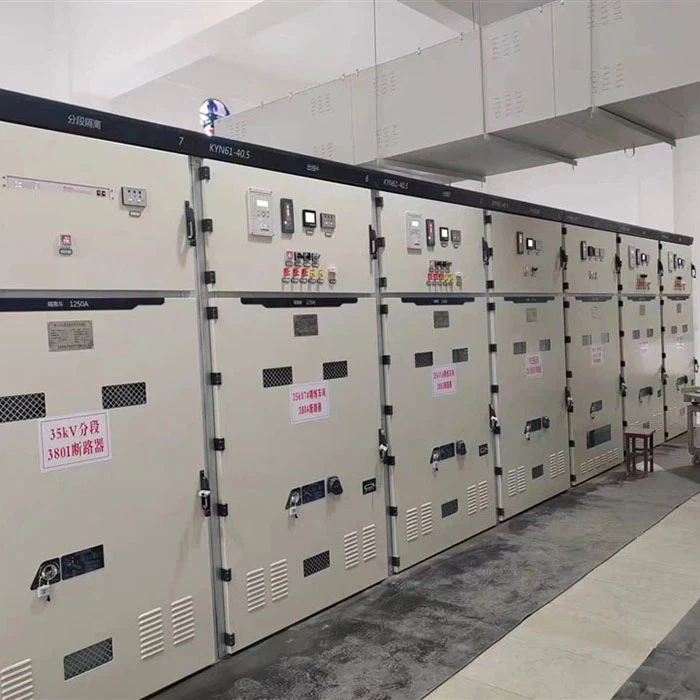
Understanding High Voltage and Low Voltage Switchgear
Voltage Classification and Core Functions
High-voltage switchgear includes distribution equipment made for systems with voltages between 6 kV and 40.5 kV, and in some cases higher than 72 kV. These systems manage, safeguard, and separate electrical circuits in places like steel mills, petrochemical centers, and large-scale mining operations; they are also used in power plants and transmission substations. The equipment has advanced insulation materials, metal-clad casings, vacuum circuit breakers or SF6 interrupters, and can safely handle high electrical loads and fault currents.
Low-voltage switchgear works with voltages between 240 V and 1000 V AC and is used in commercial buildings, data centers, and light industrial sites. These units have motor control centers, molded-case circuit breakers, and easier building methods that make them good for frequent manual use and easy upkeep. Although both types protect and isolate, their design approaches are very different depending on the voltage stress, arc containment needs, and operating settings.
Industry-Specific Applications
High-voltage switchgear is used by power companies at substations to control the distribution of large amounts of energy across regional grids. Yuguang's KYN61-40.5 Metal-Enclosed Armoured Switchgear is one type of configuration that is used by wind farms and photovoltaic plants to combine the outputs of renewable energy sources before they are sent to transmission voltages. The design of the handcart that can be pulled out lets repair be done quickly without turning off the power to whole busbar systems. This cuts down on the costs of downtime in mission-critical situations.
Electric arc furnaces, big motors, and continuous process lines are all examples of heavy inductive loads in manufacturing that need high-voltage solutions to handle starting transients and fault currents that can be more than 31.5 kA. Low-voltage switchgear, on the other hand, is used in places like office towers, shopping malls, and light assembly plants where load patterns are stable and voltage needs are low. This difference affects how people buy things: for high-voltage projects, customization is important for tough conditions, while for low-voltage buyers, normal catalogue goods are often chosen.
Compliance and International Standards
Safety and performance standards are very strict for both categories. IEC 62271-200, GB 3906, and ANSI C37 standards are followed by high-voltage equipment. These standards cover dielectric strength, mechanical endurance, and arc flash protection. Yuguang uses aerospace-grade precision tooling to make core parts of their products, which makes sure they meet national inspection standards and ISO 9001:2015 quality management standards. Low-voltage gear follows IEC 61439 and UL 508, putting more emphasis on being easy to install and use than the complicated interlocking mechanisms needed in high-voltage designs.
In-Depth Comparison: High Voltage vs. Low Voltage Switchgear
Construction Types and Materials
Most high-voltage units are made with metal-clad structures that have separate areas for control electronics, circuit breakers, busbars, and wire terminations. This method is shown by Yuguang's GBC-40.5 Hand Cart Type Switchgear, which has frames made of corrosion-resistant metal, seals rated IP67, and ceramic coatings that make the gear last longer in wet or chemically aggressive settings. Vacuum arc extinguishing technology gets rid of the environmental problems that come with SF6 gas while also making it possible for renewable energy systems to switch between phases more often without any maintenance.
Low-voltage switchgear usually has either an open-frame or an enclosed panelboard form, and the covers can be made of steel or thermoplastic. Molded-case circuit breakers protect against overload and short-circuit without having the complicated parts needed to stop a high-voltage fault. The simpler design makes it easier to make and cheaper, but it can only be used in situations with lower fault currents and less demanding environmental conditions.
Performance Metrics and Maintenance Protocols
High-voltage switchgear design is essential for personnel safety because arc flash risks rise with voltage. Modern units have isolation interlocks, rapid-trip relays, and current-limiting fuses that stop unauthorized access when the unit is on. Yuguang's combined modular design keeps dielectric separation strong while minimizing internal clearances. This makes it possible to have small areas without lowering safety limits.
Maintenance times are very different. High-voltage vacuum circuit breakers can handle more than 10,000 mechanical operations without needing to have their contacts replaced. SF6 breakers, on the other hand, need to be checked for gas leaks on a regular basis and eventually thrown away. Because building automation systems use low-voltage gear more often, the thermal joints and wear parts need to be checked more often. Yuguang solves these problems with permanent magnet operating mechanisms that stop coil failures and cut down on scheduled maintenance tasks, which saves real money over the lifecycle of the product.
Cost Structures and Lifecycle Economics
High-voltage switchgear requires three to ten times more up-front capital than low-voltage options. This is because it uses more complex engineering, materials, and testing methods. Yuguang's production process, from checking the quality of the raw materials to testing them in multiple rounds, makes sure that the products are reliable and that unexpected outages and the production losses they cause are kept to a minimum. Standard goods are shipped within 7 to 15 days, but custom designs for harsh regions or specific voltage classes take 30 to 60 days. This is done to balance speed with accuracy.
Well-designed high-voltage systems are more cost-effective to run. Poorly designed switchgear wastes energy over many years, but Yuguang's low-resistance contact materials and improved busbar shape lower joule heating. The company offers free modification plans, installation help, and spare parts after the sale. This reduces the risk of being locked into a single seller and makes equipment last longer than 30 years in well-kept installs.
Selecting the Right Switchgear for Your Industrial Application
Voltage Requirements and Load Characteristics
When project engineers look at system specifications, they have to compare the rated voltage, continuous current capacity, and short-circuit withstand ratings. For a 35 kV wind farm collection network, the switchgear needs to be designed for 40.5 kV nominal voltage to protect against short-term overvoltages caused by lightning strikes or switching spikes. Yuguang's product line includes vacuum interrupters rated up to 31.5 kA fault interruption and voltages from 6 kV to 40.5 kV, so they can be used in most industrial and utility applications without the need for custom designs.
Load patterns affect the choice of method. When something is used a lot, like switching capacitor banks or starting motors in factories, permanent magnet actuators are better because they don't wear out like spring-charged mechanisms do. Simpler motorized or manual charging systems can be used in situations where they aren't used very often, like grid sectionalizing buttons. Yuguang's engineering team gives technical advice on how to match mechanism types with duty cycles so that the best performance and lowest cost are achieved.
Environmental Conditions and Enclosure Ratings
For climate-controlled substations, indoor High-voltage switchgear needs basic IP4X protection against solid entry. On the other hand, outdoor sites near the coast or in the desert need IP67 sealing against water, dust, and salt spray. The way Yuguang treats the surface—ceramic coating, powder finishing, and constant-temperature curing—makes it more resistant to corrosion than regular paint systems, even in tough sea settings or industrial areas with acidic fumes.
Extreme temperatures change the insulating qualities and the mechanical gaps between parts. In the Arctic, heaters and low-temperature lubricants are needed, while in the tropics, better ventilation and UV-resistant polymers are needed. Yuguang's scenario-based customization features help with these problems by using modular designs that can be changed to fit the needs of each client. This makes it easier for standard catalogue products to work together in less-than-ideal situations.
Customization and Bulk Procurement Advantages
Volume prices and planned shipping plans are good for big projects. Yuguang can handle orders for as few as one unit, which is great for pilot installations or retrofit projects, all the way up to large quantities for turnkey substations. The company's minimum order freedom is different from competitors who require minimum batches that make it more expensive for mid-sized buyers to keep goods on hand. Customization goes beyond mechanical aspects and includes extra systems like built-in monitoring, remote control interfaces, and unique interlocking sequences that follow client safety rules.
Our 39 utility model patents show that we are always coming up with new ideas for small designs, better closing technologies, and systems that don't need to be maintained. These improvements give real competitive advantages: smaller switchgear reduces the cost of civil construction, longer component lifespans put off replacement capital expenditures, and easier maintenance lowers the operational burdens over the lifecycle. By working with Yuguang, you can get access to technical knowledge that has been honed over decades of experience in the Chinese power sector and is now being scaled up to meet the needs of customers all over the world.
Maintenance and Safety Best Practices for High and Low Voltage Switchgear
Routine Inspection Protocols
High-voltage equipment needs to be visually checked every three months for oil leaks, strange sounds, and changes in temperature. As part of the annual process, insulation resistance tests, contact resistance measurements, and mechanical operation counts are done. Yuguang's vacuum circuit breakers make this routine easier by getting rid of the need to handle oil and watch gas. This cuts down on the time needed for inspections and the need for special tools. Through built-in position sensors, the permanent magnet mechanism can automatically identify operational faults. This lets maintenance teams know about problems before they become catastrophic.
Low-voltage systems need to have their terminals, surge arresters, and protective relays checked every month to make sure they are tight and working properly. Thermal imaging can find hotspots caused by loose connections or circuits that are overloaded before the insulation fails. Diagnostic technologies like partial discharge tracking and online condition assessment are moving from research labs to the field. This makes it possible for predictive maintenance strategies to be used, which plan actions for planned outages instead of waiting for emergencies to happen.
Adherence to International Safety Standards
The lockout-tagout procedure, arc flash boundary calculations, and personal protective equipment specifications in ISO 45001 are all required by occupational health standards for High-voltage switchgear. Yuguang's metal-clad compartmentalization physically separates live parts from repair workers. This makes it possible for workers to safely rack out circuit breaker handcarts while nearby circuits stay on. Mechanical interlocks stop grounding and circuit closing from happening at the same time. This gets rid of the human mistake paths that used to lead to lightning accidents.
IEC 61850 communication standards make it easier to watch and handle things from afar, which protects people while switching is being done. Integration with SCADA systems allows for centralized control of spread-out substations, which speeds up response times to faults while still meeting the needs of the grid provider. Yuguang's control systems work with both old protocols and newer Ethernet-based designs. This protects investments in current infrastructure and makes digital transformation plans possible.
Training and Operational Readiness
Complex equipment doesn't mean much if the people who use it aren't skilled. Yuguang helps with installations and gives operational training on-site, based on the skill levels of the client's staff. This training covers routine procedures, emergency protocols, and troubleshooting methods. Maintenance agreements include regular checks by factory-trained techs who know about details in the design of equipment that general service providers might miss. This full-chain support model, from research and development (R&D) to after-sales service, sets comprehensive partners apart from transactional vendors.
Case Studies and Use Cases Highlighting HV vs. LV Switchgear Selection
Power Plant High-Capacity Distribution
A 500 MW combined-cycle gas turbine plant needed extra power to run its control networks, coolant systems and fuel handling systems. For generator step-up transformer secondaries and unit service transformers, the project called for 40.5 kV switchgear. Yuguang provided KYN61-40.5 units with ZN85 vacuum circuit breakers. During the first year of operation, 99.7% of the units were available, even though the load would cycle a lot during peak demand times. The design that could be taken apart allowed for planned repair without shutting down the plant, which kept income high during the busy summer months.
Industrial Manufacturing Cost Optimization
An old SF6 switchgear in a steel rolling mill kept breaking down because it needed gas to be refilled and leaks to be fixed. By replacing it with Yuguang's vacuum-insulated GBC-40.5 switchgear, yearly gas handling costs dropped by more than $50,000 and fault interruption reliability went up. Compared to solenoid actuators, the permanent magnet mechanism cut the amount of energy used by control circuits by 40%. This helped the company meet its sustainability goals. The project showed Yuguang's ability to adapt to non-standard industrial needs. It was completed in 45 days as a custom solution for the mill's unusual voltage control plan.
Infrastructure Environmental Challenges
For traction power substations that were located in space-constrained tunnels with high humidity and poor ventilation, an urban rail transit system needed small switchgear. Yuguang's combined modular design made areas 30% smaller than those of other providers while still keeping the IP67 rating for protection against groundwater seepage. The corrosion-resistant alloy construction could handle the chemicals used for track upkeep, and the low shape cut down on the cost of digging during installation. The transit authority's aggressive commissioning plan was sped up by cutting the lead time for purchases to just 15 days for normal setups.
Conclusion
Choosing the right switchgear like High-voltage switchgear depends on the power needs, the surroundings, and the cost over its entire life. With advanced safety features and strong construction, high-voltage solutions can handle power distribution on a utility scale, heavy industrial loads, and the use of renewable energy. Low-voltage equipment is used in light industrial and commercial settings that value simplicity and standardization. Yuguang has a wide range of products, from 6 kV to 40.5 kV, backed by 39 patents and full-chain service capabilities. These help with connection issues, speed up shipping times, and make sure that products can be used legally in different situations. Our modular, integrated designs, aerospace-grade manufacturing precision, and maintenance-free permanent magnet mechanisms make operations stable, which lowers long-term costs and meets the strict safety standards needed for global power infrastructure projects.
FAQ
Q1: Can low-voltage switchgear replace high-voltage systems in any applications?
A: In networks that collect renewable energy, distribute power, or control large motors larger than 1000 kW, low-voltage equipment cannot replace High-voltage switchgear. The levels of voltage stress, insulator coordination, and fault currents are higher than what is allowed by low-voltage design. Trying to make these kinds of substitutions goes against electrical codes and creates huge safety risks.
Q2: What environmental impacts distinguish SF6 versus vacuum switchgear?
A: Because SF6 gas is 23,500 times more likely to cause global warming than carbon dioxide, it is limited in Europe and North America. This problem is completely taken care of by vacuum interrupters, which also offer better arc suppression and longer mechanical life. Sustainability rules are met by Yuguang's vacuum technology without affecting efficiency.
Q3: How can buyers ensure fast delivery for high-voltage projects?
Working with makers to keep common configurations in stock cuts down on wait times. Yuguang keeps common voltage classes and current ratings in stock so that they can be shipped within 7–15 days. Our modular manufacturing method also lets us finish custom units faster—in 30–60 days—than competitors who need full custom engineering cycles. Getting involved early in the design process and having clear lines of communication stop last-minute changes to specifications that slow down production.
Partner with a Trusted High-Voltage Switchgear Manufacturer
Yuguang provides tried-and-true High-voltage switchgear options that reduce upkeep costs, remove compatibility issues, and speed up project schedules. Our 6 kV to 40.5 kV product line uses patented permanent magnet mechanisms and vacuum arc extinction to give you long-lasting performance that doesn't need any maintenance. We offer full support from customized research and development to fitting help and full after-sales service. We are certified under ISO 9001:2015 and have national authority qualifications. Our flexible MOQ and fast delivery—standard goods in 7–15 days—keep your projects on track, whether you need a few units for retrofits or a lot of them for full substations. You can email our technical team at ygvcb@hotmail.com or visit ygvcb.com to talk about your needs with a High-voltage switchgear supplier that is dedicated to engineering excellence and customer success.
References
1. International Electrotechnical Commission. High-Voltage Switchgear and Controlgear – Part 200: AC Metal-Enclosed Switchgear and Controlgear for Rated Voltages Above 1 kV and Up to and Including 52 kV. IEC 62271-200:2021.
2. IEEE Power and Energy Society. IEEE Guide for Metal-Clad Switchgear. IEEE Std C37.20.2-2015.
3. National Electrical Manufacturers Association. American National Standard for Switchgear – Metal-Enclosed Interrupter Switchgear. ANSI C37.74-2017.
4. Garzon, R.D. High Voltage Circuit Breakers: Design and Applications. 3rd Edition. CRC Press, 2019.
5. Flurscheim, C.H. Power Circuit Breaker Theory and Design. Institution of Engineering and Technology, 2018.
6. Swindler, D.L., and Baldwin, T.L. "Maintenance Strategies for High-Voltage Vacuum Circuit Breakers in Utility Applications." IEEE Transactions on Power Delivery, Vol. 34, No. 2, 2019, pp. 687-695.

Send Inquiry
You may like
