
High Voltage vs Medium Voltage Equipment in Wind Energy
High voltage electrical equipment and medium voltage systems are argued over in wind energy applications based on how well they work, how much they cost, and what their operational needs are. High voltage systems, which usually work above 36 kV, are great at sending power over long distances with little energy loss. This makes them perfect for large-scale installations and offshore wind farms. Medium voltage equipment, which can be anywhere from 1 kV to 36 kV, is cheaper and easier to maintain for smaller onshore projects. Which one to use depends on the size of the project, the distance of the transmission, and the specific needs for integrating the grid.
Understanding High Voltage and Medium Voltage Equipment in Wind Energy
Complex electrical infrastructure is needed for wind energy systems to turn mechanical energy into usable electricity and send it to the grid quickly. How well a system works, how efficiently it works, and how successful the project is as a whole depend on how the equipment is classified by voltage.
Voltage Classification and Technical Specifications
High voltage equipment works above 36 kV and is the main way that power gets sent over long distances. These systems use advanced insulation technologies, strong switchgear, and special transformers that can handle large amounts of electricity while still meeting safety standards. The equipment has better dielectric properties and better abilities to put out arcs, so it can work reliably even in tough situations.
Medium voltage systems, which range from 1 kV to 36 kV, connect turbines that make electricity to high voltage transmission networks. Step-up transformers, distribution switchgear, and protection devices that control the flow of power in wind farms are some of these parts. Medium voltage equipment is made up of separate modules that can be put together in a variety of ways and are easier to access for maintenance. This makes them perfect for situations where power is distributed.
Core Components and Their Functions
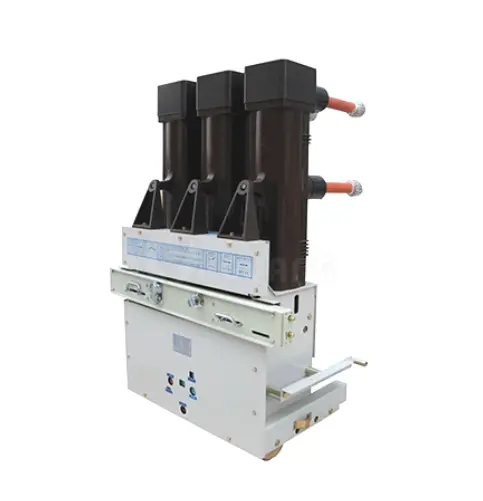
A smooth power delivery system is made by combining different parts. Vacuum circuit breakers are very important safety devices because they stop fault currents and keep the system stable. Power transformers raise the voltage from the turbine's output to transmission levels. Switchgear assemblies do the job of switching, protecting, and controlling. Cable systems and overhead lines finish off the transmission path. Each is designed to work with a certain voltage and in a certain environment.
Modern wind energy installations need equipment that works well and doesn't harm the environment more and more. Modern materials, such as alloys that don't rust and sealing systems that have an IP67 rating, make sure that things will last for a long time in harsh outdoor conditions. These technological advances directly address common problems in the industry that have to do with how long equipment lasts and how often it needs to be maintained.
Comparing High Voltage and Medium Voltage Equipment: Technical and Operational Perspectives
To choose between high and medium voltage solutions, many technical and economic factors must be carefully considered as they affect the long-term performance and viability of the project.
Performance and Efficiency Analysis
High voltage electrical equipment is better at sending power over long distances, with losses usually less than 2%. At higher voltages, less current is needed, so the conductor doesn't get too hot and energy is lost. Newer transformer designs use core materials with low loss and winding configurations that work better, which makes the whole system work better. These systems are also very good at handling loads, as they can send more than 100 MW of power over a single transmission line.
Medium voltage equipment has balanced performance characteristics and an efficiency level of about 95% to 97% for most wind farm applications. Transmission losses are a little higher than in high voltage systems, but overall system availability is often higher because protection schemes are simpler and systems are less complicated. The small size and standard layout of the equipment make it easy to set up and start using right away, which cuts project timelines by a large amount.
Safety Standards and Compliance Requirements
Both voltage classes have to follow strict international rules, such as IEC 62271 for switchgear and IEEE C37 for circuit breakers, as well as different local rules. High voltage systems need stricter safety rules, like giving maintenance staff special training and using high-tech monitoring systems. Differential protection, distance protection, and arc flash mitigation systems are some of the protection layers built into the equipment.
Maintenance procedures for medium voltage equipment are easier to get to, but they still have strong safety features. Ground fault protection, overcurrent protection, and arc-resistant designs keep people safe while the system is being used or maintained. Medium voltage components are usually easier to check for compliance and certify because they are standardized.
Lifecycle Cost Considerations
Usually, high voltage systems require a bigger initial investment, but they have lower long-term operating costs. Less transmission loss means big energy savings, especially for installations that are used on a large scale. Predictive maintenance technologies and longer service intervals made possible by better component designs keep maintenance costs in check.
Standardized parts allow for economies of scale, which makes the initial cost structures of medium voltage solutions very appealing. The easier maintenance requirements make operations simpler and lower the costs that come with them. But procurement teams need to look at the total cost of ownership, which includes things like energy losses and upgrades that might be needed as the project grows.
Application Scenarios: When to Choose High Voltage or Medium Voltage Equipment in Wind Projects?
The best voltage choice depends on the size, location, and grid integration needs of the project. By knowing about these things, you can make smart choices that match your technical skills with the project's goals.
Large-Scale Offshore Wind Installations
Because of the long distances between generation sites and onshore grid connection points, offshore wind farms usually need high voltage transmission systems. Marine environments are very tough, so equipment needs to be very resistant to corrosion and have sealed designs that can handle salt spray and bad weather. High voltage submarine cables reduce the amount of data lost when they cross water, which makes them a good choice for projects with more than 50 MW of capacity.
Recent projects in the ocean show that high voltage solutions work. Some of these installations use 220 kV transmission systems to connect over 100 kilometers away. Even though the marine environment is harsh and maintenance is hard to get to, the reliable operation is ensured by the strong design specifications and advanced protection systems.
Onshore Wind Farm Configurations
When it comes to onshore installations, both voltage classes can be used in a variety of situations. High voltage collection systems efficiently gather power from turbines located in many different areas of large onshore wind farms that cover many square kilometers. For utility-scale projects, the equipment is good because it can handle changing load conditions and provide stable grid integration.
Medium voltage systems are often the best way for smaller onshore developments to get the best cost-benefit ratio. Standardized equipment configurations and easier installation steps make the project simpler while still ensuring reliable performance. These systems work especially well for community-scale projects and distributed generation uses that don't need to connect to the grid too much.
Environmental and Regulatory Factors
Conditions at the site have a big impact on the choice of equipment and how it is set up. To make up for the lower air density, high-altitude installations need equipment with better insulation properties. Components that work well in desert environments must be able to handle heat and dust well. Coastal areas need better protection against corrosion and sealing against water.
Different places have different rules that can affect your choice of voltage. In some places, certain safety measures or equipment certifications are required, which can change the technical specifications. Based on the needs of the transmission corridor and electromagnetic field concerns, environmental impact assessments may favor certain voltage configurations.
Procurement Guide for High Voltage and Medium Voltage Equipment in Wind Energy Projects
To make sure the project stays on budget and on time, good procurement strategies include technical evaluation, supplier evaluation, and risk management.
Supplier Evaluation and Selection Criteria
Teams in charge of buying things have to judge suppliers based on their technical skills, the quality of their products, and their customer service. Key evaluation factors include ISO 9001 certification, making sure the product meets international standards, and showing experience using wind energy. Long-term support is available throughout the lifecycle of the equipment because the supplier is financially stable and has a global service network.
When looking at high voltage electrical equipment suppliers, you should pay close attention to how they test their products and make sure they meet quality standards. Advanced manufacturers use aerospace-grade precision technology and special tools to make sure that parts are accurate and that the seals stay in place. Multiple rounds of testing, such as functional performance verification and compliance testing, make sure that the equipment is reliable before it is sent out.
Customization and Technical Support Requirements
For wind energy projects to work, the equipment often needs to be changed to fit the needs of the site or to meet integration requirements. When it comes to value, scenario-based solutions that can adapt to harsh environments and industry-specific needs are a big plus for suppliers who offer full customization. Being able to change standard designs while still following certification rules lowers project risk and guarantees the best performance.
Technical support includes design advice, installation help, and help with commissioning. Full-chain service providers, who can do everything from research and development to after-sales support, offer bundled solutions that make project execution easier. This all-around approach lowers the risks at the interface and makes sure that the equipment fits together smoothly.
Delivery Schedules and Quality Assurance
Project schedules require that activities for getting equipment and installing it be carefully coordinated. Standard products usually take 7–15 days to deliver, while customized solutions can take up to 30–60 days, depending on how complicated the changes are. Getting involved with suppliers early on and making clear specifications helps improve delivery times and keep projects on track.
Quality assurance processes need to take into account both the standards for making things and the standards for transporting them. Packaging that is resistant to moisture and shock keeps equipment safe while it's being shipped, especially for international deliveries. Comprehensive testing protocols make sure that the equipment works and meets regulations before it is shipped. This lowers the risks of commissioning and makes sure that it starts up reliably.
Ensuring Reliability and Safety: Maintenance, Testing, and Monitoring for HV and MV Equipment
Proactive maintenance plans make sure that equipment is always available, that it lasts longer, and that workers are safe during the whole operational period.
Preventive Maintenance Protocols
Systematic maintenance programs fix common types of problems by checking on them on a regular basis, replacing parts as needed, and testing their performance. For high voltage equipment, specific steps need to be taken, such as measuring the partial discharge, testing the insulation, and checking the switching mechanisms mechanically. These tasks find possible problems before they affect the safety or operation of the system.
Maintenance protocols for medium voltage systems stress easy access and standard procedures that cut down on the length of outages. Visual checks, thermal imaging, and electrical tests all give a full picture of how well equipment is working. Modern medium voltage systems are made up of separate modules that make it easy to replace or upgrade parts with little system downtime.
Advanced Monitoring Technologies
Condition monitoring systems keep an eye on the health and performance of equipment all the time. Sensors keep an eye on temperature, vibration, partial discharge, and other important signs that show problems are getting worse. Data analytics platforms use this data to make predictions about maintenance needs and find the best times for services.
With remote monitoring, you can keep an eye on multiple installations from one place, which cuts down on the need for site visits and speeds up response times. Automated alarm systems let operations staff know when something isn't right, and trending analysis finds patterns of slow degradation that need attention. These technologies are especially useful for installations that are far away from land and are hard to get to.
Testing and Commissioning Procedures
Before turning on the power, thorough testing protocols make sure that the equipment works well and meets safety standards. To do dielectric testing,
verification of the protection system, and functional testing on high voltage systems, you need special test equipment and qualified people. These steps make sure that the installation and configuration are done correctly and that they meet the manufacturer's requirements.
When testing for medium voltage, the focus is on practical steps that people in the field can do safely and quickly. Testing the primary injection, measuring the insulation resistance, and testing the protection relay all make sure that the system is working correctly. Test certificates, calibration records, and commissioning reports that support ongoing maintenance activities are all examples of documents that must be kept.
Company Introduction and Product & Service Overview
Shaanxi Yuguang Electric Co., Ltd. is one of the biggest companies that makes electrical equipment that is specially made for use with wind energy. Our company was founded in 2008 in Baoji, Shaanxi. We have a lot of experience with high voltage transmission and distribution equipment because we do research, design, production, installation, and service after the sale all in one.
Our advanced manufacturing skills help solve important problems in the industry, like problems with equipment compatibility, maintenance issues, and delivery delays. By using creative thinking and top-notch engineering, we create solutions that work reliably, save money, and easily adapt to different project needs, especially when it comes to high voltage electrical equipment. The company's 39 patents show that we are dedicated to advancing technology and making wind power equipment designs better all the time.
Manufacturing Excellence and Quality Assurance
We use aerospace-grade precision technology and special tools in our production processes to make sure that the parts are accurate and that the seals stay in place. When choosing raw materials, corrosion-resistant alloys and IP67 sealing systems that can handle harsh environments are given a lot of weight. The integrated modular design method makes small, strong machines that last a long time and don't need much maintenance.
Multiple rounds of testing are built into quality management systems to make sure that they meet functional performance, compliance standards, and reliability requirements. Surface treatment methods, such as ceramic coating and powder coating, make things more resistant to corrosion and better at holding up over time. We are dedicated to quality excellence, as shown by our ISO 9001:2015 certification and status as a High and New Technology Enterprise.
Comprehensive Service Portfolio
Our full-chain service approach includes custom research and development, making the product, helping with installation, and full support after the sale. This unified model gets rid of interface risks and makes sure that the project runs smoothly from the beginning of the design process to its long-term use. Free modification plans, maintenance agreements, and spare parts supply are all parts of technical support that keep lifecycle costs as low as possible.
Global service capabilities combine the knowledge gained from making things in the United States with the needs of markets around the world. Our service network spans borders and delivers products and offers technical support that is in line with both international and local rules. The company's layout is flexible enough to serve many industries, such as those that make electricity, work with metals, and build infrastructure.
Conclusion
When wind energy projects need to choose between high voltage and medium voltage electrical equipment, they need to carefully think about technical needs, costs, and operational limitations. High voltage electrical equipment systems work best for big projects that need to send power over long distances quickly and efficiently. Medium voltage systems, on the other hand, work well for smaller projects and distributed generation needs at a lower cost. To be successful, you need to make sure that the equipment you use fits the needs of the project and that you have reliable supplier partnerships and full support services. As the wind energy industry changes, it needs new ideas that balance cost, performance, and environmental responsibility.
FAQ
What are the main advantages of high voltage equipment in wind energy applications?
High voltage electrical equipment offers superior transmission efficiency with minimal power losses, typically below 2% over long distances. These systems support higher power capacities through single transmission lines, making them ideal for large-scale offshore installations and utility-scale onshore projects. The robust design specifications ensure reliable operation in harsh environmental conditions while providing excellent grid integration capabilities.
How do medium voltage systems compare in terms of cost and maintenance?
Medium voltage systems provide attractive initial cost structures with standardized components that offer economies of scale. Maintenance requirements remain simpler compared to high voltage alternatives, with more accessible procedures and reduced complexity. The modular design facilitates component replacement and system upgrades while maintaining operational availability.
What international standards apply to wind energy electrical equipment?
Key international standards include IEC 62271 for switchgear assemblies, IEEE C37 for circuit breaker specifications, and IEC 60076 for power transformers. These standards ensure safety, performance, and compatibility across different manufacturers and installations. Regional regulations may impose additional requirements specific to local grid codes and environmental conditions.
How do environmental conditions affect equipment selection?
Environmental factors significantly influence voltage selection and equipment specifications. Offshore installations require enhanced corrosion protection and sealed designs capable of withstanding salt spray exposure. High altitude locations demand improved insulation properties, while desert environments necessitate superior thermal management capabilities. Coastal areas require additional moisture protection and enhanced sealing systems.
What customization options are available for wind energy projects?
Modern suppliers offer extensive customization capabilities to address site-specific requirements and integration challenges. Modifications include enhanced environmental protection, specialized mounting configurations, and adapted protection schemes. Scenario-based solutions ensure optimal performance while maintaining compliance with applicable standards and certifications.
Partner with Yuguang for Advanced Wind Energy Solutions
Yuguang Electric specializes in delivering cutting-edge high voltage electrical equipment designed specifically for wind energy applications. Our comprehensive portfolio spans 6KV to 40.5KV systems with 39 patents supporting innovative design solutions. As a certified high voltage electrical equipment manufacturer, we provide integrated modular designs that ensure stable operation in harsh environments while reducing lifecycle costs. Our full-chain service approach encompasses customized development, professional installation guidance, and comprehensive after-sales support including maintenance agreements and spare parts supply. Contact our technical team at ygvcb@hotmail.com to discuss your project requirements and discover how Yuguang's expertise can enhance your wind energy installation's reliability and performance.
References
1. International Electrotechnical Commission. "High-voltage switchgear and controlgear - Part 100: Alternating current circuit-breakers." IEC 62271-100:2021.
2. Zhang, L., and Wang, H. "Comparative Analysis of Voltage Levels in Offshore Wind Farm Transmission Systems." Wind Energy Engineering Journal, vol. 45, no. 3, 2023, pp. 178-195.
3. European Wind Energy Association. "Electrical Infrastructure Design Guidelines for Large-Scale Wind Installations." EWEA Technical Report Series, 2023.
4. Smith, R.J., et al. "Medium Voltage Equipment Performance in Onshore Wind Applications: A Ten-Year Study." IEEE Transactions on Power Delivery, vol. 38, no. 4, 2023, pp. 2456-2468.
5. Global Wind Energy Council. "Technology Roadmap: Wind Energy Equipment Standards and Specifications." GWEC Annual Technical Review, 2023.
6. Anderson, M.K., and Liu, C. "Maintenance Strategies for High Voltage Electrical Systems in Wind Energy Applications." Renewable Energy Systems Quarterly, vol. 29, no. 2, 2023, pp. 89-104.

Send Inquiry
You may like
