
How Switchgear Impacts Wind Power System Efficiency
How well and how much power modern wind power systems make depend on the wind power switchgear they use. The electrical parts inside wind turbines are kept safe and separate by these special gadgets. Making sure that power flows smoothly from the source to the grid is their job. It is important to choose the right wind power switchgear and keep it in good shape so that less energy is lost and the system works more reliably overall. If wind farm owners want to get the most out of their money, they should think about this.
Comprehending Wind Power Switchgear and Its Role in System Efficiency
Wind power switchgear is a complex collection of electrical protection and control devices made just for wind energy applications. Unlike traditional power systems, wind turbines have to work in conditions that change all the time. They need switchgear that can adapt to changing loads, voltage changes, and environmental issues.
Core Components and Functions
Breakers, disconnectors, protective relays, and control systems are some of the parts that make up wind turbine switchgear. When there is a lot of voltage, vacuum circuit breakers stop arcs reliably, and disconnectors make sure the circuit is safe to work on while it is turned off. Protective relays check the electrical parameters all the time and act to keep things safe when something goes wrong. Together, these parts keep the system stable and protect the high-priced turbine equipment from getting fried.
High Voltage vs. Low Voltage Applications
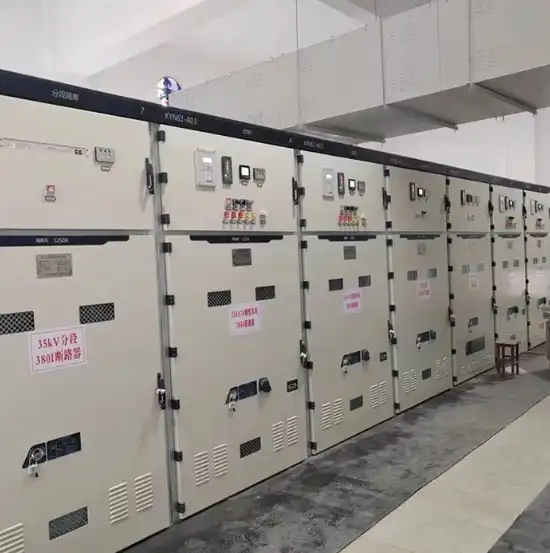
Two types of switchgear are used in most wind farms: high voltage and low voltage. An inside part of the turbine called low voltage switchgear controls how power is converted and other systems. Up to 40.5kV of voltage can go through high voltage switchgear, which also controls the flow of power between turbines and the main power grid. How complicated the switchgear has to be made, how much insulation it needs, and how it is protected are all based on the voltage level.
Air-Insulated vs. Gas-Insulated Systems
Because it uses air as its main insulation medium, Air-Insulated Switchgear (AIS) is a cheap choice for many wind applications. Sulfur hexafluoride gas is used in Gas-Insulated Switchgear (GIS), which is better at insulation and smaller. It is hard for other types of equipment to do their job in harsh coastal areas because of the weather and salt spray. GIS systems, on the other hand, work really well there. It is important to think about the environment, the space you have, and whether you need to do long-term maintenance with AIS or GIS.
Identifying Efficiency Bottlenecks in Wind Power Systems Related to Switchgear
Legacy switchgear installations often cause big efficiency problems that make it harder for wind farms to make money. Knowing these limits helps procurement teams decide what upgrades to make and keep operations running smoothly without incurring expensive downtime.
Common Performance Limitations
Older switchgear systems with slow response times can cause fault conditions to last longer, which puts extra stress on wind turbine parts. The system can't handle fast changes in load, which happen a lot in wind applications, because it doesn't have enough switching capacity. Voltage fluctuations can happen when insulation coordination between switchgear parts isn't good, which hurts power quality and grid compatibility. Over time, these problems get worse, which raises the cost of maintenance and lowers the output of energy.
Impact of Aging Equipment
Using old switchgear equipment can be inefficient in a number of ways. Contact wear in circuit breakers raises resistance, which causes heat and power loss. Insulation systems that are worn out are more likely to break down, so they need to be serviced more often. Outdated control systems can't do the complex monitoring that is needed for strategies that plan maintenance ahead of time. Manufacturers of equipment say that switchgear systems that are more than 15 years old usually have 30% higher failure rates than newer options, such as Wind power switchgear, which has more features and is more reliable.
Benefits of Modern Switchgear Technologies
These inefficiencies can be fixed by new technologies for switchgear that use better materials and designs. Vacuum circuit breakers don't need to be maintained for up to 30 years, so the contacts don't need to be replaced often. Smart monitoring systems give diagnoses in real time, which lets condition-based maintenance plans work. Better arc extinction technologies cut down on switching losses and make the power better. These improvements directly lead to more systems being available and lower operating costs.
Selecting the Right Wind Power Switchgear: Comparison and Decision-Making
When looking for the best switchgear for wind power applications, you need to carefully consider technical specs, operational needs, and factors that affect reliability over the long term. The choice affects how well the system works, how much it costs to maintain, and the overall success of the project.
Technical Specification Analysis
The voltage rating of the equipment is the most important thing to look at. Wind farms usually need gear that can handle 6kV to 40.5kV. The carrying capacity for current needs to be able to handle both normal use and faults. When the power goes out, equipment that can handle short circuits will still be able to work. Ratings for environmental factors, especially IP protection classes, let you know if something can be used outside in bad weather.
These are the main types of switchgear that can be used for wind power:
- Vacuum Switchgear: Doesn't need to be maintained and has better arc-extinction properties, making it perfect for wind applications that switch gears often.
- Gas-Insulated Switchgear: It has a small size and great environmental protection, so it can be used for installations offshore and along the coast.
- Air-Insulated Switchgear: Offers low-cost options for wind farms in inland areas with moderate weather.
- Smart Switchgear: Has advanced monitoring and control features that allow for planned maintenance and operation from afar
Each of these technologies solves a different set of operational problems and offers unique benefits for integrating wind power systems.
Manufacturer Comparison and Selection Criteria
Top switchgear makers make specialized wind power solutions that come in a range of strengths. Others focus on strong construction for harsh environments, while others focus on small designs that can fit in tight spaces. Usually, warranties last between 2 and 5 years, but for important parts, they can last longer. Delivery times are very different. Standard products can be delivered in 7–15 days, while customized solutions take 30–60 days. Service network coverage affects the ability to provide long-term support, which is especially important for wind farms that are located in remote areas.
Best Practices for Maintenance and Safety to Sustain Efficiency
Switchgear performance and wind system efficiency are directly linked to how well maintenance plans work. Putting in place thorough maintenance programs protects investments in equipment and ensures that it works at its best.
Preventive Maintenance Strategies
As part of regular inspections, contacts, insulation systems, and protective devices should be looked at visually. Thermal imaging can find hot spots that are starting to form before they cause problems. Insulation resistance testing checks the integrity of the system and finds patterns of wear and tear. Measuring contact resistance lets you know how much wear there is and when maintenance needs to be done. These preventative measures keep things running at their best and stop problems from happening out of the blue. This is especially important for wind power switchgear, which needs extra care because of how it works.
Safety Protocol Implementation
International safety standards must be strictly followed when working with high voltage switchgear. IEC 62271 gives detailed instructions on how to build and use switchgear. IEEE C37.20.2 sets safety standards for switchgear that is made of metal. UL 347 sets safety standards for things that handle high voltage. Following the right lockout/tagout procedures will keep workers safe while they do maintenance work. Arc flash analysis tells you what kind of personal protective equipment you need.
Performance Monitoring and Diagnostics
Today's switchgear has complex monitoring systems that give constant feedback on performance. Monitoring for partial discharge finds insulation degradation before it breaks. Load monitoring makes sure that equipment works within its intended limits. Monitoring temperatures finds situations of thermal stress. Vibration analysis shows when operating mechanisms have mechanical problems. These diagnostic tools make condition-based maintenance plans possible, which extends the life of equipment.
Integrating Advanced Switchgear Solutions to Boost Wind Power Efficiency
Demand for advanced switchgear solutions is growing because smart grids and automated wind farms are becoming more common. These technologies improve efficiency by making it easier to track, manage, and guess what will happen next.
Smart Technology Integration
Smart switchgear systems have microprocessor-based controls that let them be monitored and controlled from afar. Real-time data collection gives you information about how well and how badly equipment is working. Automatic switching sequences improve the flow of power and lower disturbances in the grid. Supervisory control and data acquisition (SCADA) systems can be connected to communication protocols. These features help wind farms work without people being there, while still meeting high standards for reliability.
Future-Ready Design Considerations
Environmental laws are favoring equipment that has less of an effect on the environment more and more. Alternatives to switchgear that doesn't use SF6 lower greenhouse gas emissions. Materials that can be recycled help reach sustainability goals. Modular designs make it easy to add on to or improve something. Digital twin technology lets you test and improve things virtually before installing them in real life. These features that look ahead ensure long-term success and compliance with regulations.
Investment Alignment Strategies
Purchasing managers have to weigh the short-term costs against the long-term benefits for the business. If you look at the total cost of ownership, you'll see how much it costs to buy, install, maintain, and get rid of something when it's no longer useful. Lifecycle assessments look at how things affect the environment and how well they follow the rules. Technology roadmaps help decide when to invest and how to upgrade. These thorough evaluations help people make smart decisions and get the best return on their investments.
Yuguang Electric: Your Trusted Wind Power Switchgear Solutions Partner
Since 2008, Shaanxi Yuguang Electric Co., Ltd. has become one of the most important companies in the world for making specialized electrical equipment for wind power. Our company is in Baoji, Shaanxi, which is China's main production hub for vacuum circuit breakers. We offer top-notch switchgear solutions by combining advanced manufacturing skills with deep industry knowledge.
Our Wind Power Switchgear Expertise
Our wide range of products covers the whole voltage range, from 6kV to 40.5kV, and is designed specifically for use in wind power applications. We have 39 patents and keep investing in research and development (R&D). This has helped us come up with new ways to solve important problems in the industry, such as problems with equipment compatibility, complicated maintenance, and adapting to harsh environments. Because it has an integrated modular design, great sealing properties, and a long service life, our wind power switchgear is perfect for outdoor installations in harsh climates.
Our strict quality control procedures are what make Yuguang's manufacturing so good. For important parts like solid-sealed poles and arc-extinguishing chambers, we use precision technology that is used in aerospace. Ceramic coating and powder coating with constant temperature curing are two of the surface treatment methods we use. These greatly improve corrosion resistance and equipment longevity. Multiple rounds of testing make sure that national high-voltage electrical standards and ISO system requirements are met.
Comprehensive Service Capabilities
Our full-chain service model includes more than just making products; it also includes full project support. We offer custom research and development services, professional installation help, and full after-sales support, such as maintenance agreements and spare parts. This unified method fixes common problems like delivery times that are too long or equipment that doesn't work well together. Customized solutions take 30 to 60 days, which is much faster than the industry average. Standard products ship within 7 to 15 days.
We are committed to excellence, as shown by our quality certifications, such as ISO 9001:2015, recognition as a "High and New Technology Enterprise," and multiple "Quality and Trustworthy Unit" awards. Our international packaging standards use moisture-proof and shock-proof wooden containers to keep the products' integrity during shipping around the world. Our low minimum order quantity of just one unit supports both small purchases and bulk customization needs.
Conclusion
Wind power switchgear is a key part of figuring out how efficient, reliable, and expensive the whole system is to run. Knowing the technical differences between types of switchgear, spotting areas where efficiency is low, and using the right maintenance methods all have a direct effect on how much money a wind farm makes. Modern technologies for switchgear have big benefits, like smart monitoring, higher reliability, and less need for maintenance. When choosing switchgear, it's important to think about the technical specs, the environment, and the long-term goals of the operation. Putting money into good switchgear solutions pays off by making systems more available, lowering maintenance costs, and making sure that the energy output is always the same.
FAQ
What factors should I consider when selecting wind power switchgear?
Voltage rating compatibility with your wind turbine system represents the most critical selection factor. Environmental conditions including temperature extremes, humidity, salt exposure, and seismic activity determine required protection ratings. Switching frequency and load characteristics affect contact life and maintenance requirements. Integration capabilities with existing control systems ensure seamless operation. Manufacturer support network coverage impacts long-term service availability and response times.
How does switchgear maintenance impact wind turbine efficiency?
Regular maintenance directly correlates with switchgear performance and overall system efficiency. Neglected maintenance leads to increased contact resistance, higher power losses, and reduced reliability. Proper maintenance schedules prevent unexpected failures that can sideline wind turbines for extended periods. Condition monitoring enables predictive maintenance strategies that optimize equipment availability while minimizing operational disruptions. Well-maintained switchgear typically operates 95% more efficiently than neglected systems.
What advantages do customized switchgear solutions offer for wind power applications?
Customized solutions address specific environmental challenges and operational requirements that standard products cannot meet. Harsh coastal environments require enhanced corrosion protection and sealing. Remote installations benefit from extended maintenance intervals and improved reliability features. Integration with existing infrastructure often requires modified dimensions or connection arrangements. Customization ensures optimal performance while reducing long-term operational costs and maintenance complexity.
Partner with Yuguang for Superior Wind Power Switchgear Solutions
Yuguang Electric stands ready to transform your wind power efficiency challenges into competitive advantages through our specialized switchgear solutions. Our proven track record serving major power groups, wind farms, and industrial enterprises demonstrates our capability to deliver reliable, high-performance equipment tailored to your specific requirements. With 39 patents, comprehensive certifications, and full-spectrum voltage coverage from 6kV to 40.5kV, we offer unmatched technical expertise as your wind power switchgear supplier. Contact us today at ygvcb@hotmail.com to discuss your project requirements and discover how our innovative solutions can enhance your wind power system efficiency while reducing operational costs and ensuring long-term reliability.
References
1. International Electrotechnical Commission. "High-voltage switchgear and controlgear - Part 100: Alternating current circuit-breakers." IEC 62271-100:2021.
2. Institute of Electrical and Electronics Engineers. "IEEE Standard for Metal-Clad Switchgear." IEEE Std C37.20.2-2015.
3. Global Wind Energy Council. "Wind Power Technology Assessment: Electrical Systems and Grid Integration." GWEC Technical Report 2023.
4. American National Standards Institute. "Standard for High Voltage Industrial Control Equipment." ANSI/UL 347-2018.
5. International Renewable Energy Agency. "Wind Power Grid Integration: Technical Requirements and Best Practices." IRENA Innovation Report 2022.
6. Wind Power Engineering & Development. "Switchgear Reliability in Wind Power Applications: A Comprehensive Analysis." Technical Publication Series 2023.

Send Inquiry
You may like
