
How to Choose a Wind Power Switchgear Manufacturer
It is important to carefully consider technological capabilities, quality standards, and service dependability when choosing a wind power switchgear manufacturer. The choice of manufacturer significantly affects operational safety, efficiency, and long-term project performance since wind power switchgear is the vital electrical protection and control system in wind farms. The ideal manufacturer should exhibit shown proficiency in renewable energy applications, give extensive customization options, uphold strict quality standards, and provide dependable support over the equipment's operating lifespan.
Understanding Wind Power Switchgear and Its Importance
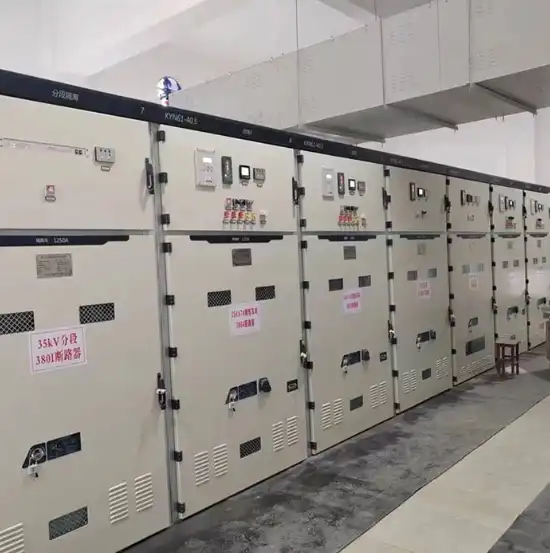
The foundation of electrical safety and control in renewable energy systems is wind power switchgear. This sophisticated technology enables smooth power transfer from wind turbines to the grid, controls electrical circuits, and guards against malfunctions. Switchgear systems that can endure challenging external circumstances while maintaining consistent performance across a range of operating situations are necessary due to the complexity of wind farm surroundings.
Core Components and Functionality
Circuit breakers, safety relays, transformers, and busbars are the essential parts of wind power electrical systems, and they are all incorporated into sturdy enclosures intended for outdoor installation. Together, these parts separate problematic areas, control power flow, and shield costly equipment from electrical irregularities. Predictive maintenance techniques that save downtime and increase equipment longevity are made possible by the sophisticated monitoring features included in modern switchgear, which offer real-time operating data.
Types of Switchgear Technologies
Depending on available space and environmental factors, wind power applications usually use gas-insulated switchgear (GIS), air-insulated switchgear (AIS), or hybrid arrangements. While GIS offers small footprints ideal for installations with limited space, AIS systems provide the benefits of cost-effective installation and maintenance. Project-specific criteria, like as voltage levels, environmental exposure, and long-term operating factors, determine which of these technologies to use.
Benefits of Advanced Switchgear Solutions
Modern wind power switchgear delivers enhanced operational efficiency through improved fault detection, reduced maintenance requirements, and extended service life. These systems contribute to optimized wind farm operations by minimizing unplanned outages and providing comprehensive protection against electrical disturbances. Compliance with international safety standards ensures reliable operation while meeting regulatory requirements across different markets.
Defining Your Procurement Needs and Decision Scenarios
Clearly identifying project-specific criteria and operating situations is the first step in a successful switchgear procurement process. The size, location, and technical requirements of wind generating projects vary greatly, requiring customized methods for equipment selection and manufacturer assessment.
Project Environment Considerations
Extreme weather, exposure to seawater, and restricted accessibility for maintenance tasks are some of the particular difficulties faced by offshore wind projects. Switchgear with improved sealing capabilities, increased corrosion resistance, and longer maintenance intervals are needed for these projects. Even while onshore installations are easier to reach, they nevertheless need strong environmental protection and consistent performance across a range of temperatures.
Volume and Customization Requirements
In contrast to situations involving bulk buying, single unit purchases may call for alternative assessment standards. Standardization and bulk pricing are advantageous for large-scale projects, although flexibility and quick delivery may be more important for smaller installations. Narrowing the selection of manufacturers and streamlining procurement procedures are made easier by knowing if standard configurations satisfy project requirements or customisation is necessary.
Critical Evaluation Metrics
While innovation evaluation concentrates on cutting-edge features like smart monitoring, remote diagnostics, and integration capabilities, quality assessment entails confirming adherence to international standards like IEC 61439 and UL certifications. Long-term operating expenses and project performance are greatly impacted by post-sale service capabilities such as installation assistance, maintenance plans, and the availability of replacement parts.
Comparison of Wind Power Switchgear Solutions and Brands
Specialized development of switchgear systems tailored for wind power applications has been fueled by the renewable energy industry. Procurement teams may make well-informed judgments that are in line with operational objectives and financial restrictions by being aware of the differences between wind-specific designs and conventional industrial switchgear.
Wind-Specific Design Adaptations
In order to satisfy the particular requirements of wind power installations, traditional switchgear often has to be modified. Improved weatherproofing, vibration resistance, and remote monitoring features—all crucial for autonomous operation—are included in wind-specific designs. These modifications save maintenance needs and increase operating longevity while guaranteeing dependable performance under difficult circumstances.
Leading Manufacturer Comparison
Well-known producers with extensive experience in large-scale installations, such as ABB, Siemens, and Schneider Electric, provide complete wind power systems. These businesses usually provide worldwide service networks, standardized configurations, and comprehensive engineering support. New manufacturers often prioritize cost-effective substitutes or specific applications while maintaining certification compliance and quality requirements.
Manufacturers have different performance standards; some excel at small designs, while others place more value on modularity or sophisticated monitoring capabilities. Objective comparison criteria are provided by reliability measurements like as availability ratings and mean time between failures (MTBF). Operational performance and maintenance needs throughout the course of the equipment lifespan are both included in efficiency calculations.
Technology Trade-offs and Cost Implications
Air-insulated switchgear is appropriate for onshore installations with sufficient space allocation since it has benefits in terms of initial cost and maintenance accessibility. Gas-insulated options save space and provide better protection, but they cost more up front and need specialist maintenance knowledge. Selecting a technology requires weighing up-front expenditures against ongoing operating costs and site-specific limitations.
How to Evaluate and Select the Right Manufacturer?
Manufacturer evaluation extends beyond product specifications to encompass quality systems, innovation capabilities, and service reliability. Comprehensive assessment ensures selected partners can support project requirements for Wind power switchgear from initial design through long-term operation and maintenance.
Certification and Quality Standards Verification
Reputable manufacturers have certifications such as ISO 45001 occupational health and safety requirements, ISO 14001 environmental management, and ISO 9001 quality management. These certificates show methodical methods to continuous development and quality assurance. To confirm stated capabilities and performance metrics, further verification entails examining test results, factory audits, and reference installations.
Technology Leadership and Innovation Assessment
Investments in R&D, patent portfolios, and sophisticated feature integration are examples of innovation leadership. Current technological innovations that improve operational efficiency include IoT connection, predictive maintenance features, and smart monitoring capabilities. Strong R&D initiatives usually result in superior long-term support and product innovation that keeps up with market trends.
Customization Capabilities and Support Services
Customization is often needed for wind power projects in order to satisfy certain integration needs, environmental regulations, or voltage levels. Strong technical skills enable manufacturers to create customized solutions while upholding delivery dates and quality requirements. Complete support services, such as installation advice, commissioning assistance, and maintenance instruction, guarantee project execution success and continuous dependability.
Professional installation services, clear warranty conditions, and prompt technical assistance are all important factors in the success of a project. Manufacturers that supply all-inclusive service packages simplify procurement and give a single point of responsibility for problems with performance.
Tips for a Smooth Procurement and Installation Process
Planning for procurement effectively reduces delays, manages expenses, and guarantees project success. Proactively managing possible difficulties is made possible by an understanding of supply chain dynamics, installation specifications, and maintenance techniques.
Supply Chain and Timeline Management
Tight construction timelines are common for wind generating projects, necessitating careful planning of equipment supply and installation procedures. While bespoke solutions could need longer production times, standard switchgear layouts usually provide shorter lead times. Establishing reasonable timetables and identifying any bottlenecks that might affect project schedules are made easier with early contact with manufacturers.
Using bulk purchase techniques may save money and guarantee uniform standards for many installations. However, in order to reduce the need for on-site storage and to coincide with building progress, staged delivery can be required. Manufacturers may improve production scheduling and logistical coordination by clearly communicating project milestones and delivery requirements.
Installation Best Practices and Safety Compliance
To guarantee safe operation and warranty compliance, wind-specific switchgear installation must comply to manufacturer specifications and industry norms. During the design stages, environmental factors such as cable routing, foundation requirements, and access arrangements must be taken into account. Expert installation crews with expertise in renewable energy are aware of these specifications and are able to spot any problems before they affect project schedules.
Throughout the installation and commissioning process, safety compliance include adhering to electrical rules, environmental laws, and occupational safety requirements. Equipment functions within design constraints and satisfies performance requirements when it is properly tested and documented.
Maintenance Strategy Development
Through planned inspections, preventative maintenance, and condition monitoring, proactive maintenance techniques increase the lifespan of equipment and reduce unscheduled downtime. Based on operating expertise and environmental factors, manufacturers usually provide suggested maintenance schedules and methods. Condition-based interventions that maximize maintenance scheduling and minimize needless tasks are made possible by predictive maintenance solutions.
The efficacy of maintenance is greatly impacted by the availability of spare parts and the responsiveness of technical help. Building connections with suppliers and manufacturers guarantees quick resolution of equipment problems and reduces downtime during crucial operating times.
Company Introduction and Our Solutions
Shaanxi Yuguang Electric Co., Ltd. brings comprehensive expertise in wind power switchgear solutions specifically engineered for renewable energy applications. Since our establishment in 2008, we have developed specialized capabilities in designing, manufacturing, and supporting electrical protection systems that meet the demanding requirements of wind power installations across diverse environmental conditions.
Specialized Wind Power Expertise
Our wind power switchgear solutions address the core challenges facing renewable energy projects including equipment compatibility issues, maintenance complexity, delivery uncertainties, and adaptation to harsh environmental conditions. Through our integrated approach combining advanced engineering, rigorous manufacturing processes, and comprehensive service support, we deliver stable and safe operation while reducing costs and ensuring regulatory compliance.
The company's product portfolio covers voltage ranges from 6kV to 40.5kV, supported by 39 patents and authoritative industry certifications. Our scenario-based customization capabilities enable adaptation to challenging environments and industry-specific requirements. The integrated modular design philosophy delivers compact solutions with superior sealing characteristics and extended operational lifespan, particularly suited for outdoor wind power applications.
Manufacturing Excellence and Quality Assurance
Our manufacturing processes begin with careful selection of high-quality raw materials including corrosion-resistant alloys and IP67-rated sealing components, all subjected to rigorous incoming inspection procedures. Structural components undergo precision manufacturing through advanced shearing and stamping operations, while critical components like solid-sealed poles and arc-extinguishing chambers benefit from aerospace-grade precision technology and dedicated tooling to ensure accuracy and reliability.
The modular assembly approach enables precise pre-assembly of key components using specialized tooling, followed by integration with frames and enclosures according to our integrated modular design concept. Surface treatment processes including ceramic coating and powder coating with constant temperature curing enhance corrosion resistance and aging performance, extending service life in harsh environmental conditions.
Comprehensive testing protocols include functional performance verification covering arc extinguishing, insulation, and load adaptability characteristics, along with compliance verification meeting national high-voltage electrical appliance standards and ISO system requirements. Our moisture-proof and shock-proof wooden packaging meets international standards for overseas shipments, ensuring product integrity throughout global distribution.
Service Excellence and Global Support
Our full-chain service approach encompasses research and development through production, installation, and after-sales support, extending beyond single product sales to provide comprehensive project partnership. This integrated service model combines extensive domestic experience with proven cross-border service capabilities, enabling effective support for international wind power projects.
Flexible ordering options accommodate requirements from single units to bulk customization, with standard products available within 7-15 days and customized solutions delivered within 30-60 days. Comprehensive after-sales services include installation guidance, maintenance agreements, spare parts supply, and modification planning to ensure continued optimal performance throughout the equipment lifecycle.
Conclusion
Selecting the right wind power switchgear manufacturer requires comprehensive evaluation of technical capabilities, quality standards, and service reliability. Successful procurement depends on clearly defining project requirements, understanding technology options, and evaluating manufacturers based on proven performance and support capabilities. The complexity of wind power environments demands specialized expertise and customized solutions that standard industrial switchgear cannot adequately address. Manufacturers with dedicated renewable energy experience, robust quality systems, and comprehensive service capabilities provide the foundation for successful project implementation and long-term operational reliability.
FAQ
Q1: What are the main cost drivers for wind power switchgear investments?
A: Wind power switchgear costs depend on voltage ratings, environmental protection requirements, customization levels, and certification compliance. Higher voltage applications require more robust insulation and safety features, while harsh environmental conditions demand enhanced protection ratings that increase material and manufacturing costs. Customization for specific applications involves engineering resources and modified production processes that affect pricing compared to standard configurations.
Q2: How often should wind power switchgear undergo maintenance?
A: Maintenance intervals vary based on environmental conditions, operational loads, and manufacturer recommendations. Typical schedules include monthly visual inspections, quarterly operational checks, and annual comprehensive maintenance. Harsh environments may require more frequent attention, while condition monitoring systems can optimize maintenance timing based on actual equipment condition rather than fixed schedules.
Q3: Can switchgear from different manufacturers be integrated within the same wind farm?
A: Integration of switchgear from multiple manufacturers is possible but requires careful coordination of specifications, communication protocols, and protection schemes. Standardized interfaces and common communication standards facilitate integration, while custom solutions may require additional engineering to ensure compatibility. Working with experienced system integrators helps manage these complexities and ensure reliable operation.
Partner with Yuguang for Your Wind Power Switchgear Requirements
Yuguang Electric delivers proven wind power switchgear solutions engineered specifically for renewable energy applications worldwide. Our comprehensive capabilities spanning 6kV-40.5kV voltage ranges, supported by 39 patents and authoritative certifications, ensure reliable performance in demanding wind power environments. With flexible MOQ starting from single units, rapid delivery schedules, and comprehensive after-sales support, we provide worry-free procurement experiences for wind power switchgear suppliers and project developers. Contact our technical team at ygvcb@hotmail.com to discuss your specific requirements and discover how our integrated modular designs and full-chain service approach can optimize your wind power installations.
References
1. International Electrotechnical Commission. "Wind Power Generation Systems - Electrical Safety Requirements." IEC Standards Publication 61400-24, 2019.
2. Global Wind Energy Council. "Wind Power Switchgear Technology Assessment and Market Analysis." GWEC Technical Report Series, 2022.
3. IEEE Power and Energy Society. "Recommended Practice for Switchgear Installation in Wind Power Applications." IEEE Standard 1547.9, 2021.
4. American Wind Energy Association. "Wind Farm Electrical Systems: Design, Installation, and Maintenance Best Practices." AWEA Technical Guidelines, 2020.
5. European Wind Energy Association. "Switchgear Reliability and Maintenance in Offshore Wind Applications." EWEA Research Report, 2023.
6. National Renewable Energy Laboratory. "Electrical Protection Systems for Wind Power Generation: Performance Analysis and Selection Criteria." NREL Technical Report 5000-78542, 2021.

Send Inquiry
You may like
