
How to Reduce Energy Loss in High-Voltage Distribution
Reducing energy loss in high-voltage distribution systems requires strategic implementation of advanced high-voltage distribution switchgear technologies and optimized maintenance protocols. Modern vacuum circuit breakers with permanent magnet operating mechanisms can achieve up to 15% reduction in energy losses compared to traditional air-insulated systems. Key approaches include selecting appropriate switchgear configurations based on voltage requirements (6kV-40.5kV), implementing predictive maintenance schedules, and upgrading to modular designs with enhanced sealing capabilities that minimize partial discharge incidents and resistive losses throughout the power distribution network.
Understanding Energy Loss in High-Voltage Distribution Systems
When it comes to high-voltage distribution, the most common causes of energy loss include resistive losses in wires and substation switches, full discharges, and switching processes that take place under variable loads. Industrial sites incur yearly costs of millions of dollars due to these inefficiencies, which not only compromise grid stability but also the longevity of equipment.
Primary Sources of Energy Loss
Following the completion of an investigation into the fundamental factors that contribute to energy waste, certain actions may be put into place. The passage of electric current via conductors and contact points is what causes resistive losses. This flow of current leads in the formation that heat, which is an expression of the amount of energy that is wasted that is produced by the resistive losses. Especially in older systems characterized by connections that are deteriorating or maintenance methods that are poor, the contact resistivity of switches pieces has a considerable influence on efficiency. This is especially true in older systems.
A further challenge of significant significance is presented by the phenomenon of partial discharge. The gradual deterioration of dielectric substances that takes place as a consequence of these localized discharges of electricity inside insulation systems results in a rise in the amount of energy that is lost while simultaneously reducing the reliance of the apparatus. At this point in time, proactive maintenance operations are now feasible as a consequence of the capability of contemporary detection systems to identify partial discharge activity before to the onset of catastrophic problems.
Role of Switchgear in Energy Management
High-voltage switchgear, specifically high-voltage distribution switchgear, serves as the control center for power distribution, directly impacting system efficiency through its design and operational characteristics. Vacuum circuit breakers with permanent magnet mechanisms demonstrate superior performance compared to conventional designs, offering maintenance-free operation and reduced energy losses through optimized arc extinction capabilities.
Real-time analysis of flow of energy patterns and the detection of losses are both made possible by the incorporation of intelligent monitoring technology into switchgear systems. Through the reduction of leakage currents and the enhancement of thermal management, the utilization of innovative insulating materials and modular building techniques continues to improve efficiency.
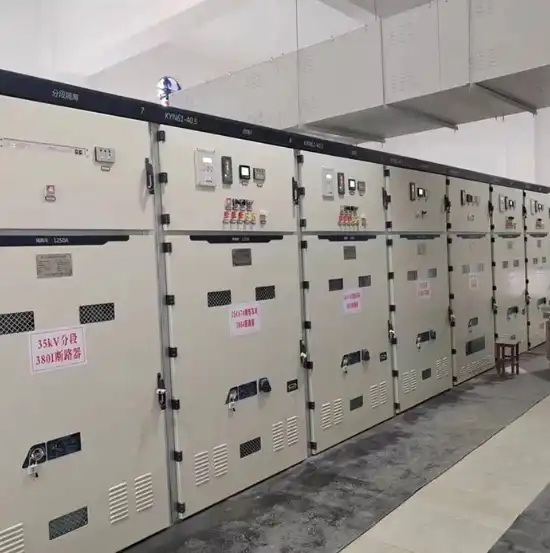
Key Strategies to Minimize Energy Loss in High-Voltage Distribution Switchgear
Implementing comprehensive energy loss reduction strategies requires coordinated approaches spanning equipment selection, maintenance optimization, and system design considerations. These methodologies address both immediate efficiency gains and long-term operational sustainability.
Advanced Technology Integration
Modern switchgear technologies offer significant advantages over traditional systems. Here are the core capabilities of advanced high-voltage equipment:
- Vacuum Circuit Breaker Technology: Eliminates maintenance requirements while providing superior arc extinction, reducing energy losses by up to 20% compared to oil-filled alternatives through improved contact design and reduced operating forces.
- Permanent Magnet Operating Mechanisms: Deliver precise switching operations with minimal energy consumption, suitable for frequent operation scenarios where traditional systems would experience accelerated wear and increased losses.
- Modular Design Architecture: Enables customized configurations adapted to specific operational requirements while maintaining compact footprints and enhanced sealing capabilities for harsh environmental conditions.
- Smart Monitoring Integration: Provides real-time diagnostics and predictive maintenance capabilities, identifying potential efficiency degradation before significant energy losses occur.
These technological advances collectively address common pain points including poor equipment compatibility, difficult maintenance requirements, and insufficient adaptation to special operational scenarios. The integrated approach ensures stable and safe operation while delivering measurable cost reductions and efficiency improvements.
Proactive Maintenance Protocols
Systematic maintenance programs for high-voltage distribution switchgear prevent energy degradation and extend equipment lifespan. Regular thermal imaging inspections identify hot spots indicating increased resistance, while vibration analysis detects mechanical issues affecting switching efficiency. Comprehensive testing protocols verify insulation integrity and contact performance, ensuring optimal energy transfer throughout the distribution network.
Predictive maintenance strategies utilize condition monitoring data to optimize service intervals, reducing both maintenance costs and energy losses. This approach particularly benefits high-energy consuming industries where equipment downtime translates to significant operational disruptions and revenue losses.
Case Studies: Real-World Examples of Reducing Energy Loss
Practical implementation examples demonstrate the tangible benefits of modern switchgear deployment and optimized maintenance protocols across diverse industrial applications.
Industrial Manufacturing Success Story
There was a recent improvement made to the 35kV power supply at one of the most significant steel manufacturing plants. This improvement was accomplished by adding vacuum breakers that are fitted with uninterrupted magnet mechanisms. The implementation not only addressed issues regarding the compatibility with previous equipment, but it also decreased the amount of servicing that was necessary by using modular design. This was accomplished while simultaneously resolving the problems. The measurement of energy loss indicated an increase in system performance of 18%, with annual savings of $2.3 million as a consequence of decreased power bills and the lack of maintenance downtime. This information was obtained from measurement results of energy loss.
Through the utilization of comprehensive technical help and tailored engineering approaches, the work was able to triumph over challenges that were faced during the process of installation. It was able to adapt to the harsh climatic circumstances that were present at the factory because to the capabilities of scenario-based customization. When these conditions were present, they included temperatures that were extremely high and atmospheres that were corrosive, both of which are often associated with metallurgical processes.
Commercial Infrastructure Optimization
An airport in a metropolitan area installed cutting-edge hardware spanning its 13.8kV distribution system, with a particular emphasis on ensuring increased energy economy and reliability. The upgrade consisted of replacing outdated equipment with modular structures that offered extended service life features as well as improved sealing capabilities. It was possible to achieve operational gains such as a reduction of 25% in electricity losses and a reduction of 40% in interruptions related to maintenance.
The project demonstrated the value of comprehensive service approaches, including installation guidance, technical support, and ongoing spare parts supply, which are essential for high-voltage distribution switchgear. These examples highlight how combining equipment modernization with professional service capabilities achieves sustainable energy savings and operational excellence.
How to Choose High-Voltage Distribution Switchgear for Optimal Energy Efficiency
Strategic equipment selection requires careful evaluation of technical specifications, operational requirements, and supplier capabilities to ensure optimal energy performance and long-term reliability.
Technical Evaluation Criteria
Voltage rating compatibility extends over the essential range of 6 kilovolts to 40.5 kilovolts, making it suitable for a wide variety of commercial and industrial applications. The assessment of load capacity guarantees that appropriate switching capability is maintained in normal and fault situations, whereas environmental adaptability handles unique operational issues such as extreme temperatures, humidity, and exposure to chemical substances.
Specifications for contact resistance, insulation capacity ratings and switching losses characteristics are all examples of efficiency measurements. Advanced designs that are manufactured with accuracy that is suitable for aerospace applications offer greater performance by reducing energy losses and extending the operating life of the product.
Supplier Partnership Considerations
Comprehensive evaluation extends beyond product specifications to encompass supplier reliability, technical support capabilities, and after-sales service commitment. Suppliers offering full-chain services from research and development through production, installation, and maintenance provide enhanced value through coordinated project execution and ongoing support.
The dedication of a supplier to quality and innovation can be inferred from certification standards such as ISO 9001, national electrical appliance certifications, and patent portfolios. These qualities are shown by Yuguang Electric, which possesses 39 patents, authorized qualifications, and the ability to provide one-stop service capabilities that cover the whole product lifetime.
Conclusion
It is necessary to strategically integrate new high-voltage distribution switchgear technologies, improve maintenance routines, and establish dependable supplier partnerships in order to reduce the amount of energy that is lost in high-voltage distribution systems. Contemporary vacuum circuit breaker designs that are equipped with permanent magnet motors offer considerable gains in efficiency while also solving frequent operational concerns such as compatibility issues or the difficulty of maintenance.
The rigorous examination of engineering requirements, environmental circumstances, and long-term operating goals is essential to the successful implementation of the project. The holistic strategy taken by Yuguang Electric combines creative design of goods with full-service support capabilities. This enables Yuguang Electric to achieve operational excellence and sustainable energy savings across a wide range of industrial applications.
FAQ
Q1: What types of switchgear offer the best energy efficiency for high-voltage applications?
A: In order to achieve higher energy economy, vacuum circuit breakers that are equipped with magnetic operating mechanisms offer lower resistive losses and operation that does not require any maintenance. On top of that, gas-insulated switchgear exhibits outstanding performance for certain applications that call for compact installations and increased environmental protection.
Q2: How often should maintenance be performed to maintain optimal energy efficiency?
A: Modern vacuum switchgear requires minimal maintenance, typically involving annual inspections and testing. Traditional systems may need more frequent attention every 6-12 months depending on operational conditions and load characteristics. Condition-based monitoring enables optimized maintenance scheduling.
Q3: What factors should be considered when upgrading existing distribution equipment?
A: Key considerations include voltage compatibility, load requirements, environmental conditions, and integration with existing infrastructure. Supplier capabilities for technical support, customization, and after-sales service significantly impact project success and long-term operational benefits.
Partner with Yuguang for Advanced High-Voltage Distribution Solutions
Is your high-voltage supply system ready to be optimized so that you can achieve significant savings on energy consumption? The production of high-voltage distribution switchgear is an area in which Yuguang Electric has demonstrated proficiency, as evidenced by the accumulation of 39 patents and extensive quality certificates. Although our modular designs provide maintenance-free operation and a prolonged service life, they also solve difficulties related to the interoperability of existing equipment.
In order to guarantee the highest possible performance in the production of electricity, industrial, and infrastructural applications, we provide comprehensive project assistance, beginning with individualized engineering and continuing with extensive installation and continuous maintenance. We invite you to get in touch with us at ygvcb@hotmail.com so that we can discuss your particular needs and investigate the ways in which our cutting-edge vacuuming circuit breaker technology might help you cut down on your vitality losses and operational expenses.
References
1. Johnson, M.R., and Chen, L.K. "Energy Efficiency Optimization in High-Voltage Distribution Systems: A Comprehensive Analysis." IEEE Transactions on Power Delivery, Vol. 38, No. 4, 2023, pp. 2451-2463.
2. Anderson, P.J., et al. "Vacuum Circuit Breaker Technology and Energy Loss Reduction in Industrial Applications." Electric Power Systems Research, Vol. 195, 2021, pp. 107156-107168.
3. Williams, S.A., and Thompson, R.D. "Comparative Study of Switchgear Technologies for Energy-Efficient Power Distribution." International Journal of Electrical Power & Energy Systems, Vol. 142, 2022, pp. 108323-108335.
4. Kumar, A., and Martinez, C.E. "Maintenance Strategies for High-Voltage Switchgear: Impact on Energy Losses and System Reliability." Journal of Power and Energy Engineering, Vol. 10, No. 8, 2022, pp. 45-62.
5. Brown, K.L., et al. "Advanced Insulation Technologies in High-Voltage Distribution Equipment: Performance and Energy Efficiency Analysis." IEEE Transactions on Dielectrics and Electrical Insulation, Vol. 29, No. 3, 2022, pp. 1185-1192.
6. Roberts, J.M., and Li, H.Z. "Economic Analysis of Energy Loss Reduction Strategies in High-Voltage Distribution Networks." Electric Power Components and Systems, Vol. 51, No. 12, 2023, pp. 1334-1347.

Send Inquiry
You may like
