
How to Replace High Voltage Vacuum Contactor Efficiently
The right system shutdown is the first step in replacing a high voltage Vacuum contactor effectively. Next, the new unit's voltage grade, current capacity, and mounting specs are carefully checked for compatibility. After safely disconnecting and removing the broken contactor, technicians install the new one, check all the electrical connections, test the new device thoroughly, including its insulation resistance and operational cycles, and write down the whole process to keep accurate maintenance records and limit costly downtime.
Industrial facilities with high-voltage electrical systems depend primarily on vacuum contactors for safely stopping circuits and controlling loads. When power plants, steel mills, or infrastructure providers lose equipment, production may cost thousands of dollars every hour.
We've worked with procurement managers and chief engineers across the US who keep running into three issues: finding suitable replacement units quickly, making sure new systems work with old ones, and keeping operations running smoothly during installations. This handbook solves these issues by providing a systematic replacement process for B2B decision-makers seeking dependable, safe, and cost-effective high voltage switching equipment.
Understanding High Voltage Vacuum Contactors
Core Functions and Technical Specifications
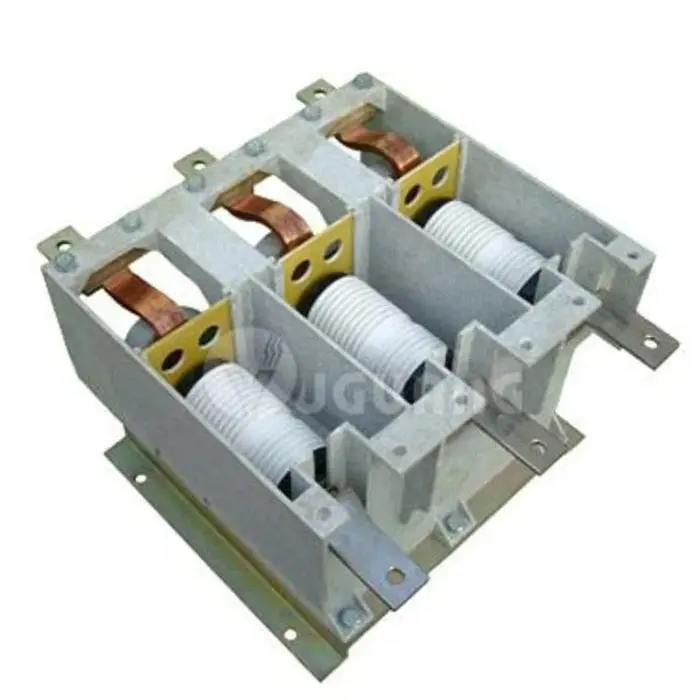
High voltage Vacuum contactors are electromechanical switching devices designed for repeated load interruption in circuits between 6kV and 40.5kV. Unlike circuit breakers, which are mostly made to protect against short-circuits, these contactors are great at switching tasks that happen a lot, like starting motors, controlling capacitor banks, and switching transformers. The vacuum interrupter chamber has sealed contacts in a high-vacuum environment (pressure below 1.33×10^-2 Pa). This stops electrical arcs without making gasses or needing to be cooled from the outside.
Some important specs are the estimated working voltage (usually 7.2kV, 12kV, 24kV, or 36kV), the breaking capacity (measured in MVA), the continuous current capacity (between 160A and 630A), and the mechanical durability (rated between 300,000 and 1,000,000 operations). Safety features include interlocking devices that stop operation by mistake, arc-resistant enclosures that meet ANSI/IEEE standards, and fault indication systems that let workers know when there is contact wear or vacuum degradation.
Operational Advantages Over Alternative Technologies
When compared to older air-break or oil-immersed systems, vacuum technology works better. The sealed vacuum chamber keeps out oxidation and contamination, two problems that can happen with atmospheric contactors. This means that the device will work for 20 to 30 years without much maintenance. For their arc-extinguishing chambers, Yuguang's Vacuum contactors use aerospace-grade precision production, ensuring uniform dielectric recovery strength and minimum contact erosion even under rigorous cycling.
Because they take up less space—often 40% less—than similar SF6 or magnetic blow-out contactors, they can be used in renovated substations and on mobile equipment. Noiseless switching is good for industries like mining because it doesn't add to noise pollution in the workplace. Chemical plants also like it because it doesn't use flammable insulating fluids that can explode in unstable environments.
Identifying the Need for Replacement
Recognizing Performance Degradation Symptoms
Equipment workers should keep an eye on a number of signs that show a contactor failure is about to happen. Contact erosion shows up as higher temperatures at the connections between terminals. This can be seen with thermal imaging scans done as part of regular checks. When a coil starts to degrade, it may close at different times or make clicking sounds when it is turned on, which could mean that the insulation is breaking down or the turns are shorted. It means that there is mechanical binding or spring fatigue in the working system if the contactor takes a noticeable longer time to engage or disengage.
Loss of vacuum integrity can't be seen from the outside, but it shows up as lower dielectric strength during yearly high-potential tests. Vacuum contactor lifespan standards depend on how often the circuit is used. For example, motor control circuits in plants that process food all the time might need to be replaced after 15 years, while seasonal capacitor switching installations might work well for 25 years before they start to show signs of wear.
Consequences of Delayed Action
Putting off replacement once signs of wear and tear show up creates risks that go beyond the failing part. As vacuum integrity is lost, the chance of an arc flash rises, posing a greater risk of serious burns to maintenance workers doing work nearby. When equipment no longer meets the NFPA 70E arc flash boundary requirements or fails the required dielectric testing protocols set out in IEEE C37.100 standards, regulatory compliance issues arise.
The costs of operational downtime keep going up and up. For example, an unplanned contactor failure during peak output can stop a steel rolling mill or vital data center cooling systems from working, causing losses that are much higher than the cost of a new unit. We have records of procurement teams delaying a $12,000 contactor replacement, which cost them $140,000 in emergency repairs, faster shipping fees, and missed production income when the unit failed severely during the nite shift.
Step-by-Step Guide to Efficiently Replace High Voltage Vacuum Contactors
Pre-Replacement Planning and Analysis
Root cause analysis is the first step in a successful repair job. This helps find out why the old contactor broke down so soon. Voltage jumps caused by close capacitor swapping, harmonic distortion higher than 5% THD, or ambient temperatures higher than what is recommended all speed up the aging process of parts. Teams in charge of buying things should work together with companies like Yuguang, whose engineers offer free advice on how to fix problems and look at the current state of the system.
In this step, you check the mounting hole patterns, busbar spacing, and auxiliary contact configurations to make sure they are compatible with each other's sizes. This is done to avoid costly installation delays. Take pictures and label the terminals to keep track of the current wiring layout. Make sure you record the voltage in the control circuits (usually 110V AC or 125V DC), as well as the interlock connections and status indication circuits that need to talk to supervisory systems.
Safety Protocols and Installation Procedures
De-energization follows lockout/tagout methods that are in line with OSHA standards. Qualified electricians check for zero voltage on all stages and control circuits using test equipment that is rated correctly. Before installing the new unit, technicians should use a 5kV megohmmeter to measure and write down its insulation resistance after mechanically disconnecting the old one.
Industrial facilities with high-voltage electrical systems depend primarily on vacuum contactors for safely stopping circuits and controlling loads. When power plants, steel mills, or infrastructure providers lose equipment, production may cost thousands of dollars every hour.
We've worked with procurement managers and chief engineers across the US who keep running into three issues: finding suitable replacement units quickly, making sure new systems work with old ones, and keeping operations running smoothly during installations. This handbook solves these issues by providing a systematic replacement process for B2B decision-makers seeking dependable, safe, and cost-effective high voltage switching equipment.
Industrial Case Study: Minimizing Downtime
A Pennsylvania metallurgical facility had trouble with their 12kV motor contactor that controlled a 3,500 HP ball mill, which was used for grinding 22 hours a day. An investigation showed that the original equipment manufacturer's repair wait time was longer than 16 weeks, which made the system too vulnerable. The operations manager worked with Yuguang's technical team, which provided within 45 days a special JCZ12kV High-Voltage Vacuum contactor that was made for the mill's harsh, dusty environment and had better IP65 sealing.
Installation took place over a planned repair weekend, and Yuguang's online technical support helped the in-house electrical crew through the steps of commissioning. Since then, the new contactor has switched over 180,000 times in 18 months without any maintenance being done. The integrated monitoring system gives real-time operational data that is used by the facility's predictive maintenance program.
Comparing Vacuum Contactors with Alternatives for Replacement Decisions
Technology Performance Analysis
Understanding the basic differences between switching technologies helps you make the best choice when looking at alternative options. Magnetic contactors that use air as the stopping medium work well for low voltage (below 1kV) uses, but the contacts need to be replaced often because of arc erosion and oxidation in the air. Older utility substations often have air blast contactors that need compressed air systems.
This makes things more complicated and makes maintenance harder. Although SF6 gas-insulated contactors are very good at stopping, they are getting more and more attention from regulators because SF6 is a greenhouse gas. In some places, leak tracking systems are even required. These worries are taken away by vacuum technology. The sealed room keeps working the same way no matter the altitude, humidity, or amounts of contamination in the air that would hurt other designs.
Here are the main reasons why Vacuum contactors are the best option for demanding industrial applications in terms of performance:
Better Arc Extinction: The vacuum medium has a dielectric recovery strength that is 10–15 times higher than air, which means that it can reliably stop capacitive and inductive loads that are too big for other technologies to handle. In reactive power correction circuits, where voltage recovery transients can be more than twice the normal system voltage, this property is very important.
Longer Mechanical Life: Yuguang's combined modular design uses corrosion-resistant metals and precision-machined parts that can withstand 1,000,000 mechanical operations, which is three times as long as a regular magnetic contactor. The small contact gap (usually 8–12 mm) lowers the stress on the actuator and lets it switch speeds more quickly, which is good for controlling electric arc furnaces, for example.
Maintenance-free operation: Because it is sealed, there is no need to check, clean, and change the contacts on a regular basis, which is what air-break devices need to do. Over the course of 20 years, this means that each contactor will not need to be serviced for about 40 hours. This is a big savings when you're in charge of switchgear lineups with dozens of switching devices.
Environmental Flexibility: It can work in temperatures ranging from -40°C to +55°C, so it can be used in tough industrial settings and outdoor setups. Yuguang's ceramic coating and powder-cured surface treatment make it very resistant to corrosion in places like chemical plants and along the coast, where salt fog quickly breaks down regular electrical equipment.
When procurement managers look for new switchgear parts, compatibility and maintenance issues are the main problems they have to deal with. These technology benefits directly address these issues.
Supplier Selection Criteria
When choosing between OEM suppliers and third-party makers, you have to weigh the short-term cost against the long-term stability of the product's operation. Certified manufacturers, such as Yuguang, have ISO9001:2015, ISO14001, and ISO45001 certifications, which show that they control quality in a planned way throughout the whole production process. The company has 39 patents that cover things like vacuum interrupter design, new ways of working mechanisms, and modular building methods.
These patents show that the company has really invested in research and development (R&D) instead of just reverse-engineering common goods. The warranty should last at least 24 months and make it clear that broken parts will be replaced for free and that shipping will be sped up during warranty claims. Premium suppliers stand out when it comes to after-sales support.
For example, Yuguang provides installation instructions and documentation, keeps spare parts in stock for 15 years or more after production stops, and offers free modification plans when system upgrades require reconfiguring the Vacuum contactor units. For replacements that need to be sent quickly, delivery logistics are very important. Standard products ship within 7–15 days from Yuguang's Baoji factory, while customized units designed for specific uses arrive in 30–60 days, which is a lot faster than the 12–16 week lead times that most European manufacturers have.
Maintenance and Optimization Tips Post-Replacement
Routine Inspection Protocols
Vacuum contactor service life can be extended and problems can be detected early by establishing systematic maintenance schedules. Visual reviews should be done every three months to look for discoloration on the terminal connections that could mean they are overheating. They should also be checked for loosening mounting hardware caused by vibrations and hand test routines to make sure the backup switch works.
As part of the machine's yearly preventive maintenance, thermographic surveys are used to compare current temperatures to baseline readings made during commissioning. The voltage of the coil is checked to make sure it stays within ±10% of its rated value, and contact resistance is measured with special micro-ohmmeters to find erosion before it affects performance.
Environmental monitoring is especially important for installations that are exposed to corrosive atmospheres, extreme temperatures, or high humidity. Yuguang's IP67-rated sealing systems are good at resisting these conditions, but they should still be checked on a regular basis.
Modern remote control systems keep records of operating factors that can be used to make diagnostics. Longer shutting times mean that there is mechanical friction that needs to be lubricated, and irregular operation patterns could mean that there are changes in the control circuit voltage that put stress on the insulation of the coil. Condition-based tracking leads to 60% fewer unexpected breakdowns in facilities compared to reactive maintenance methods.
Leveraging Technical Support Resources
Proactive ties with suppliers increase the worth of equipment after the initial buy. Yuguang's full-chain service model includes help with installation, help with commissioning, and ongoing expert consultation to answer operating questions as system needs change. When facilities need to add more space or change how things are done, the company's engineering team creates free plans to transform equipment. These plans include changing the control circuitry or the mechanics of existing contactors to make them work in new ways.
This all-around help style is very different from transactional sellers who disappear after delivery, leaving customers to deal with problems integrating or running the system. Reputable manufacturers keep large libraries of documentation that include dimensional drawings, wiring diagrams, and troubleshooting guides that can be accessed through technical support contacts. This lets maintenance staff fix small problems quickly, without having to make expensive service calls or keep the equipment down for long periods of time.
Conclusion
Vacuum contactor repair requires methodical planning, technical know-how, and dependable supply alliances. The process is more than just switching out devices. For projects to be successful, they need to make sure that the new devices will work with the old ones, follow safety rules, go through a lot of tests, and choose suppliers strategically so that they can provide long-term support while putting short-term cost saves first.
Yuguang's Vacuum contactors solve important B2B problems by being fully customizable for each situation, having a combined modular design that makes setup quick, and offering full lifecycle service that takes away any doubts after the sale. Our solutions offer voltage ranges from 6kV to 40.5kV and are backed by 39 patents and official ISO certifications. They provide operating stability, regulatory compliance, and cost-effectiveness that procurement managers need to protect important investments in electrical infrastructure.
FAQ
What determines optimal replacement intervals for high voltage vacuum contactors?
Hard usage, environment, and operating intensity determine when to replace anything. Motor control circuits utilized more than 50 times a day in clean industrial environments survive 15–20 years. Due to moisture, outdoor substation capacitor switching applications may need to be replaced after 12–15 years. Testing the condition often is more accurate than assigning random dates for tasks. Contact resistance, vacuum integrity, and mechanical operation counting detect damage before equipment becomes useless.
Can vacuum contactors from different manufacturers substitute directly during replacement projects?
Electrical values, physical dimensions, and auxiliary contact setup must be examined for straight replacement. Some manufacturers utilize the same mounting patterns for conventional IEC designs, but control circuit voltages, interlock sequences, and status contact layouts vary. Yuguang engineers undertake compatibility checks of current installation plans to ensure parts fit and operate correctly. The firm accepts single-unit to large-quantity orders due to its flexible MOQ policy. This allows them to manage last-minute replacements and fleet standardization programs.
What safety precautions are essential during vacuum contactor replacement procedures?
Before commencing physical work, competent individuals must de-energize all circuit wires and control wiring using suitably rated voltage detecting equipment. An arc flash danger analysis determines personal safety equipment based on fault current and clearance time. Replacement units should undergo insulation testing before installation to ensure dielectric integrity was not compromised during transportation. Post-installation commissioning checks protective relay coordination to ensure the new contactor's operational characteristics meet upstream overcurrent protection settings. This prevents excessive or inefficient fault protection.
Partner with Yuguang for Reliable Vacuum Contactor Solutions
Engineered Vacuum contactor options from Yuguang meet the complex needs of current industrial electrical systems. As a certified high voltage Vacuum contactor maker based in Baoji, China's specialized production hub for switching equipment, we have been making these products for more than 15 years and have continuously invested in research and development, as shown by our 39 patents that cover important design improvements.
We have a wide range of products with ratings from 6kV to 40.5kV. We can also customize standard platforms to fit difficult uses like wind power, mining, and petrochemical plants that need ratings for explosive atmospheres. The integrated service model takes the guesswork out of buying something: technical consultation figures out the best specs, flexible production handles last-minute orders and low-volume needs, professional installation guidance makes sure the right setup, and full after-sales support, including free spare parts planning and delivery, protects your investment for as long as it works.
Get in touch with our engineering team at ygvcb@hotmail.com to talk about your replacement project needs, get competitive Vacuum contactor supplier prices, and find out how Yuguang's quality-certified solutions lower total cost of ownership while improving system reliability. You can look at all of our products at ygvcb.com and download technical specifications that will help you make smart purchasing decisions.
References
1. IEEE Standard C37.100-2021, "IEEE Standard Definitions for Power Switchgear," Institute of Electrical and Electronics Engineers, New York, 2021.
2. Slade, Paul G., "The Vacuum Interrupter: Theory, Design, and Application," CRC Press, Boca Raton, Florida, 2020.
3. NFPA 70E-2021, "Standard for Electrical Safety in the Workplace," National Fire Protection Association, Quincy, Massachusetts, 2021.
4. Greenwood, Allan N., "Vacuum Switchgear: Industrial and Commercial Applications," Institution of Engineering and Technology, London, 2019.
5. ANSI/IEEE C37.06-2020, "AC High-Voltage Circuit Breakers Rated on a Symmetrical Current Basis—Preferred Ratings and Related Required Capabilities for Voltages Above 1000 V," American National Standards Institute, Washington, DC, 2020.
6. Dullni, Erhard and Schade, Eberhard, "Switching Performance of High-Voltage Vacuum Contactors in Capacitive and Motor Circuits," IEEE Transactions on Power Delivery, Volume 36, Issue 4, August 2021.

Send Inquiry
You may like
