
How to Select a Vacuum Switch for Mining Power Distribution
To choose a vacuum switch for mining power, you should first think about what it needs to do. Then make sure that the pressure range, contact logic, voltage class, environmental rating, and certification are all right for the job. Make sure the supplier can keep records of testing, help with installation, and deliver on time. Mine sites have extra things like dust, vibration, water, and changes in temperature that can't be seen in bench tests. This guide tells you how to set the duty, compare switch types, check suppliers, and put samples to the test. I also show how Yuguang can work with vacuum switching equipment that works with medium voltages between 6KV and 40.5KV.
Define the Application and Learn How a Vacuum Switch Works
You can make a good choice if you know what the task is. The technical details will fall into place once that is clear.
Map the Duty Before You Compare Products
That's the first thing I always ask myself: what does this thing need to do? A vacuum switch in a mine can turn on a dewatering pump, sound an alarm if the suction drops, keep an eye on a dust collector filter, or send a message to a PLC. Every job needs a different set point and way to contact it. You should write down the load, the control voltage, the size of the thread or port, the connector, and the space for mounting. Make sure you write down whether the device will be in a control cabinet, on a pump skid, or on a piece of mobile equipment. If you know what the job is, you won't buy a switch that fits the thread but not the job.
See How a Vacuum Switch Turns Pressure into a Signal
A diaphragm, piston, bellows, or electronic element in a vacuum pressure switch can pick up on negative pressure. When the pressure goes over the set point, the mechanism changes the state of the contacts, which triggers a relay, alarm, or PLC input. There are three types of contacts: normally open, normally closed, and single-pole double-throw. Pick the one that works with your fail-safe logic. In this case, a normally closed circuit can sound an alarm when a wire breaks. Models that are mechanical don't use much power. Electronic models can get a screen, be more accurate, and have more than one set point. Before installing, you should always look at the wiring diagram and the marks on the terminals.
Separate Process Switches from Medium-Voltage Vacuum Switching Devices
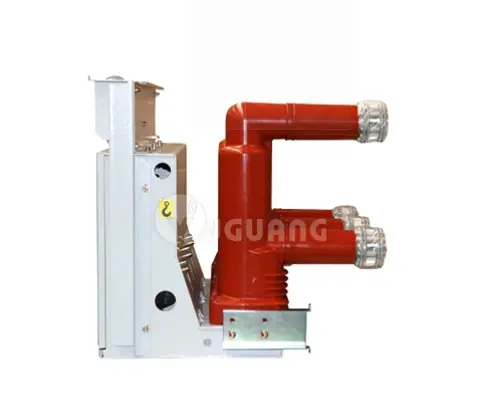
Using the term "vacuum switch" for two different types of products is wrong and can cost a lot of money. Process switches check to see if there is a vacuum of air or fluid in pumps and air lines. For example, a vacuum circuit breaker opens and closes power circuits with the help of a vacuum interrupter. For voltages above 1 kV and up to and including 52 kV, IEC 62271-103 covers switches. IEC 62271-100 covers AC circuit breakers. A device that drives an interlock, checks the vacuum inside an interrupter, and checks the vacuum in the process all do different things. The voltages that Yuguang works with are between 6KV and 40.5KV.
Set the Core Selection Criteria for Mining Duty
You can make a specification once the duty is clear. Most mistakes are caught by these three checks.
Match the Pressure Range, Set Point, and Hysteresis
Pick a range for a vacuum switch that puts your normal vacuum level close to the middle of the scale, not right on the edge. You must choose whether the reference is absolute, gage, or differential. Finally, look at the set point, the reset point, and the space between them. This is known as hysteresis. Bicycle and pump wear can be annoying if the gap is too small. A big gap lets the vacuum move too far before the switch turns on. Write down the normal vacuum, the lowest vacuum, the highest vacuum, and how fast the pressure changes. If the readings change when the machine is first turned on, ask the seller for a model that can be adjusted or a factory setting that has been checked on a test bench.
Check Electrical Ratings and Contact Logic
Contact ratings depend on the load and the type of voltage. Because DC arcs are harder to put out, a switch that can handle a certain amount of current on AC may not be able to handle nearly as much on DC. Because motor inrush and inductive loads put stress on the switch, many engineers use it to power a relay or contactor instead of the motor itself. Look over the frequency of switching, the expected life of the contacts, and the control interface. You should add rated voltage, rated current, and short-circuit withstand to the list for medium-voltage gear. The 6KV–40.5KV equipment made by Yuguang uses vacuum arc extinguishing, and its permanent magnet mechanism works well for regular use.
Verify Environmental Ratings and Standards
In both underground and surface mines, dust, water, vibration, shock, oil, corrosion, and heat can damage equipment. The IP code is set by IEC 60529, and the common enclosure types in the US are set by NEMA 250. Check to see if the rating applies to the whole assembly, which should include cables and connectors. Standard switchgear is only supposed to work at elevations up to 1,000 m according to IEC 62271-1. This means that sites at higher elevations need to have their insulation fixed. Check to see what rules apply to your area, like the 30 CFR Part 75 MSHA rules for underground coal mines. Before you agree to a model, ask for test reports.
Match the Vacuum Switch Type to the Mining Scenario
Designs need to be different for each piece of equipment. This is how I put the common cases in order.
Pumps, Dewatering, and Ventilation
Most pump and dewatering systems need a switch that can be set to a fixed or adjustable position to start, stop, or protect against low vacuum. When conditions on the site change during commissioning, models that can be adjusted can help. Standard skids can't be changed by accident with fixed models. Low-range differential switches are often used in ventilation, HVAC, and dust control lines to find clogged filters or fan faults. Since those ranges aren't very big, a bad choice can lead to false alarms. Set the range to match the real drop in pressure across the filter, and make sure that dust can't get in the way of the sensing port. After each round of maintenance, check that port.
Mechanical, Electronic, and Digital Options
People like mechanical switches because they are easy to make, use little power, and work reliably. Electronic and digital models can have more features, like a display, more than one set point, the ability to communicate, and the ability to log data. Which one is best depends on the site's conditions, the power that's available, electromagnetic interference, the person's maintenance skills, and their budget. A pump station that is far away might like a mechanical unit that can sense without power. Data from computers may be more useful for a central plant that has SCADA. No matter what you choose, make sure that the certification covers the whole setup, not just the sensor. Compare the price difference to the cost of one broken unit, which includes the time it takes to fix it.
Mobile Equipment, OEM Machines, and Medium-Voltage Switchgear
Mobile mining equipment needs to be small, resistant to vibration and oil, and able to work with the voltage and connectors of the vehicle. With a validation plan, OEM machines may be able to use custom threads, connectors, dimensions, or factory settings. There is a separate case for medium-voltage vacuum switch equipment. In this case, Yuguang provides scenario-based customization for harsh environments and the needs of specific industries. The size is small and the seal is strong thanks to our integrated modular design. Our 6KV–40.5KV vacuum circuit breakers have a permanent magnet operating mechanism that doesn't need to be maintained. This makes them perfect for plants that switch things on and off a lot. When you start, tell our engineers about the dust, humidity, and height of where you are.
Compare Suppliers, Validate Samples, and Troubleshoot Failures
There must still be a good source and a good test for one to be good. Keep your schedule and your budget safe by following these steps.
Judge Suppliers on Total Cost, Not Price Alone
There is only one line for unit price. During the equipment's lifetime, you have to account for setup, commissioning, calibration, spare parts, downtime, and the time it takes to get a new one. Direct manufacturers can often meet specific needs, work with OEMs, and make long-term supply agreements. Some distributors may have local stock and can get replacements to you faster. Ask each supplier for samples, ranges, factory settings, certifications, test reports, and the ability to track your order. Go over the steps they take to inspect things, like the switching point, reset point, continuity, pressure-tightness, and electrical safety tests. Also, look at the minimum order quantity, warranty, and policy on spare parts. If a spare part is missing, a pump station may not work.
Validate a Sample Before Full Deployment
Before you agree to a full order, try out a sample. Bring in a vacuum source that has been checked and a reference gage. Since the vacuum is going up and down, check the switching point, reset point, hysteresis, and repeatability. Connect the test piece to the real PLC, relay, or alarm circuit, and check the responses for normal, fault, and loss-of-signal. If you can, do the test again with heat, vibration, dust, water, and many cycles. Then, make an installation guide with information about thread sealant, tightening torque, cable protection, set-point records, inspection intervals, and when to replace something. After that, field results stay the same from one site to the next.
Troubleshoot Common Failures Safely
There are four main types of failures: no change in state, frequent cycling, readings that aren't stable, and failure too soon. First, look at the wiring, the NO or NC terminals, any blocked ports, the wrong range, any damaged sensing elements, and any calibration drift. It's likely that vacuum changes, narrow hysteresis, pump short cycling, or electrical noise are to blame for frequent cycling. Vibration, shock, overload, moisture, dust, chemicals, over-torque, or temperatures above the rating are often to blame for early failure. Turn off the power and follow the lockout/tagout procedure before any test. NFPA 70E tells workplaces how to keep their electrical systems safe. Gradually change the pressure and write down that the contact is still open.
How Yuguang Supports Vacuum Switch Selection in Mining Power Distribution?
Technical know-how is most useful when a supplier can put it to use. This is what we bring to mining jobs.
Who Yuguang Is and What We Supply?
In 2008, Shaanxi Yuguang Electric Co., Ltd. was founded in Baoji, Shaanxi, as a base for making vacuum switch equipment. For 6KV to 40.5KV high-voltage equipment, we do research and development, design, production, installation, and service after the sale. Yuguang is recognized as a High and New Technology Enterprise and has 39 patents. We are also certified to ISO 9001:2015. ISO 14001 and ISO 45001 are also part of our management system. Our goods are used in projects for railroads, petrochemicals, mining, electric power, and metalworking. We also do OEM and ODM work, design oil-free equipment transformations, and supply goods across borders with technical support for customers in other countries.
Product Advantages That Address Common Pain Points
Four problems that mine buyers tell us about are not being compatible with other equipment, being hard to maintain, having slow delivery, and not being a good fit for certain sites. To answer those questions, here are the main benefits we came up with.
- Scenario-based customization: Our engineers adapt equipment to harsh environments and industry-specific needs. We support drawings, equipment adaptation, and commissioning, so new units match your existing switchgear, control voltage, and mounting dimensions. That cuts rework during installation.
- Low maintenance by design: The integrated modular design keeps the size small and the sealing strong. Vacuum arc extinguishing and a permanent magnet operating mechanism give maintenance-free operation and long service life, so your team spends fewer hours on routine servicing.
- Full-chain service: We cover R&D, production, installation, and after-sales instead of selling a single product. Support includes installation guidance, a maintenance agreement, spare parts supply, and a free modification plan, backed by domestic project experience and cross-border service.
These benefits are meant to make operations more stable and safe and to lower long-term costs for mine operators.
Manufacturing, Delivery, and Order Terms
Before they are used, we check raw materials like IP67 seals and alloys that don't rust. We use aerospace-grade precision and special tools to make core parts like solid-sealed poles and arc-extinguishing chambers. Our team puts together key parts ahead of time, then uses a modular process to put them together in the frame and apply ceramic and powder coatings that cure at a constant temperature. Multi-round testing checks for arc-suppression, insulation, and the ability to handle different loads. We pack units in wooden boxes that are resistant to moisture and shock, and we follow international standards for orders going to other countries. The minimum order quantity (MOQ) is one unit or set. It takes 7–15 days for standard products to arrive, and 30–60 days for customized products.
Conclusion
When choosing a vacuum switch for mining power distribution, it's important to make sure the device is right for the job. It is important for process switches to have the right electrical rating, set point, hysteresis, contact logic, and pressure range. The right voltage class, standard compliance, and altitude correction are all requirements for medium-voltage vacuum switching equipment. IP or NEMA ratings and written test reports are needed because of mining dust, water, vibration, and changes in temperature. Different sites can use mechanical, electronic, or digital options. Before full deployment, performance is confirmed by testing a sample with a calibrated vacuum source. Not just unit price should be used to compare suppliers; installation, calibration, spare parts, downtime, and lead time should also be taken into account. Isolation and lockout/tagout are the first steps in safe troubleshooting. Fewer mistakes in the specifications and lower lifetime costs are caused by a weighted review of these factors.
FAQ
Q1: What does a vacuum switch do in mining power distribution?
A: When vacuum reaches a certain point, a process vacuum switch changes its contact state. This lets pumps, alarms, and interlocks work. This kind of vacuum switching device opens and closes power circuits with a vacuum interrupter.
Q2: How do I choose a vacuum pressure range?
A: Choose a range where the normal vacuum is close to the middle. Check to see if the reference is absolute, gage, or differential. Next, make sure that the set point, reset point, and hysteresis all work with the pump cycle.
Q3: What is the difference between NO and NC contacts?
A: An open contact that is normally open closes when the switch trips. A contact that is normally closed opens. In places where a broken wire should set off an alarm, use NC.
Q4: When should I order a custom model?
A: If your site needs unique threads, connectors, contact logic, factory settings, or sealing for harsh environments, choose custom. Check a sample first with a multimeter and a vacuum source that has been properly set up.
Request a Vacuum Switch Quote from Yuguang
You can buy vacuum switches from Yuguang. They have 39 patents, cover voltages from 6KV to 40.5KV, and offer full service from design to after-sales. You can email ygvcb@hotmail.com with your voltage class, load, site conditions, and delivery date. Our engineers will give you a quote and drawings of a model that they think will work. One set is all it takes to place an order, and standard units ship in 7–15 days.
References
1. IEC 62271-100: High-Voltage Switchgear and Controlgear – Part 100: Alternating-Current Circuit-Breakers, 2021
2. IEC 62271-103: High-Voltage Switchgear and Controlgear – Part 103: Switches for Rated Voltages Above 1 kV up to and Including 52 kV, 2021
3. IEC 62271-1: High-Voltage Switchgear and Controlgear – Part 1: Common Specifications for Alternating Current Switchgear and Controlgear, 2017
4. IEC 60529: Degrees of Protection Provided by Enclosures (IP Code), 2013
5. NFPA 70E: Standard for Electrical Safety in the Workplace, 2024
6. Code of Federal Regulations, Title 30, Part 75: Mandatory Safety Standards – Underground Coal Mines, 2024

Send Inquiry
You may like
