
How Vacuum Contactor Affects Equipment Lifespan in Industry
A vacuum contactor is a high-voltage switching device that controls electrical circuits by extinguishing arcs inside a sealed vacuum chamber. Unlike conventional air-break or oil-type contactors, it eliminates arc exposure to atmosphere, dramatically reducing contact erosion with every switching cycle. In industrial environments — steel mills, wind farms, mining operations, data centers — where switching happens thousands of times daily, this difference is decisive. The vacuum contactor directly determines how long motors, transformers, and downstream equipment survive before requiring intervention.
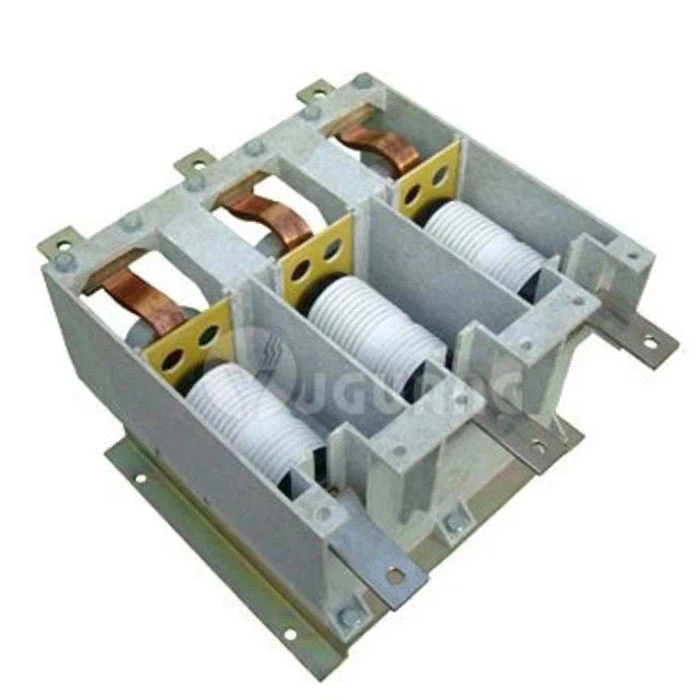
Understanding Vacuum Contactors and Their Operating Principles
A vacuum contactor has three main parts: a vacuum interrupter (the arc-extinguishing chamber), an electromagnetic coil that moves the mechanism, and copper-chromium alloy contacts inside a ceramic or resin case that keeps the contacts completely sealed. When the coil is energized, the contacts close. When it de-energizes, the contacts open, and any remaining arc goes out almost instantly (within microseconds), since there is nothing ionizable in the vacuum to keep it going.
Voltage Range and Rated Performance
Most industrial-grade devices can handle voltages from 6 kV to 40.5 kV and currents of 160 A to 630 A. Depending on the quality of the design, mechanical endurance can last between 300,000 and 1,000,000 operations. In well-designed models, the chopping current stays below 0.5 A. This keeps switching overvoltages within safe limits for motor insulation. These ratings are in line with IEC 60470 and GB/T 14808, which are the two most common standards for high-voltage equipment used around the world and in China.
Since there is no oil or gas that needs to be replaced, the device works perfectly for its entire rated lifetime, with only minor wear and tear between the first and one hundred thousandth use.
Vacuum Contactors' Impact on Equipment Lifespan — Technical Breakdown
Contact deterioration is the main way that switching devices get old. An arc forms every time a contact opens when it is loaded. In oil- and air-break units, that arc burns hot and for a long time, removing contact material, leaving behind carbon waste, and putting stress on the insulator. In a vacuum contactor, this process is different because the arc is suppressed quickly in the vacuum environment. Over time, thermal losses rise, contact resistance goes up, and connected motors experience voltage distortion that speeds up winding degradation.
How Arc Extinction in Vacuum Changes the Equation
Vacuum arc extinction cuts the length of the arc to microseconds. Micrograms, not grains, are used to measure the amount of contact material lost per process. IEC technical reports show that vacuum interrupters keep their dielectric integrity for the full rated mechanical life without needing to resurface the contacts. This directly means that the connected load will last years longer for a high-energy arc furnace or a mining conveyor motor that switches 50 times an hour.
With the right vacuum switching devices, maintenance can be done every three to five years instead of every six months like it is with air contactors. This is a known practical benefit that lowers both labor costs and the risk of unplanned outages.
Yuguang's JCZ series devices, which range from 7.2 kV to 12 kV, are designed to work with high-frequency duty cycles (AC-3 and AC-4 classifications). Yuguang's solid-sealed pole technology and aerospace-grade precision machining ensure consistent contact geometry throughout the device's working life. This protects linked assets from the damage that happens over time when switching happens irregularly.
Comparing Vacuum Contactors to Alternative Solutions for Enhanced Equipment Longevity
To choose the best switching device, you need to be honest about how often it breaks, how much it costs to maintain, and the total cost of ownership.
In terms of factors that affect lifespan, here's how the main types of devices compare:
- Air contactors carry the lowest upfront cost but generate persistent arc products (carbon, metallic vapor) that contaminate insulation and accelerate contact wear. Maintenance intervals are short, and replacement frequency is high in demanding duty applications.
- Magnetic contactors (conventional AC types) perform adequately at low voltage. At medium-voltage levels, their arc-interruption capability is insufficient for frequent switching, and insulation degradation accumulates rapidly under high inrush events.
- Oil-type interrupters once dominated medium-voltage switching but introduce fire risk, require periodic oil replacement, and generate carbon sludge that contaminates contacts over time — making them unsuitable for modern enclosed switchgear.
- Vacuum circuit breakers (VCBs) share vacuum interrupter technology with vacuum contactors but are engineered for infrequent fault interruption at very high fault currents. Their mechanical life is typically 10,000–30,000 operations, compared to 300,000–1,000,000 for a contactor. Using a VCB where a contactor is needed accelerates mechanism wear and raises capital cost unnecessarily.
These differences are very important for buying teams that are in charge of controlling the long-term performance of assets. The listed parameters of a device are important, but picking the right device class — such as a vacuum contactor — for the working job profile is even more crucial.
Yuguang's modular integrated design combines solid-sealed poles, IP67-rated sealing, and corrosion-resistant alloy housings to make vacuum interrupters reliable in places where regular products don't work, like seaside substations, underground mine circuits, and industrial halls with a lot of humidity.
Maintenance Practices and Troubleshooting to Maximize Vacuum Contactor Performance
Structured upkeep is needed for even the toughest switching devices to keep working at their best for the full length of their rated life.
Essential Inspection and Preventive Protocols
Visual checks should be done every three months to make sure the housing is solid, the coil terminals are tight, and no water is getting in. Measurements of contact over-travel and open-distance must stay within the manufacturer's limits; any variation shows that the contact is wearing down and is getting close to the end of its useful life. Early winding degradation is found by coil resistance checks, before it leads to annoying trips or failure-to-close events.
Every year, thermal imaging of live busbars and contact connections finds resistance increases that are starting to happen before they reach connected loads. For storing extra units, you need packing that is resistant to moisture and shock. Yuguang uses the same standard for all outgoing shipments, even those going to other countries.
Chattering when energizing, delayed opening, or high operating temperature are all common signs of a fault. These problems are usually caused by a change in the coil voltage, contacts that are not lined up properly, or contaminated interrupter housings. Each has a clear path for diagnosis that skilled repair teams can follow without needing any special tools.
Studies from power company maintenance programs show that structured inspection programs cut unexpected outages by 40–60% compared to reactive-only maintenance strategies. This means that proactive maintenance on vacuum contactor switching equipment always pays off.
Procurement Considerations for Vacuum Contactors: Ensuring Reliable Supply and Service
There is more to reliable buying than just unit price. Whether a device extends or decreases the life of equipment depends on its voltage rating, duty class, mechanical life rating, certification compliance, and the ability of the supplier to provide service.
Key Parameters and Supplier Evaluation
When buying a medium-voltage vacuum contactor, procurement teams should check the following: the rated voltage (usually between 7.2 and 40.5 kV), the rated current (between 160 and 630 A), the mechanical endurance class, the usage category (AC-3 for motor switching and AC-4 for plugging and reversing duty), and any relevant certifications (IEC 60470, GB/T 14808, ISO 9001).
Yuguang is a producer and seller of vacuum contactors that is approved by ISO 9001:2015, ISO 14001, and ISO 45001, and it is also a National High and New Technology Enterprise with 39 patents. It takes 7–15 days to deliver a standard product. It takes 30–60 days to ship customized configurations that are made for wind power electrical assemblies, arc furnace duty, or metro traction substations. MOQ starts at one unit, which works for both project-specific buying and stocking in large quantities.
One thing that sets Yuguang apart from other providers is its full-chain service, which includes R&D advice and drawing review, installation help, commissioning support, and long-term servicing agreements. The operating risk that procurement managers and maintenance engineers most often say is their biggest worry can be reduced by having spare parts on hand and a written rapid-response after-sales procedure.
Conclusion
In a motor control circuit, the switching device in the middle quietly decides whether equipment further down the line lasts five years or fifteen. Vacuum arc extinction, sealed contact tanks, and precision-engineered mechanical systems all work together to protect insulation, cut down on upkeep, and reduce wear over hundreds of thousands of operations.
The most reliable way to stretch the life of equipment and minimize operating disruption is to match device specifications — particularly those of a vacuum contactor — to actual duty needs and buy from a provider with documented quality systems, the ability to customize for particular situations, and real after-sales support.
FAQ
How does a vacuum contactor extend connected motor lifespan compared to a magnetic contactor?
Contact erosion can only lose a small amount of material per operation when vacuum arc extinction is used. Continuous arcs made by magnetic contactors leave behind conductive residue and cause voltage spikes, both of which damage the insulation on motor windings. The difference adds up to years more of motor service life over thousands of switching cycles.
What maintenance does a vacuum contactor require?
Structured care includes checking the coil terminals, housing soundness, and contact travel measures every three months, imaging the live connections with a thermal camera once a year, and checking the coil resistance every so often. During its rated mechanical life, the sealed vacuum interrupter doesn't need to have its contacts resurfaced or its insides cleaned.
How do I specify the correct vacuum contactor for my industrial motor application?
Make sure the rated voltage is the same as your system voltage (for example, 7.2 kV or 12 kV), that the rated current meets the needs for full-load and inrush, and that you choose utilization category AC-3 for normal motor starting or AC-4 for reversing/plugging duty. For difficult settings like high humidity, vibration, or explosive atmospheres, make sure the housings are IP67-sealed and that the provider can customize them for your needs. The expert team at Yuguang offers free help with finding solutions, looking over drawings, and figuring out parameters.
What is the typical mechanical life of a vacuum contactor?
High-quality vacuum contactors can handle 300,000 to 1,000,000 mechanical operations, which is a lot more than the 10,000–30,000 operations that vacuum circuit breakers made for fault interruption duty can handle.
Partner with Yuguang — Trusted Vacuum Contactor Supplier for Industrial Applications
Yuguang has 39 patents, ISO 9001/14001/45001 certifications, and full-chain service from research and development to after-sales for its vacuum contactor products, which range from 6 kV to 40.5 kV. Our engineering team is ready to help with specification, delivery, and commissioning, whether your project needs standard configurations or customizations that are specific to the environment. You can get datasheets, ask for a technical advice, or talk about bulk purchasing terms by emailing us at ygvcb@hotmail.com or visiting our website, ygvcb.com.
References
1. International Electrotechnical Commission. IEC 60470: High-Voltage Alternating Current Contactors and Contactor-Based Motor-Starters. IEC, 2009.
2. Greenwood, A. Electrical Transients in Power Systems. Wiley-Interscience, 1991.
3. Slade, P. G. The Vacuum Interrupter: Theory, Design, and Application. CRC Press, 2008.
4. IEEE Power & Energy Society. IEEE Std C37.100: Definitions for Power Switchgear. IEEE, 2011.
5. Flurscheim, C. H. (Ed.). Power Circuit Breaker Theory and Design. IET, 1982.
6. EPRI (Electric Power Research Institute). Maintenance and Reliability of Medium-Voltage Switchgear in Industrial Applications. EPRI Technical Report, 2017.

Send Inquiry
You may like
