
Industrial Solutions: 6KV-40.5KV Circuit Breakers for Heavy-Duty Use
6KV-40.5KV Circuit Breaker systems are the foundation of power distribution infrastructure when industrial processes need constant electrical dependability. These advanced switching devices secure costly equipment and guarantee operational continuity in a variety of industrial sectors, making them essential protective elements in medium-voltage applications. These circuit breakers provide crucial fault protection while preserving optimum system performance in anything from power plants and industrial sites to data centers and transportation hubs. For heavy-duty industrial applications where downtime immediately results in large financial losses, modern vacuum arc extinguishing technology, coupled with permanent magnet working mechanisms, provides maintenance-free operation and prolonged service life.
Understanding 6KV-40.5KV Circuit Breakers in Industrial Applications
Technical Parameters and Operating Principles
The complex electrical protection devices known as medium-voltage circuit breakers, which operate in the 6KV to 40.5KV range, are designed to manage significant power loads while offering immediate fault reaction. These devices use sophisticated vacuum interruption technology, in which electrical contacts function within enclosed vacuum chambers to instantly put out sparks when the current zero-crosses. The potential of explosive failures associated with prior oil-filled or air-blast designs is eliminated by the interruption medium's lack of air or other gases.
The permanent magnet working mechanism separates current 6KV-40.5KV Circuit Breaker devices from older spring-operated alternatives. This mechanism eliminates the need for recurring spring tension changes while providing constant closing and opening forces throughout millions of operations. The magnetic actuator ensures quick fault isolation that shields downstream equipment from harm by reacting to control signals in milliseconds.
Important technological features include mechanical durability ratings of more than 10,000 operations, rated current capacity between 630A and 4000A, and short-circuit breaking current capabilities up to 63kA. The integrated modular design's corrosion-resistant metal structure and IP67-rated seals allow for dependable operation in challenging industrial settings with severe temperatures, high humidity, and airborne pollutants.
Voltage Level Differences and Applications
The requirements for system integration and application appropriateness are greatly impacted by the difference between 6KV and 40.5KV voltage ratings. Typically, lower voltage 6KV units link motors, transformers, and process equipment in manufacturing facilities as feeder protection in industrial distribution systems. These applications provide strong protection for vital industrial machines together with small installation footprints and streamlined maintenance processes.
Higher voltage 40.5KV circuit breakers are mostly used in transmission and sub-transmission applications, such as renewable energy projects, big industrial complexes, and utility substations. In order to manage fluctuating production patterns and grid synchronization transients, wind farms often use 35kV collection systems that call for 40.5kV-rated protection devices. These higher voltage devices are used in mining operations to control power distribution across large locations when high distribution voltages are required due to voltage drop concerns.
Because the dielectric strength of vacuum is constant regardless of voltage level, the vacuum interruption technique is very beneficial in both voltage classes. Compact designs that need less switchgear area while retaining superior insulating qualities are made possible by this feature. Vacuum technology reduces environmental issues associated with sophisticated gas handling systems and greenhouse gas emissions, in contrast to SF6 gas-insulated alternatives.
Performance, Maintenance, and Common Faults
Maintenance Best Practices and Inspection Protocols
The operational longevity and dependability of medium-voltage switching equipment are maximized by putting thorough maintenance procedures into place. Contact surfaces should be visually inspected, contact resistance should be measured, and working mechanism timing parameters should be confirmed as part of routine inspection schedules. These preventative actions spot possible problems before they become expensive malfunctions that cause production schedule disruptions.
External components, such as bushing insulators, cable connectors, and enclosure seals, are the subject of monthly visual inspections. Technicians check these components for indications of mechanical damage, corrosion, or tracking that would jeopardize the integrity of the insulation. In order to take remedial action before equipment failure occurs, thermal imaging checks carried out during regular operation identify hot patches that indicate weak connections or contact degradation.
Contact resistance measurements, insulation resistance verification, and operating time analysis are all part of the yearly complete testing. Wear or contamination that has to be addressed is indicated by contact resistance values that are higher than those specified by the manufacturer. While operating time measurements verify correct mechanism operation and show progressive deterioration trends, insulation resistance testing verifies the integrity of main and secondary circuits.
Common Fault Scenarios and Troubleshooting
The performance and dependability of circuit breakers may be impacted by a variety of issues seen in industrial settings. Maintenance teams may use focused diagnostic techniques and remedial measures when they are aware of typical problem patterns. Contact erosion is the most prevalent problem in vacuum circuit breakers, coming from normal switching operations and fault interruption duty cycles.
Increased contact resistance, longer arcing times, and obvious material transfer between contact surfaces are signs of excessive contact erosion. Frequent contact resistance monitoring allows for planned maintenance during scheduled outages instead of emergency repairs by identifying this situation early. Under normal circumstances, vacuum interrupters have a 30-year service life; however, extreme duty cycles may need an early replacement.
Actuator coil failures, auxiliary switch malfunctions, and lubricant deterioration are examples of mechanism-related defects. Auxiliary switch contact testing guarantees correct control circuit functioning, while actuator coil resistance tests detect winding degradation. Modern permanent magnet systems don't need much lubrication, but regular use of certain lubricants keeps them operating smoothly and guards against mechanical damage.
Environmental elements that might hasten component deterioration include moisture intrusion, corrosive environments, and very high or low temperatures. These impacts are lessened by temperature control systems and proper enclosure sealing, and protection integrity is maintained by routine seal replacement. Early warning of unusual heating conditions that may point to potential breakdowns is provided by temperature monitoring systems.
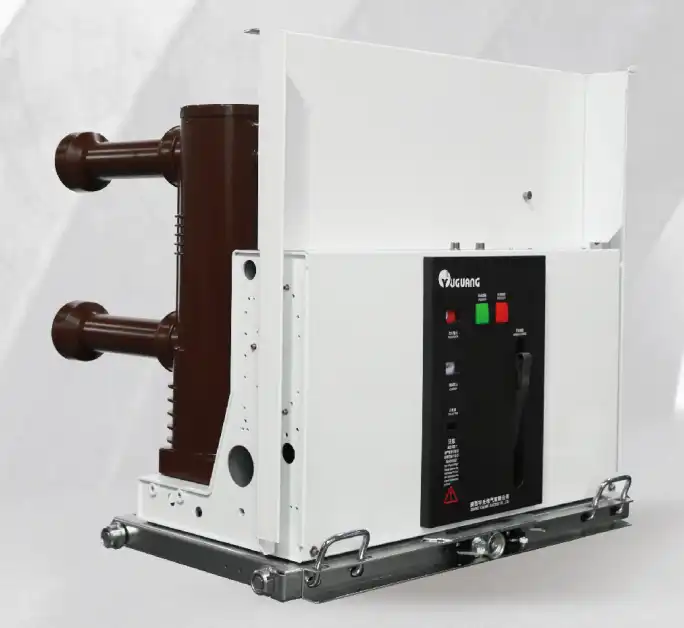
Comparative Analysis: Choosing the Right Circuit Breaker
Technology Comparison: Vacuum vs SF6 Systems
When choosing between vacuum and SF6 interruption technologies, application needs, environmental considerations, and lifespan costs must all be carefully taken into account. When it comes to operating safety, environmental effects, and maintenance needs, vacuum technology has a lot to offer. The sealed vacuum chambers do away with the necessity for particular handling techniques, leak detection tools, and gas monitoring systems that are necessary for SF6-filled units.
Vacuum interrupters thrive in situations demanding frequent switching operations owing to their improved contact life and consistent interruption performance. While SF6 units may gradually undergo gas decomposition under extreme arcing circumstances, the lack of a degrading insulating medium guarantees constant electrical properties throughout the service life. Because of this feature, vacuum technology is especially well-suited for capacitor bank switching and motor starting applications where repeated processes take place.
The greater dielectric strength of the gas allows for more compact designs, while SF6 technology retains benefits in very high voltage applications over 40.5KV. However, since SF6 has a significant potential for global warming, environmental restrictions are gradually restricting its use, which is encouraging the industry to embrace vacuum and other technologies. The complexity of maintenance and related safety procedures are greatly reduced when gas handling needs are eliminated.
Brand Performance and Market Analysis
Prominent producers with extensive product lines spanning the 6KV-40.5KV voltage range include Siemens, ABB, Schneider Electric, Eaton, and GE. Large-scale industrial project procurement choices are influenced by the various technology approaches and market positioning strategies that each manufacturer stresses. While ABB concentrates on digital integration and monitoring capabilities, Siemens vacuum circuit breakers have sturdy mechanical designs tailored for demanding industrial applications.
Schneider Electric places a strong emphasis on standardized interfaces and modular architecture to make spare parts management and installation easier. Their EcoStruxure product provides operational insights and predictive maintenance capabilities by integrating circuit breaker monitoring with facility management systems. Eaton focuses on cost-sensitive applications with dependable designs that strike a compromise between price and performance for projects with tight budgets.
New Asian manufacturers, such as specialty firms like Yuguang Electric, provide attractive substitutes by fusing low cost with tried-and-true technology. Larger manufacturers may not be able to match these vendors' rapid technical assistance and improved customisation possibilities. Yuguang's 39 patents show notable advancements in vacuum circuit breaker technology, especially in the areas of permanent magnet mechanisms and modular building techniques.
Certifications such as IEC 62271, IEEE C37, and relevant national standards should be included in quality evaluation criteria. Manufacturing quality indicators include ISO 9001 certification, type testing results from certified labs, and reference installations in related applications. Calculations of the total cost of ownership are greatly impacted by warranty conditions and the availability of local service assistance.
Procurement Guide for 6KV-40.5KV Circuit Breakers
Global Sourcing Strategies and Supplier Assessment
When purchasing 6KV-40.5KV Circuit Breakers, industrial procurement teams must strike a compromise between cost reduction, quality control, and delivery dependability. Through thorough supplier screening procedures, global sourcing techniques provide access to affordable prices while maintaining strict quality requirements. Detailed technical specifications that precisely outline application requirements, environmental conditions, and performance expectations are the first step in effective sourcing.
Technical support infrastructure, production capabilities, and quality management systems are only a few of the evaluation elements that are included in supplier assessment. Site audits provide information on testing facilities, manufacturing processes, and quality control methods that directly affect the dependability of a product. For essential components, Yuguang Electric's sophisticated manufacturing lines use aerospace-grade precision technology, guaranteeing uniform quality and dimensional accuracy across production batches.
Analysis of financial stability guards against supplier interruptions that can impact project timelines and continuing support needs. Through reference projects, client endorsements, and sustained market presence, reputable providers exhibit consistent performance. Suppliers like Yuguang are positioned to efficiently serve global projects while keeping competitive cost structures because of their mix of local manufacturing knowledge and foreign service skills.
Verification of certification guarantees adherence to relevant regulations and standards. Reputable test results from recognized labs attest to mechanical durability, electrical performance, and environmental appropriateness. While specific certificates like the high-tech enterprise designation show technical proficiency and innovative skills, ISO 9001 accreditation implies well-established quality management systems.
Order Processing and Delivery Logistics
Both regular product requirements and specialized solutions made to meet particular application demands are supported by effective order processing systems. Typically, standard 6KV–40.5KV circuit breaker designs arrive in 7–15 days, allowing for quick project completion for pressing needs. Delivery timetables for customized units with unique ratings, environmental modifications, or integrated features must coincide with project timeframes and last between 30 and 60 days.
While bulk procurement agreements provide economies of scale for big projects, minimum order quantities beginning with single units allow flexibility for prototype installations and maintenance inventories. Supporting small-volume purchases in addition to large contracts shows supplier flexibility and customer-focusedness, which enhances long-term business partnerships.
Packing specifications, customs paperwork, and logistical coordination are all important aspects of international shipping agreements. International-standard timber packaging that is both shockproof and moisture-proof safeguards equipment throughout lengthy shipping times and many handling procedures. Installation and customs clearance procedures are made easier by comprehensive documentation packages that include test results, instruction manuals, and catalogs of replacement parts.
Operational dependability and equipment lifespan costs are greatly impacted by after-sales support infrastructure. Installation advice services aid in ensuring optimum performance from the first start and correct commissioning. Maintenance agreements optimize equipment availability by offering priority support and planned inspection services. Agreements for the provision of spare parts ensure that components will be available for the duration of the equipment's service life, avoiding prolonged outages brought on by a lack of parts.
Future Trends and Technological Advances in Industrial Circuit Breakers
Emerging Innovations and Performance Enhancements
Medium-voltage switching technology is still evolving in the direction of better performance, more dependability, and less environmental impact. Predictive maintenance, automated grid management, and remote monitoring are all made possible by the revolutionary trend of digital integration. In order to enable real-time health evaluation and maintenance schedule optimization, smart 6KV-40.5KV Circuit Breaker use sensors that track contact state, vacuum integrity, and mechanism performance.
Advanced materials research leads to enhanced contact materials that prolong switching life and minimize maintenance needs. Applications of nanotechnology in contact surface treatments reduce erosion rates while improving arc interruption performance. Applications with frequent switching operations or demanding load conditions that hasten traditional contact wear would especially benefit from these advancements.
Standardized platforms that support a variety of application needs are made possible by modular design ideas, which allow for replaceable parts and adjustable functionality. This strategy lowers production costs while increasing the effectiveness of the spare parts inventory and the need for maintenance training. Yuguang and other firms have pioneered an integrated modular design method that shows how careful engineering can minimize complexity and increase performance at the same time.
The creation of substitute insulating materials and enhanced recycling capacities is motivated by environmental concerns. Vacuum technology offers better environmental compatibility while removing worries about greenhouse gas emissions related to SF6 systems. Smaller, lighter designs that lessen the effect of transportation and material consumption are made possible by advancements in vacuum interrupter manufacture.
Regulatory Evolution and Compliance Considerations
New performance criteria and safety procedures are established by evolving electrical standards, which have an impact on procurement choices. Harmonizing international standards makes international procurement easier while guaranteeing uniform performance and safety requirements in various markets. Unified specifications that promote equipment interchangeability and maintenance standardization are made possible by the implementation of IEC 62271 standards.
Environmental rules have a growing influence on supplier certification requirements and technology choices. Restrictions on SF6 consumption encourage uptake of vacuum and other ecologically beneficial alternatives. Requirements for life cycle assessments measure the overall environmental effect, taking into account factors related to manufacture, operation, and end-of-life disposal. These elements support vacuum technology because of its superior recyclability qualities and little environmental impact.
Cybersecurity regulations have an impact on digitally integrated devices that connect to communication networks and control systems. To prevent unwanted access and guarantee operational security, circuit breakers with smart monitoring and control capabilities must adhere to industrial cybersecurity regulations. Working with vendors that comprehend and apply suitable security measures is crucial, as this need highlights.
Conclusion
A thorough grasp of the technical specifications, operational needs, and supplier capabilities is necessary for the selection and installation of 6KV-40.5KV Circuit Breaker . Current vacuum circuit breaker technology provides strong benefits in terms of operational dependability, environmental compatibility, and maintenance requirements that correspond with changing industrial demands. Effective procurement methods provide sufficient technical support and service capabilities throughout the equipment's lifespan while striking a balance between cost optimization and quality assurance.
FAQ
What are the key differences between 6KV and 40.5KV circuit breakers?
The primary differences lie in insulation requirements, physical size, and application scope. Higher voltage units require enhanced insulation systems and larger clearances, making them suitable for transmission applications rather than distribution systems.
How often should vacuum circuit breakers be maintained?
Vacuum circuit breakers require minimal maintenance due to their sealed design. Annual inspections and testing every 3-5 years typically suffice, though operating environment and duty cycle may necessitate more frequent attention.
What factors should guide circuit breaker technology selection?
Consider application voltage, switching frequency, environmental conditions, maintenance capabilities, and lifecycle costs. Vacuum technology generally offers advantages for most industrial applications below 40.5KV.
How do permanent magnet mechanisms improve circuit breaker performance?
Permanent magnet actuators provide consistent operating forces, eliminate spring maintenance, reduce operating times, and improve reliability through simplified mechanical systems with fewer wear components.
Partner with Yuguang for Your Industrial Circuit Breaker Needs
Yuguang Electric stands ready to support your medium-voltage switching requirements with innovative 6KV-40.5KV Circuit Breaker solutions backed by 39 patents and comprehensive technical expertise. Our scenario-based customization capabilities ensure optimal equipment performance in demanding industrial environments, while our full-chain service approach provides seamless project execution from initial design through long-term support. As a qualified manufacturer with ISO certifications and a high-tech enterprise designation, we deliver reliable, maintenance-free products that reduce operational costs and enhance system reliability. Contact our technical team at ygvcb@hotmail.com to discuss your specific requirements and discover how our advanced circuit breaker solutions can optimize your electrical infrastructure performance.
References
1. IEEE Standard C37.04-2018, "IEEE Standard for Ratings and Requirements for AC High-Voltage Circuit Breakers."
2. IEC 62271-100:2021, "High-voltage switchgear and controlgear - Part 100: Alternating current circuit-breakers."
3. CIGRE Technical Brochure 406, "Vacuum Switchgear: Benefits and State of the Art for Distribution Systems."
4. IEEE Power & Energy Society, "Application Guide for AC High-Voltage Circuit Breakers Rated on a Symmetrical Current Basis."
5. International Electrotechnical Commission, "Medium Voltage Switchgear: Selection and Application Guidelines."
6. NEMA SG 4-2020, "Alternating Current High-Voltage Circuit Breakers - Preferred Ratings and Related Required Capabilities."

Send Inquiry
You may like
