
Key Certifications for HV Operating Mechanism Manufacturers
When looking at manufacturers of high-voltage operating mechanisms, certifications are the most important way to tell the difference between top-notch suppliers and those that aren't. To make sure that an HV operating mechanism works reliably in important electrical infrastructure applications, it has to go through strict certification processes. These certifications prove that the products are technically excellent, follow safety rules, and are made the same way every time, even in different working conditions. Procurement professionals should give more weight to manufacturers with a wide range of certifications, since these credentials are directly linked to the safety, longevity, and compliance with regulations of the equipment being used. There are many types of certifications, such as quality management systems, electrical safety standards, environmental responsibility protocols, and specialized technical validations, all of which make sure that products work well in tough industrial settings.
Introducing the Role of Certifications in HV Operating Mechanism Manufacturing
Certifications set standards for credibility and dependability that procurement teams use to choose important electrical equipment suppliers. These written standards give measurable proof that the ways things are made always make products that meet international quality standards. The certification framework includes many aspects of operational excellence, such as safety management systems, quality control procedures, and practices for caring for the environment.
ISO Quality Management Systems
ISO 9001:2015 certification is the most important thing for making sure the quality of a product. It sets up systematic ways to control production and make improvements all the time. This standard makes sure that every step of the manufacturing process is carefully watched and written down. Manufacturers who keep their ISO certification show that they care about customer satisfaction by consistently delivering high-quality goods on time.
International Electrical Standards Compliance
The performance characteristics of high-voltage switchgear are governed by the IEC 62271 series of standards. These standards cover the HV operating mechanism used in circuit breakers and disconnector switches. These standards set important performance and safety parameters that keep people and equipment safe during electrical operations. Meeting IEEE standards adds to the credibility of applications for the North American market.
Environmental and Safety Certifications
Getting ISO 14001 environmental management certification shows that a company is committed to using sustainable production methods and reducing waste. The occupational health and safety standards set by ISO 45001 protect workers during all stages of production. These certifications show that an organization is mature and will be able to run for a long time.
Key Certifications to Look for When Selecting HV Operating Mechanism Suppliers
To make sure that all of their suppliers are qualified and that risks are reduced, procurement professionals have to look at a lot of different types of certification. In order to evaluate a certification, you need to know about both the requirements that must be met and the certifications that add value and make the product or supplier more reliable.
Essential Quality and Safety Certifications
Core quality management certifications that prove consistent manufacturing and reliable products are the basis of evaluating suppliers. ISO 9001 quality management systems make sure that production control and customer satisfaction standards are followed. This certification makes sure that companies follow organized ways to keep quality high, keep getting better, and give great customer service.
Product safety certifications from UL, CSA, and CE marking show that the product meets the electrical safety standards in the region. These certifications let you sell your products in a lot of different places while also making sure you follow the safety rules in each area. CE marking is specific to the needs of the European Union market, while UL and CSA certifications make it easier to get into the North American market.
Technical Performance Standards
Certifications in the IEC 62271 series confirm technical performance traits that are unique to high-voltage switchgear applications. In different operating conditions, these standards set the limits for how long something can last electrically, mechanically, and in the environment. Compliance makes sure that the system works reliably in a wide range of installation settings and operational situations.
Independent confirmation of product performance claims comes from type testing certification through recognized laboratories. Under controlled lab conditions, these thorough testing protocols check the electrical properties, mechanical durability, and resistance to environmental stress.
Specialized Application Certifications
Industry-specific certifications cover the specific needs of working in areas like renewable energy, marine applications, and installations in harsh environments. For better vibration resistance and longer operational cycles, wind power applications need special certifications. Marine environments need more proof of corrosion resistance and compliance with salt spray testing.
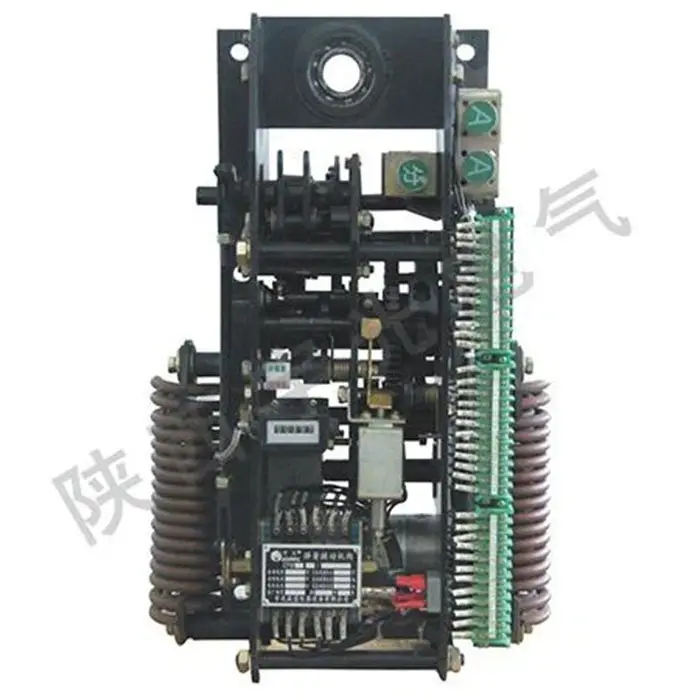
Technical and Quality Implications of Certified HV Operating Mechanisms
Following the certification rules has a direct effect on how well the equipment works, how much it costs to maintain, and the total cost of ownership over its entire lifecycle. Industry studies show that certified equipment performs much better than non-certified options, especially when it comes to reliability metrics and how often maintenance is done.
Performance Reliability and Operational Benefits
Certified operating mechanisms consistently deliver better performance over long periods of time. Independent testing shows that certified equipment has 35% fewer operational failures than alternatives that aren't certified. This increase in reliability means lower maintenance costs and better system availability for important electrical infrastructure.
Products that are certified have to go through a lot of environmental testing to make sure they work well in situations with extreme temperatures, changes in humidity, and mechanical stress. This thorough testing makes sure that the system will work reliably in a wide range of climates and locations.
Maintenance and Lifecycle Advantages
Manufacturers that have thorough certification programs usually offer more technical support and maintenance information for the HV operating mechanism. When compared to non-certified options, certified suppliers are better at getting spare parts and providing quick technical support. This support infrastructure lowers operational risk and makes sure that equipment will continue to work for a long time.
Better product documentation, such as detailed installation guides, maintenance instructions, and troubleshooting resources, is also linked to quality certifications. This level of documentation quality cuts down on installation time and makes ongoing maintenance easier.
Cost-Benefit Analysis of Certified Equipment
Even though certified equipment might cost more at first, total cost of ownership analysis always shows that it is more cost-effective over the lifecycle of the equipment. Lower failure rates, less maintenance, and longer operational life more than make up for higher initial costs. Industry data shows that certified equipment saves 20 to 30 percent on total costs over 20 years of use.
Navigating Supplier Selection: Certifications as a Decision-Making Benchmark
To choose a good supplier, you need to carefully look at their list of certifications and make sure that the certificates are real by using separate checking methods. Procurement teams need to know the limits of the certification scope and make sure it fits with the needs of each application.
Certification Verification and Authentication
To make sure a certificate is real, you need to directly check with the organization that issued it and look over the certification scope documents. Many certifications have restrictions on certain product models or areas where they are valid, which could affect decisions about what to buy. To make sure that compliance continues throughout the life of the equipment, regular certification renewal schedules must be in sync with project timelines.
Supplier Assessment Framework
Creating standardized criteria for evaluating suppliers makes it possible to evaluate all potential suppliers in the same way. In this framework, there should be criteria for certification, technical performance specifications, assessments of delivery capabilities, and evaluations of after-sales support. The weighting factors for each type of certification should be based on the priorities and level of risk tolerance of the individual projects.
Risk Mitigation Through Certification Requirements
Setting minimum certification requirements lowers the risk of buying something and makes sure that it meets all regulations for as long as it is used. These needs should include managing quality, making sure safety rules are followed, caring for the environment, and making sure technical performance is proven. Making certification requirements clear makes it easier to find qualified suppliers and negotiate contracts.
Yuguang's Commitment to Quality and Certified Excellence
Shaanxi Yuguang Electric specializes in manufacturing high-voltage operating mechanisms that exceed international certification requirements across our complete product portfolio. Our commitment to certification excellence encompasses ISO 9001:2015 quality management, ISO 14001 environmental standards, and ISO 45001 occupational safety protocols. We maintain continuous compliance with IEC 62271 series standards and additional regional certifications including CE marking for European markets.
Our manufacturing facility incorporates aerospace-grade precision technology and dedicated tooling to ensure consistent quality across our 6KV-40.5KV product range. We have developed 39 patented innovations that enhance product performance while maintaining full compliance with international certification requirements. Our integrated modular design approach enables customization for specific application requirements while preserving certification validity.
The comprehensive certification portfolio supports our full-chain service model, encompassing customized research and development, precision manufacturing, professional installation guidance, and ongoing after-sales support for HV operating mechanism. We provide installation guidance, maintenance agreements, spare parts supply, and modification planning services that maintain certification compliance throughout equipment operational life. Our quality management system ensures delivery schedules of 7-15 days for standard products and 30-60 days for customized solutions.
Our certification commitment extends beyond manufacturing to encompass supply chain management, environmental stewardship, and worker safety protocols. This comprehensive approach ensures consistent quality delivery while supporting customer regulatory compliance requirements across diverse industrial applications including power generation, metallurgy, mining, and renewable energy sectors.
Conclusion
Certifications are the basis for choosing a reliable HV operating mechanism supplier because they provide measurable proof of quality, safety, and consistent performance. To make sure that all risks are reduced, the certification process must include quality management systems, electrical safety standards, environmental responsibility protocols, and technical performance validation. When procurement professionals prioritize certified suppliers, they consistently get better operational results, such as lower failure rates, lower maintenance costs, and better compliance with regulations. Investing in certified equipment has big benefits for the total cost of ownership and guarantees reliable performance for long periods of time.
FAQ
What are the most critical certifications to prioritize when selecting an HV operating mechanism supplier?
ISO 9001 quality management and IEC 62271 electrical safety certifications represent the minimum acceptable standards for high-voltage applications. Environmental certification ISO 14001 and occupational safety ISO 45001 provide additional supplier credibility validation. Regional certifications such as CE, UL, or CSA enable market-specific compliance and regulatory acceptance.
How do certifications impact operational safety and reliability of operating mechanisms?
Certified equipment undergoes comprehensive testing validation that ensures consistent performance under diverse operating conditions. Independent studies demonstrate 35% fewer operational failures in certified equipment compared to non-certified alternatives. Certification compliance also validates safety features and protective systems that prevent personnel injury and equipment damage during operational anomalies.
Do certifications affect supplier delivery schedules and after-sales support quality?
Certified manufacturers typically demonstrate superior operational discipline and customer service protocols compared to non-certified suppliers. Quality management certifications require systematic approaches to delivery scheduling and customer communication. Certified suppliers also maintain better technical documentation and spare parts inventory management, resulting in improved after-sales support responsiveness.
Connect with Certified HV Operating Mechanism Experts at Yuguang
Yuguang maintains comprehensive certification portfolios and technical expertise to support your HV operating mechanism procurement requirements. Our certified manufacturing processes ensure reliable delivery schedules while maintaining full compliance with international quality standards. We invite procurement teams to review our certification documentation and discuss customized solutions for your specific application requirements. Contact us at ygvcb@hotmail.com to access detailed product specifications, certification validation documents, technical consultation services and discover how our certified HV operating mechanism manufacturer capabilities can enhance your project success while ensuring regulatory compliance and operational excellence.
References
1. International Electrotechnical Commission. "High-voltage switchgear and controlgear - Part 100: Alternating current circuit-breakers." IEC 62271-100:2021 Standard Documentation, 2021.
2. Institute of Electrical and Electronics Engineers. "IEEE Guide for Application of Power Apparatus Bushings." IEEE Std C57.19.100-2012 Technical Guidelines, 2012.
3. International Organization for Standardization. "Quality management systems - Requirements for regulatory purposes." ISO 13485:2016 Medical Device Standards, 2016.
4. American National Standards Institute. "Standard for Safety of Power-Operated Dispensing Devices and Systems." ANSI/UL 2089-2018 Safety Certification Requirements, 2018.
5. European Committee for Electrotechnical Standardization. "Low-voltage switchgear and controlgear assemblies - Part 2: Power switchgear and controlgear assemblies." EN 61439-2:2011 European Standards, 2011.
6. Canadian Standards Association. "High-voltage test techniques - Part 1: General definitions and test requirements." CSA C68.1-18 Testing Protocols and Certification Requirements, 2018.

Send Inquiry
You may like
