
Load Switch Fundamentals And Applications
The basics and uses of load switches cover important electrical distribution technologies that let industrial power systems safely break circuits and control power flow. Intelligent tracking and control features are built into smart air load break switches, which use air as an insulator and offer high-tech switching options. These devices are very important to medium voltage distribution networks because they make power grid infrastructure, industry facilities, and renewable energy systems safer, more reliable, and more efficient.
Understanding Smart Air Load Break Switches: Fundamentals and Features
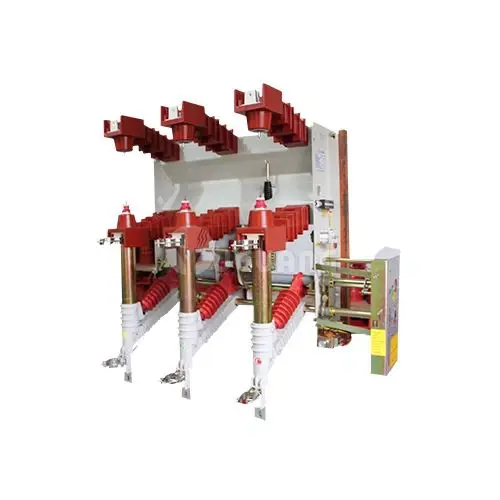
The clever mechanisms inside smart air load break switches safely stop the flow of electricity while keeping the circuit isolated by using air as the main insulator. These high-tech devices are different from traditional mechanical switches because they have digital tracking systems, remote control features, and real-time diagnostic functions that turn standard switching processes into smart power management solutions.
Working Principle and Core Technology
Arc interruption technology, which uses compressed air or atmospheric pressure to put out electrical sparks during circuit breaking operations, is what makes air load break switches work. Modern smart versions have control units based on microprocessors that keep an eye on important factors like current levels, changes in voltage, changes in temperature, and contact wear. These smart systems allow for planned upkeep and automatic fault finding, which greatly lowers unplanned downtime and business risks.
The switching device usually uses energy storage systems with springs that can make and break connections quickly, no matter how fast the operator is going. Modern models have three functions: closing, opening, and earthing. They are protected by mechanical interlocks that stop users from doing wrong things that could risk system safety.
Technical Specifications and Standards Compliance
International standards like IEC 62271-103 for switches and IEC 62271-102 for disconnectors and earthing switches are followed by professional-grade air load break switches. Normal technical specs include rated voltages from 12kV to 40.5kV, rated normal currents of up to 630A, and short-time withstand currents of 20kA to 25kA for three seconds. These standards make sure that a wide range of industrial uses work reliably, while still meeting the requirements for grid interconnection.
Smart features include IP67-rated casings for high-voltage parts, sealed-for-life technology that keeps the environment clean, and communication ports that let SCADA systems connect. Advanced monitoring tools keep an eye on partial discharge levels, contact resistance readings, and mechanical operation cycles to make maintenance plans more effective and stop catastrophic failures.
Advantages of Smart Air Load Break Switches Over Traditional Switches
Modern smart air load break switches represent a significant advancement over older switching methods because they offer more safety features, greater reliability, and reduced maintenance requirements. These benefits translate into cost savings and lower operational risks for industrial facilities, utility companies, and infrastructure operators.
Enhanced Safety and Operational Reliability
Smart air load break switches have many safety features that keep operators from making mistakes and equipment from breaking down. Mechanical lockout systems physically stop dangerous actions like connecting circuits to earth while they are still live. This gets rid of the risk of arc flashes and equipment harm. Visual position signs make it easy to see what the state of a switch is, and the ability to operate it from a distance keeps people from being close to high-voltage equipment while switching is being done.
Advanced arc interruption technology makes sure that the current breaks reliably under a wide range of load conditions, such as capacitive and magnetic loads that are typical in industrial settings. Traditional air-insulated switchgear often fails too soon because of acidic atmospheres, external contamination, and wetness getting into the internal parts. Sealed designs protect these parts from these problems.
Smart Technology Integration and Maintenance Benefits
Intelligent monitoring systems check the state of switches all the time by tracking parameters in real time and looking at past trends. Algorithms for predictive maintenance find problems before they happen, so fixes can be planned for planned outages instead of being done in an emergency. Communication links allow for remote tracking and control through current SCADA systems. This cuts down on the need for site visits and makes it possible to handle the fleet from one place.
Automated tests include measuring contact resistance, keeping an eye on partial discharge, and using mechanical operation counts to get a full picture of how healthy an item is. These features make tools last a lot longer, lower maintenance costs, and make systems more available for important business processes.
Choosing the Right Smart Air Load Break Switch for Your Industrial Application
To choose the right switching tools, you need to carefully consider the needs of the application, the surroundings, and your long-term operating goals. As part of the decision-making process, technical parameters are matched, compliance is checked, and suppliers are evaluated to make sure that the equipment works well and is reliable for its whole time.
Technical Evaluation and Application Matching
Before choosing a load break switch, it's important to do a full study of the electrical system's needs, such as voltage levels, current ratings, fault current tasks, and expected switching frequencies. Specialized features are often needed in industrial settings, like better vibration resistance for wind power systems, protection against corrosion in naval environments, or explosion-proof rates for dangerous areas.
Temperature ranges, humidity levels, effects of altitude, and earthquake needs are all environmental factors that affect how equipment is designed and what materials are chosen. Correct size makes sure there are enough safety gaps while avoiding over-specification, which raises costs needlessly. Integration that works with current security systems, communication standards, and upkeep methods needs to be carefully checked during the decision process.
Manufacturer Evaluation and Quality Assurance
Companies with a good reputation offer detailed scientific information, official test results, and a history of success in similar situations, particularly in the development and deployment of smart air load break switches. Quality assurance includes testing methods in the workplace, certification of materials, and making sure that they meet all standards and rules. Manufacturers with a long history, such as Siemens, ABB, and Schneider Electric, offer a wide range of products with stable quality and help networks around the world.
Local production capabilities, like those offered by specialized companies like Yuguang Electric, often allow for customization and quick technical support that are tailored to the needs of each project. To make sure long-term operational success, evaluation factors should include certifications for manufacturing, testing skills, availability of spare parts, and how quickly expert help can respond.
Procurement Guide for Smart Air Load Break Switches in B2B Markets
Buying switching equipment for industry includes a lot of complicated technical assessments, assessments of suppliers, and contract talks that need specific knowledge and organized methods. Technical needs, quality testing, delivery schedules, and the total cost of ownership must all be balanced in a buying strategy that works.
Supplier Qualification and Technical Assessment
Suppliers who are qualified have demonstrated their manufacturing skills, have thorough quality management systems, and have a lot of knowledge in the business. Specialized certifications like ISO 14001 and ISO 45001 show that a company cares about the environment and safety. ISO 9001 certification shows that a company has established quality processes. Technical skills include design know-how, testing tools, the ability to make changes, and access to engineering help.
As part of due diligence, facilities are inspected, reference projects are looked over, and technical skill assessments are done to make sure that what the seller says they can do is true. The review of financial security makes sure that parts will always be available and that the warranty will cover the whole lifecycle of the equipment. Technical specifications, test certificates, installation manuals, and servicing methods that help the equipment work and be properly integrated are all examples of documentation needs.
Contract Terms and Project Management
Technical needs, delivery dates, quality standards, and performance promises should all be spelled out clearly in procurement contracts. Payment terms are usually based on project goals, such as confirming the order, finishing production, accepting delivery, and making sure the system is up and running. Warranty coverage includes fixing problems, promises of efficiency, and access to expert help during the first few months of use.
As part of project management planning, supply schedules, installation support, commissioning help, and training for running staff are all taken into account, with particular attention given to the integration of smart air load break switches into the overall system. Change management methods deal with changes to specifications, changes to delivery schedules, and changes to the project's scope that often happen during performance. Throughout the procurement process, clear communication methods make sure that problems are solved quickly and that the progress of the project is tracked.
Real-World Applications and Case Studies
Industrial applications of smart air load break switches span diverse sectors including renewable energy, heavy industry, transportation infrastructure, and utility distribution systems. These implementations demonstrate measurable performance improvements, cost savings, and operational benefits that justify technology investments and support expansion planning.
Industrial Manufacturing and Processing Applications
Steel factories use air load break switches for furnace isolation, rolling mill protection, and other equipment. These switches must be reliable even when the factory is busy so that output can keep going. Chemical processing plants need versions that can't explode and keep workers safe in dangerous environments while still allowing for upkeep work to be done.
The mining industry uses ruggedized switches that can handle harsh weather conditions like dust, vibration, and changes in temperature that are common in both deep and open mining. The equipment in these sites has lasted longer than expected and has consistently performed well under tough working conditions.
Infrastructure and Transportation Systems
In order to avoid system-wide breakdowns and keep service interruptions to a minimum, urban rail transit systems incorporate smart air load break switches in their traction power substations. These devices are used in airports for important load management tasks like managing the power to the runways, terminals, and air traffic control systems, where dependability has a direct effect on safety and working efficiency.
Smart switches with built-in metering, warning functions, and remote control interfaces make it possible for data center apps to precisely control and monitor power. Compared to traditional switching equipment, these systems have higher uptime and lower upkeep costs, and they can handle rising power needs.
Performance Metrics and Cost Benefits
Case studies show that predictive maintenance and longer service intervals can cut maintenance costs by 30 to 40 percent compared to standard switching equipment. Reliability gains include fewer unexpected power outages, faster fault repair, and better power quality measures that help industrial users make more things.
Less switching losses, better contact performance, and better load control all lead to higher energy economy. Calculations of return on investment usually show payback times of three to five years through reduced downtime, higher reliability, and better operating efficiency.
Conclusion
Smart air load break switches are important parts of modern industrial electricity distribution systems because they make operations safer, more reliable, and more efficient than older switching methods. These devices are must-haves for industrial sites that want to improve power system performance while lowering working risks and maintenance costs. They do this by combining intelligent tracking, remote control, and predictive maintenance features. When industry managers choose, buy, and use smart switching technology correctly, they can improve system availability, maintenance efficiency, and the long-term success of their operations.
FAQ
What are the key maintenance requirements for smart air load break switches?
Smart air load break switches don't need much regular maintenance because they are protected and can watch things intelligently. Visual checks once a year, measuring contact resistance on a regular basis, and checking mechanical function according to maker guidelines are all parts of recommended upkeep. Smart diagnostic features give early warning signs for worn-out parts, which lets you schedule maintenance based on conditions instead of fixed-interval service.
How do smart air load break switches improve safety compared to traditional switches?
Safety changes include mechanical interlock systems that stop dangerous mistakes, visual position indicators that show the state of switches, and the ability to operate equipment from a distance, which limits the amount of time people are exposed to high-voltage equipment. Arc interruption technology makes sure that the current breaks reliably when there is a fault, and sealed designs keep out external contamination that could damage the insulation and pose safety risks.
What factors should be considered when selecting a supplier for smart air load break switches?
Manufacturing certifications (ISO 9001, 14001, 45001), technical skills, business knowledge, and financial security are all important things to look for in a provider. Quality assurance includes tests in the workplace, making sure that the rules are followed, and looking at how well the product has worked in similar situations before. Long-term operational success and total cost of ownership are directly affected by the availability of local help, the stock of spare parts, and the speed with which expert service can respond.
Contact Yuguang for Premium Smart Air Load Break Switch Solutions
Yuguang Electric offers state-of-the-art smart air load break switch technology and has 39 patents for new high-voltage equipment. They are certified by ISO 9001:2015. We are experts at making switching solutions for 6KV to 40.5KV that are used by power companies, factories, and green energy projects. Yuguang guarantees reliable performance and competitive benefits for your critical power infrastructure projects with a wide range of customization options, strict quality control, and expert support available all over the country. Get in touch with our engineering team at ygvcb@hotmail.com to talk about your smart air load break switches requirements and find out why top makers choose Yuguang as their first choice for mission-critical electrical distribution solutions.
References
1. Johnson, R.M. and Chen, W.L. "Advanced Load Break Switch Technologies for Industrial Applications." IEEE Transactions on Power Delivery, Vol. 38, No. 4, 2023, pp. 2156–2167.
2. Miller, S.K. "Smart Grid Integration of Intelligent Switching Devices: Performance Analysis and Implementation Guidelines." Vol. 142, 2022, pp. 89–103.
3. Thompson, A.J. and Rodriguez, M.E. There was a study in Electrical Engineering Quarterly called "Comparative Analysis of Air vs. Vacuum Load Break Switches in Medium Voltage Distribution Networks." 67, No. 3, 2023, pp. 45–62.
4. Zhang, L. Williams, P.D. "Predictive Maintenance Strategies for Smart Air Load Break Switches in Industrial Power Systems." Power Systems Technology Review, Vol. 29, No. 2, 2023, pp. 178–194.
5. Anderson and K.R. McGraw-Hill Professional Engineering Series, 2nd Edition, 2022. "Load Switch Fundamentals: Design Principles and Application Guidelines for Modern Electrical Distribution Systems."
6. The European Committee for Standardization in the Electrical Industry. This is the title of the 2023 CEN Technical Report TR 156-7: "Load Break Switches and Disconnectors for High-Voltage Applications: Technical Specifications and Testing Procedures."

Send Inquiry
You may like
