
OEM High-Voltage Vacuum Circuit Breaker Solutions for Special Applications
For unique uses, an OEM high-voltage vacuum circuit breaker solution matches a medium-voltage breaker to your exact ratings, mounting dimensions, control voltage, environment, and brand. Standard catalog units don't always fit well, are easy to maintain, or arrive on time. These holes are filled before production even starts with a custom OEM approach. Yuguang is a company that was established in 2008 in Baoji, Shaanxi. It makes 6kV–40.5kV vacuum circuit breakers and has 39 patents, ISO 9001:2015 certification, and support from the design stage to after the sale. You can use this guide to list, choose, and arrange things.
Why Special-Application Power Systems Need OEM High-Voltage Vacuum Circuit Breakers?
Where Standard Catalog Breakers Fall Short?
A catalog drawing doesn't always match a special power system. There are a lot of faults, switching takes place a lot, cabinet space is limited, and the air may carry salt, dust, or water. Plus, the breaker has to work with the control circuits and protection relays that are already there. You have to pay for extra work, delays, or a second order when one piece doesn't fit. An OEM high-voltage vacuum circuit breaker, on the other hand, starts with your information, such as the nameplate, documents, rated voltage, and mechanical interface. Specification mistakes usually show up late, when it costs the most to make changes, so I suggest getting all the technical details in sync before production. This guide talks about how to use 6kV to 40.5kV in substations, motor circuits, industrial plants, and systems that use renewable energy.
Construction and Working Principle of a Vacuum Circuit Breaker
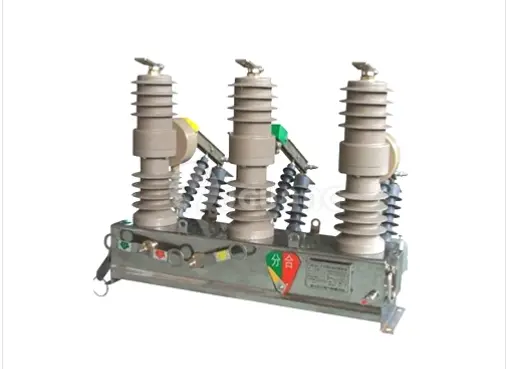
There is a sealed vacuum interrupter, an operating mechanism, an insulated support structure, main terminals, coils, auxiliary contacts, and safety interlocks in a vacuum circuit breaker. When everything is working right, electricity flows through the closed contacts. The contacts separate when there is a fault or a switching command, and the arc dies inside the interrupter when the current goes to zero. Safety features like anti-pumping and trip-free make operation safe. You must also pick between designs that are fixed and designs that can be taken away. It's better to have a fixed unit for small layouts than a retractable unit because the retractable unit can be taken out for maintenance. With that choice, installation space, service access, and the way switchgear is integrated are all changed.
Key Technical Specifications to Define Up Front
The nominal voltage does not choose the breaker by itself. List the following terms: rated voltage, insulation withstand level, continuous current, short-time withstand current, breaking and making capacity, operating sequence, mechanical and electrical endurance, and control power. DC 24V, 48V, 110V, 220V, or an AC source are common control supplies. And standards are important. AC circuit breakers are covered by IEC 62271-100, while IEEE C37.04 is often used in U.S. projects. ANSI ratings use classes like 15 kV and 38 kV, while IEC ratings use 12 kV, 24 kV, and 40.5 kV, so make a map of them early on. Request a datasheet, a compliance matrix, proof of a type test, records of routine tests, and dimensional drawings.
Choosing the Right OEM Vacuum Circuit Breaker for Special Applications
Matching Voltage Class, Load, and Environment
Fit the breaker to the voltage of the system, the load that needs to be protected, the installation area, and the structure of the switchgear. When it comes to industrial feeders and transformer incomers, an 11kV or 12kV unit works best. For distribution networks, substations, and systems that collect energy from renewable sources, 24kV and 33kV models are often used.
After checking the transformer inrush, motor switching frequency, feeder fault duty, capacitor switching, and two-way power flow, make sure that the protections are working together properly. Insulation, enclosure, anti-condensation, corrosion resistance, and UV protection need to be different for indoor and outdoor versions. Your maintenance and outage plans should be used for both fixed and retractable construction. In this case, a custom vacuum circuit breaker is worth its weight in gold because all of these things change the final setup.
Vacuum Versus SF6 and Air Technologies
The arc goes out quickly inside a sealed interrupter when vacuum interruption is used, and it doesn't need much regular maintenance. The IPCC Sixth Assessment Report says that SF6 has a global warming potential 25,200 times that of CO2 over 100 years. This makes gas handling more difficult. A vacuum interrupter is completely sealed and doesn't need to be refilled with gas. Its small size also makes it work with indoor switchgear. VCBs are better for medium-voltage fault interruption in small metal-enclosed equipment, while air circuit breakers work better for lower voltage duty. If a utility standard, project specification, or operating condition calls for them, SF6 or other technologies may still be used. You should look at the voltage range, switching duty, fleet standards, and lifecycle cost before making a choice.
Application-Specific Solutions for Power Distribution and Protection
Different priorities are set for each app of an OEM high-voltage vacuum circuit breaker. Inrush and fault characteristics need to be coordinated with transformer protection. A permanent magnet mechanism can help with motor feeders that need to switch on and off more often and have better electrical endurance. Remote control, SCADA integration, outdoor protection, and the ability to handle changing power flows are all things that renewable energy plants often need. Sites near the coast, in humid areas, at high elevations, or on the move may need extra heating, insulation, sealing, or protection against corrosion.
Yuguang sells vacuum circuit breakers and combined electrical appliances that are designed to work with wind power. Our products are used in projects related to railroads, metallurgy, mining, petrochemicals, communication, and electricity. Finish the application engineering before the final quote so that the unit quoted matches the duty that needs to be done.
How Yuguang Builds Each OEM High-Voltage Vacuum Circuit Breaker?
6kV–40.5kV Coverage and Permanent Magnet Operation
The company Yuguang began in 2008 and is based in Baoji, Shaanxi, where they make vacuum circuit breakers. We do research and development, design, production, installation, and service after the sale for equipment ranging from 6kV to 40.5kV. Our own research and development has led to 39 patents. The way our breakers work is through a permanent magnet and vacuum arc extinguishing. This design is good for heavy use, doesn't need any maintenance, and lasts a long time. For 24kV work, the VXB-24P indoor series has solid embedded poles made by Automatic Pressure Gelation (APG). It is part of the KYN28-24 switchgear and protects the core. On top of these platforms, brand owners can ask for private labeling and custom drawings.
Modular Design, Sealing, and Surface Treatment
Corrosion-resistant alloys and IP67 seals are used to start production, and each material is checked to make sure it meets standards. We use shearing and stamping to make basic structural parts. Then, we use aerospace-grade precision technology and special tools to machine core parts like solid-sealed poles and arc-extinguishing chambers. Next, we use special tools to put together key parts ahead of time and then use a modular design to connect them to the frame and shell. The result is a small body that seals well and lasts a long time. The modular layout lets it be used for a variety of purposes. Lastly, semi-finished goods are coated with ceramic and powder, and then they are cured at a constant temperature, which makes them more resistant to corrosion and aging.
Multi-Round Testing and Export Packaging
Before sending, we check for arc extinction, insulation, and load adaptability. We also make sure that the product meets national high-voltage electrical appliance standards and ISO system requirements for performance stability. In this field, regular checks also include measuring mechanical timing, loop resistance, power frequency withstand voltage, and partial discharge.
You can ask any supplier for these records. Qualified units are put in wooden boxes that are resistant to moisture and shock, and international orders are packed according to international standards. Once everything is checked one last time, we store and ship the goods. Our buyers can look at our documented quality management because we have an ISO 9001:2015 certificate, an ISO 14001 certificate, an ISO 45001 certificate, and the status of a High and New Technology Enterprise.
Evaluating and Selecting an OEM High-Voltage Vacuum Circuit Breaker Manufacturer
How to Evaluate an OEM High-Voltage Vacuum Circuit Breaker Manufacturer
A reliable supplier for an OEM high-voltage vacuum circuit breaker has a wide range of products and follows through on projects. Check the ranges of voltage, current, and breaking capacity. Also look at designs that are fixed, retractable, indoor, and outdoor, as well as motorized mechanisms and control interfaces. Ask the factory if they can change the size of the mounting holes or the way the switchgear is connected.
Check out the incoming inspection, the ability to track the process, regular testing, equipment that has been calibrated, and the written inspection procedures. International buyers should check export packaging, manuals, and documents related to the IEC. Type-test reports should also be checked if needed. Just as important are clear quotes, approved drawings, plans for factory acceptance tests, warranty terms, and the ability to get spare parts. Yuguang adds a certification in Intellectual Property Management Standardization, several national inspection reports, and a number of utility model patents.
Selecting the Best Fit, Not the Lowest Price
The best unit meets needs for safety, compliance, integration, dependability, and lifecycle, while the cheapest unit doesn't always do that. Start with the things that can't be changed: the system voltage, the insulation level, the potential fault current, the continuous load, the switching frequency, the environment, and the mechanical interface. Order the lead time, customization, standardization, and total landed cost in that order.
When you use a supplier evaluation matrix, you can compare and score things like technical compliance, test documents, manufacturing capacity, delivery performance, export experience, warranty, and support. These things may have different weights for procurement teams, engineers, distributors, and EPC contractors, but everyone should look at the whole project risk. Brand owners should protect intellectual property and make sure that samples are the same as production samples.
Why a Direct OEM Partner Pays Off?
Working directly with an OEM manufacturer speeds up technical conversations, gives you more ways to customize, and gives you control over documents and interfaces. Yuguang does R&D, production, installation, and after-sales service for both OEM and ODM clients. This means you only have to deal with one team instead of several vendors. We have experience with projects in the United States and can provide cross-border service for customers in other countries. You should send in early single-line diagrams, equipment schedules, interface drawings, and control requirements. You should also ask for a compliance matrix and a technical deviation list. In the first meeting, brand owners can ask for stricter NDA terms. A steady partner helps with standardization and planning for spare parts when there are a lot of orders.
OEM Procurement, Maintenance, and Lifecycle Support
From Technical Specification to Delivery
A structured process makes it possible to plan for costs and times for an OEM high-voltage vacuum circuit breaker. In your question, you should include information about voltage, frequency, current, fault duty, installation type (fixed or removable), control power, dimensions, standards, quantity, destination, schedule, and fault duty. When you look over the quotes, make sure you understand the details of the accessories, test documents, packaging, customization fees, deviations, warranty, and delivery terms.
The approved drawings should show the main connections, the general layout, the control schematic, the mounting interface, the nameplate, and the brand. You can test a design before making a lot of changes because our minimum order is just one unit or set. It takes 7–15 days to ship standard items, and 30–60 days to ship custom items. Before shipping, you should do routine testing, witness testing if you want to, document review, and serial number traceability.
Maintenance, Testing, and Lifecycle Management
What's meant by "low maintenance" is not "no maintenance." Visual checks, cleaning the insulation, inspecting the terminals and wiring, making sure the interlocks and position are correct, measuring the contact resistance, testing the insulation resistance, and analyzing the opening and closing time are all part of the plan. Motorized breakers need to have their charging motors, limit switches, remote controls, extra contacts, and control batteries checked as well.
Watch out for the wrong control voltage, loose connections, water, racks that aren't lined up right, and spare parts that aren't right. According to NFPA 70B, maintaining electrical equipment is like following a set of rules, so make sure you write down every inspection. Following the manufacturer's instructions increases the service life, lowers the cost of ownership, and cuts down on unplanned downtime.
Installation Guidance and After-Sales Support
We help with every order after it ships. As part of our after-sales service, we offer free modification plans, maintenance agreements, installation help, and spare parts. Yuguang also fixes electrical equipment, comes up with free oil-free transformation plans, works on those projects, processes mechanical parts, and makes special trucks for maintenance and assembly work, like fuse trucks and arrester trucks. Customers from other countries can get products and technical support across borders. This full-lifecycle support takes care of issues like incompatibility, slow delivery, and hard maintenance all in one step.
Conclusion
Special-use power systems need breakers that are right for their voltage class, fault duty, environment, and switchgear. If buyers define ratings, interfaces, and standards early on, they can get an OEM high-voltage vacuum circuit breaker that meets those needs. Vacuum interruption puts out the arc quickly in a sealed interrupter that needs little regular maintenance. It also avoids the problems that come with handling SF6, a gas that is 25,200 times more likely to cause climate change than CO2. Instead of just price, you should look at the type of load, installation conditions, test records, certifications, delivery terms, and total landed cost before making your choice. Integration errors are less likely to happen with a structured procurement path that goes from full inquiry data to drawing approval and regular testing. Planned maintenance also extends the life of the service.
FAQ
Q1: What Is an OEM High-Voltage Vacuum Circuit Breaker?
A: It is a medium-voltage vacuum breaker that is made according to the buyer's specifications for ratings, mounting holes, control voltage, and brand name. The buyer's drawings and nameplates are used to guide production, so the unit fits with the existing switchgear and has the brand's name on it.
Q2: Which Voltage Classes Does Yuguang Cover?
A: Yuguang is in charge of equipment from 6kV to 40.5kV, which includes 11kV, 12kV, 24kV, and 33kV uses. Our permanent magnet mechanism can be used a lot of times without any problems. We will make sure the match is correct after you tell us your voltage class and fault level.
Q3: What Are the MOQ and Lead Times?
A: The smallest order is one unit or set, so you can buy in small amounts or make a lot of changes at once. Customized items take 30 to 60 days, while standard items take 7 to 15 days. How fast drawings are approved affects how customized schedules work.
Q4: What Information Do I Need for a Quotation?
A: Send the installation country, system voltage, frequency, rated current, short-circuit breaking capacity, whether the installation will be indoors or outdoors, whether the preference is for a fixed voltage or an adjustable voltage, the control voltage, the motorization needs, switchgear drawings, the quantity, the delivery target, and the branding needs.
Request an OEM High-Voltage Vacuum Circuit Breaker Consultation from Yuguang
Yuguang makes OEM high-voltage vacuum circuit breakers. They have 39 patents, can cover voltages from 6kV to 40.5kV, and have a minimum order quantity of one unit. You can email ygvcb@hotmail.com with your voltage class, fault level, installation environment, and branding needs. Our engineers will check to see if they are compatible and get back to you with a technical assessment and quote.
References
1. IEC 62271-100: High-voltage switchgear and controlgear – Part 100: Alternating-current circuit-breakers, 2021
2. IEEE C37.04: IEEE Standard for Ratings and Requirements for AC High-Voltage Circuit Breakers with Rated Maximum Voltage Above 1000 V, 2018
3. IEC 62271-200: High-voltage switchgear and controlgear – Part 200: AC metal-enclosed switchgear and controlgear for rated voltages above 1 kV and up to and including 52 kV, 2021
4. NFPA 70B: Standard for Electrical Equipment Maintenance, 2023
5. IPCC Sixth Assessment Report, Climate Change 2021: The Physical Science Basis, 2021
6. The Vacuum Interrupter: Theory, Design, and Application (Paul G. Slade, CRC Press), 2008

Send Inquiry
You may like
