
Short Circuit Protection Using Vacuum Breakers
Vacuum breakers are an important safety feature for modern electrical systems that protect against short circuits. A vacuum circuit breaker uses the higher dielectric strength of vacuum to quickly and effectively put out electrical arcs when there is a fault. These high-tech devices stop fault currents by separating contacts in a vacuum chamber that is sealed off. This gets rid of the arc because there are no ionizing particles in the chamber. This technology is reliable in industrial and commercial settings to protect against short circuits, equipment damage, and possible safety risks.
Understanding Vacuum Circuit Breakers and Their Role in Short Circuit Protection
In a vacuum environment, vacuum circuit breakers work by putting out arcs, which makes them better at protecting electrical systems from short circuit faults. The basic mechanism involves contact separation in sealed vacuum interrupters. Since there are no air molecules there, there is no chance of an arc forming, and the current stops quickly.
Core Operating Principles and Construction
The vacuum interrupter is the most important part of these safety devices. It has both fixed and movable contacts that are sealed inside a ceramic or glass envelope. When there is a short circuit, the mechanism quickly separates these contacts, making a space where the electrical arc can form for a short time before being put out by the vacuum. This process usually happens in milliseconds, which is a lot faster than other options that use air or oil.
Modern vacuum breakers have permanent magnet operating systems that make them more reliable and lower the need for maintenance. These mechanisms give precise control over the contacts and don't need hydraulic or pneumatic systems, which makes them perfect for situations that happen a lot in industrial settings.
Advanced Arc Extinction Technology
The vacuum environment has great dielectric recovery properties, which let the circuit breaker handle high transient recovery voltages right after the current stops. This feature is very important for keeping sensitive equipment safe from the voltage spikes that often happen after a short circuit.
Contact materials that are specially made, usually copper-chromium alloys, don't weld and keep working well for the whole life of the device. These materials are precisely processed at an aerospace level to make sure they have the best contact geometry and surface finish. This helps with reliable arc extinction and longer service intervals.
Comparing Vacuum Circuit Breakers with Other Breaker Technologies
Knowing how vacuum technology is better than other circuit protection methods helps procurement professionals make smart choices based on the needs of the application and the limits of the operation.
Environmental and Performance Advantages
Vacuum breakers get rid of the environmental problems that come with alternatives that use SF6 gas, which has strong greenhouse gases that are subject to stricter rules all the time. Unlike oil-filled breakers, vacuum technology doesn't need to be maintained with dielectric fluid and doesn't use insulating materials that can catch fire.
Because vacuum interrupters are small, they can be installed in smaller spaces than air-blast or bulk oil breakers. This saves money on infrastructure costs and installation space. This ability to make the best use of space is especially useful for retrofitting and urban substations, where space is expensive.
Operational Reliability and Lifecycle Costs
In harsh environments, vacuum breakers work better than other types of breakers because they can keep working at the same level of performance across a wide range of temperatures. The sealed vacuum environment keeps moisture, dust, and corrosive atmospheres from getting into the internal parts, which can happen with other breaker technologies.
Quality vacuum breakers usually don't need to be serviced for 15 to 20 years under normal operating conditions. This means that they have much lower lifecycle costs than alternatives that need to be serviced more often. Since there are no consumable dielectric fluids or gases, there are no ongoing costs or environmental concerns for disposal.
Technical Performance Characteristics
Modern vacuum circuit breakers are very good at stopping current in the 6KV to 40.5KV voltage range. They can handle fault currents of up to 63kA with great consistency. Total clearing times for the rapid contact separation mechanism are less than 3 cycles, which limits energy loss and stress on protected equipment.
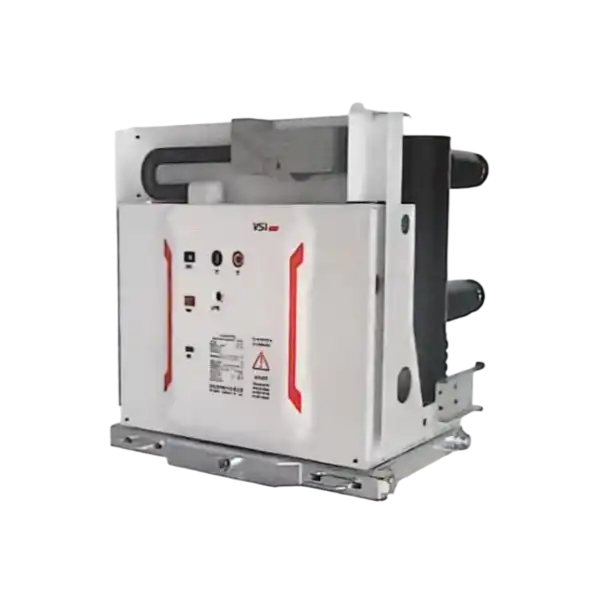
Maintenance and Troubleshooting of Vacuum Circuit Breakers to Ensure Reliable Short Circuit Protection
Effective maintenance plans make vacuum circuit breakers work better and last longer, and they also cut down on sudden failures that could hurt the reliability of the system.
Preventive Maintenance Best Practices
As part of regular inspections, external parts should be looked at visually, the functionality of the control circuit should be checked, and contact resistance should be measured to find early signs of wear and tear. These checks are usually done once a year or as suggested by the manufacturer based on the number of cycles and the environment.
Contact resistance measurements tell you a lot about the condition of a vacuum interrupter. Gradual increases show normal contact wear, while sudden changes indicate possible problems that need to be looked into. By plotting these measurements over time, maintenance teams can figure out what parts will need to be replaced and when to do the work during planned outages.
Diagnostic Techniques and Troubleshooting Methods
Advanced diagnostic tools let you check the condition of an item without taking it apart, so the integrity of the vacuum can be maintained while important performance data is collected. Testing for partial discharge can show when insulation is breaking down, and measuring contact travel can make sure that the mechanism works properly.
Keeping an eye on the temperature during operation can help find strange heating patterns that could mean there are problems with the contacts or connections. Infrared thermography is a non-invasive way to check for problems, which lets maintenance teams find problems before they become major.
Replacement Indicators and Lifecycle Management
Depending on the severity of the application and the fault duty experienced, vacuum interrupters usually need to be replaced every 10,000 to 30,000 operations. Contact erosion happens slowly, and resistance measurements and monitoring of contact travel can help you plan ahead.
Planning replacements to happen during planned maintenance breaks reduces the impact on the system and lets full testing be done to make sure proper installation and performance. Keeping enough spare parts on hand makes sure that you can respond quickly when unexpected problems happen.
Procurement Guide for Vacuum Circuit Breakers in B2B Context
To get the best value and performance from vacuum circuit breakers, you need to carefully consider the technical specifications, the supplier's abilities, and the need for long-term support.
Technical Specification Evaluation
Voltage ratings must exactly match what the system needs, taking into account both normal operating voltages and short-term overvoltage situations that can happen when the system isn't working right. When choosing breaking capacity, it's important to think about how much fault current is expected to flow, along with enough safety margins to allow for future system growth.
When switching operations happen a lot, like when controlling a capacitor bank or starting a motor, mechanical endurance ratings become very important. The environmental ratings need to be compatible with the installation conditions, such as extreme temperatures, altitude, pollution levels, and, if needed, seismic needs.
Supplier Assessment and Qualification
When looking at possible suppliers, you need to look at their manufacturing skills, quality management systems, and technical support infrastructure. ISO 9001 certification is the basic level of quality assurance. Other certifications, such as ISO 14001 and ISO 45001, show that the management system is mature in all areas.
Patents and research skills show that a company is a leader in its field and has the potential to keep coming up with new ideas. Suppliers with a lot of patents, especially in the areas of vacuum interrupter technology and how they work, usually have products that are more advanced and reliable.
Commercial Considerations and Risk Management
Delivery schedules need to take project timelines into account, taking into account both standard products and custom solutions that may need more time to be made. When it comes to smaller installations or pilot projects, minimum order quantities can change how procurement strategies are used.
Support after the sale is very important for long-term success. This includes technical support, having spare parts on hand, and being able to do field service. Value propositions are better when suppliers offer full support packages that include installation help and training in maintenance.
Company Introduction and Product Portfolio
Shaanxi Yuguang Electric Co., Ltd. is one of the biggest companies that makes high-voltage electrical equipment. They focus on making vacuum circuit breakers and other safety devices. Our company was founded in 2008 in Baoji, Shaanxi, which is known as China's vacuum circuit breaker production hub. We do research and development, manufacturing, installation, and full after-sales support.
Manufacturing Excellence and Innovation
Our advanced production facilities use aerospace-grade precision technology to make important parts like solid-sealed poles and arc-extinguishing chambers. The manufacturing process starts with carefully choosing the raw materials. Corrosion-resistant alloys and IP67-rated seals are used to make sure that the products will work reliably for a long time in harsh environments.
Using modular assembly techniques lets you set up things in a variety of ways to meet the needs of different applications while keeping quality standards high. Surface treatment methods, such as ceramic coating and powder coating that cures at a controlled temperature, make things less likely to rust and make them last longer than the average for the industry.
Comprehensive Product Range and Capabilities
Our range of products covers the whole voltage range from 6KV to 40.5KV and has breaking capacities of up to 63kA, meeting the needs of power generation, transmission, distribution, and industrial uses. Specialized products include combined electrical equipment designed for wind power and custom solutions for harsh environmental conditions.
The integrated modular design philosophy leads to small sizes with better sealing properties, which makes installation possible in places with limited space while still delivering full performance. The permanent magnet operating mechanisms don't need to be maintained and have a mechanical life of more than 30,000 operations.
Quality Assurance and Certifications
We have many certifications that show our dedication to quality, such as ISO 9001:2015 for quality management, ISO 14001 for environmental management, and ISO 45001 for health and safety at work. Being named a "High and New Technology Enterprise" shows that we are a leader in innovation and technology.
We keep improving vacuum circuit breaker technology to meet the changing needs of the industry. Our 39 utility model patents protect our technological innovations. To make sure that strict performance and safety standards are met, national inspection reports and official qualifications are used.
Conclusion
According to their performance, environmental friendliness, and long life, vacuum circuit breakers are the best way to protect modern electrical systems from short circuits. Rapid arc extinction, low maintenance needs, and small size make them perfect for a wide range of industrial uses. Expertly examining technical requirements, supplier abilities, and long-term support needs is necessary for successful procurement. With more complicated electrical systems and higher expectations for reliability, vacuum breaker technology offers the strong defense needed to protect important infrastructure investments.
FAQ
What advantages do vacuum circuit breakers offer over SF6 alternatives?
Vacuum circuit breakers eliminate environmental concerns associated with SF6 gas, which has a global warming potential 23,900 times greater than CO2. They require no gas handling or monitoring systems, reducing operational complexity and ongoing costs while providing equivalent or superior interrupting performance.
How often do vacuum circuit breakers require maintenance?
Quality vacuum circuit breakers typically operate 15-20 years without major maintenance under normal conditions. Routine inspections should occur annually, including contact resistance measurements and mechanical operation verification, but extensive overhauls are rarely necessary within the design life.
Can vacuum breakers handle frequent switching operations?
Modern vacuum circuit breakers excel in frequent operation applications, with mechanical endurance ratings often exceeding 30,000 operations. The permanent magnet operating mechanism provides consistent performance without degradation, making them ideal for capacitor bank switching and motor control duties.
Contact Yuguang for Premium Vacuum Circuit Breaker Solutions
Yuguang Electric delivers cutting-edge vacuum circuit breaker technology backed by 39 patents and comprehensive certifications. Our experienced engineering team provides customized solutions for demanding applications, ensuring optimal protection and reliability. As a trusted vacuum circuit breaker manufacturer, we offer complete project support from design through commissioning, with rapid delivery of standard products within 7-15 days. Contact us at ygvcb@hotmail.com to discuss your specific requirements and receive detailed technical proposals tailored to your application needs.
References
1. IEEE Standard C37.04-2018, "IEEE Standard for Ratings and Requirements for AC High-Voltage Circuit Breakers with Rated Voltages Above 1000V"
2. IEC 62271-100:2021, "High-voltage switchgear and controlgear - Part 100: Alternating current circuit-breakers"
3. Slade, Paul G., "The Vacuum Interrupter: Theory, Design, and Application," CRC Press, 2nd Edition
4. Greenwood, Allan, "Vacuum Switchgear," Institution of Engineering and Technology Power and Energy Series
5. CIGRE Working Group A3.27, "Vacuum Circuit Breakers: Condition Assessment and Remaining Life Management"
6. National Institute of Standards and Technology Special Publication 1800-32, "High-Voltage Circuit Breaker Testing and Maintenance Guidelines"

Send Inquiry
You may like
