
Switchgear Solutions for Onshore Wind Farms
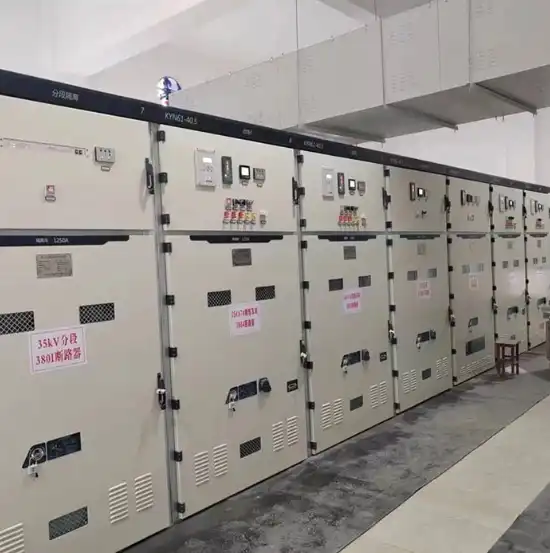
Wind power switchgear is the most important part of onshore wind farms because it makes sure that the electricity made by wind turbines is safely distributed and controlled. These complex electrical systems handle connections with high voltage, keep equipment safe from electrical problems, and make sure that power flows smoothly to the grid. These days, modern wind farms need special switchgear that can work in harsh outdoor conditions and still meet high standards of safety and reliability. Because wind energy systems are so complicated, they need equipment that is both highly protective and well-built. Choosing the right switchgear is therefore very important for both short-term and long-term profits.
Introducing Wind Power Switchgear in Onshore Wind Farms
Understanding the complicated role of electrical distribution equipment is a key part of any successful wind energy installation. Wind power switchgear is a broad term for a lot of different electrical parts that are used to manage, safeguard, and separate electrical circuits in wind farm infrastructure.
Core Components and Operational Principles
The electrical systems in wind farms are made up of many important parts that all work together to control the flow of power. As the main safety measure, circuit breakers stop the flow of electricity when there is a problem so that no damage is done to the equipment. Disconnectors make it possible to clearly separate maintenance tasks, which keeps technicians safe during service operations. Protection relays keep an eye on electrical parameters all the time and take action to keep things safe when something goes wrong.
The conditions for running wind farm switchgear are different from those for running other types of power plants. To keep its precise electrical performance, equipment has to be able to handle changes in temperature, exposure to moisture, and vibrations from nearby turbines. Advanced insulation systems and weatherproof enclosures keep sensitive parts safe from damage from the outside world.
Technology Classifications and Applications
Different types of switchgear are used in modern wind farms based on the voltage needs and the weather. Vacuum circuit breakers work great in medium-voltage situations because they don't need to be maintained and are very good at putting out arcs. For installations with limited space, gas-insulated switchgear is a small option. For standard uses, air-insulated systems are a cost-effective choice.
High-voltage switchgear usually works at levels between 6kV and 40.5kV, so it can work with a variety of turbine configurations and connect to the grid. Power from individual turbines is collected by medium-voltage systems, and sent to utility networks by high-voltage equipment.
Impact on System Performance and Reliability
The design and quality of wind power switchgear have a direct effect on how well the farm does overall. When you specify the right equipment, you can keep power losses to a minimum during transmission and avoid unplanned downtime with reliable protection mechanisms. Advanced monitoring tools allow for planned maintenance plans that make equipment last longer and work more efficiently.
Recent industry data shows that about 15% of wind farm downtime is caused by problems with the switchgear. This shows how important it is to choose tried-and-true solutions from well-known companies with thorough testing programs.
Selecting the Right Switchgear for Your Onshore Wind Farm
Before buying electrical equipment for a wind farm, you need to carefully consider the technical specs, the operating conditions, and the long-term needs of the farm. The selection process involves finding the best balance between performance and cost, while also making sure that all safety standards are met.
Technical Specification Analysis
When choosing switchgear solutions, voltage level compatibility is the most important technical factor. The equipment has to be able to work with the chosen wind turbines' specific output characteristics while also meeting the requirements for connecting to the grid. When figuring out current capacity, plans for future growth and peak generation should be taken into account.
When it comes to onshore installations that are exposed to extreme weather, environmental durability requirements become even more important. Protection ratings of IP65 or higher make sure that the seal is good enough to keep out dust and moisture. Ratings for temperatures must take into account the local climate and include enough safety margins.
Compliance and Safety Standards
International safety standards are very important for choosing equipment and putting it in place. The IEC 62271 series of standards spells out how high-voltage switchgear should work, and the IEEE C37 standards cover protection and control. Following these standards makes sure that equipment works well and speeds up the process of getting regulatory approval.
If the installation is in a certain region, regional certification requirements may add more requirements. Installations in the United States must have a UL listing, while a CE mark means that the product meets European standards. Knowing the standards that apply early on in the procurement process keeps delays and changes to specifications from happening, which costs a lot of money.
Manufacturer Evaluation and Selection Criteria
There are a number of well-known companies in the wind energy switchgear market that have a track record of success in renewable energy applications. ABB has a wide range of solutions, including advanced digital monitoring tools and large service networks. Siemens makes strong equipment that is designed to work in wind farms and is highly reliable and lasts a long time.
General Electric has decades of experience making electricity, which it uses to offer integrated solutions that improve the performance of turbines. Schneider Electric focuses on modular designs that make it easier to install and fix things. Eaton focuses on finding low-cost solutions that don't sacrifice important safety and performance features.
Manufacturers should be judged on more than just their products' abilities. They should also be judged on things like their technical support, spare parts inventory, and warranty terms. For remote installations that need quick responses, having a local service presence is especially helpful.
Installation, Maintenance, and Troubleshooting Best Practices
To get the most out of your switchgear's performance and lifespan, you need to follow tried-and-true installation and maintenance procedures. Installing things correctly keeps them from breaking down too soon, and structured maintenance programs find problems before they affect operations.
Installation and Commissioning Procedures
A professional installation starts with preparing the site carefully and checking the equipment carefully when it arrives. Care must be taken when moving and positioning switchgear parts so that they don't get damaged. The requirements for the foundation must take into account the weight of the equipment and provide good grounding connections.
Comprehensive testing protocols are used during commissioning procedures to make sure that the electrical connections are correct and that the protection system works. Measuring insulation resistance makes sure that parts are whole, and testing protection relays makes sure that they work well with equipment upstream and downstream. Keeping records of all test results gives maintenance workers a starting point for future work.
Preventive Maintenance Strategies
Setting up regular inspection times helps find wear patterns and possible failure modes before they make the system less reliable. Wind power switchgear in particular needs to have its connections tightened, its insulation in good condition, and its enclosure in good shape. Thermal imaging scans find hotspots that could mean problems are starting to happen.
To keep working right, mechanical parts like operating mechanisms need to be oiled and adjusted from time to time. Contact wear monitoring helps figure out how often circuit breaker parts should be replaced. Environmental monitoring systems can keep an eye on things that might make equipment break down faster.
Diagnostic Tools and Troubleshooting Protocols
Modern diagnostic tools use advanced measurement methods to accurately pinpoint problems that are getting worse. Testing for partial discharge shows that the insulation is breaking down before it fails completely. Power quality analyzers find harmonic distortion and other electrical problems that could put stress on parts of the equipment.
Protocols for troubleshooting should stress safety measures while allowing for quick problem resolution. Lockout/tagout procedures keep technicians safe while they are investigating and fixing things. Plans for what to do in an emergency should include ways to get technical help and spare parts.
Enhancing Onshore Wind Farm Performance through Optimized Switchgear Solutions
Optimizing wind farms depends more and more on new switchgear technologies that make monitoring easier and make it easier to connect to modern control systems. These new technologies make grid management and maintenance plans more responsive.
Advanced Monitoring and Control Integration
Intelligent switchgear systems have advanced monitoring features that let you see electrical parameters and equipment condition in real time. Digital communication protocols make it possible for supervisory control and data acquisition systems to work together without any problems. Remote monitoring cuts down on the need for staff on-site and lets problems be fixed quickly as they arise.
Predictive analytics use data about past performance to find patterns that show up before equipment breaks down. Machine learning algorithms can look through huge amounts of operational data to find the best maintenance schedules and guess when parts will need to be replaced. These features cut down on unplanned downtime by a large amount while also lowering the cost of maintenance.
Grid Compatibility and Power Quality Management
For modern grid interconnection to work, wind farm electrical systems need to be able to handle complex power quality management tasks. To make sure they meet utility interconnection standards, advanced switchgear solutions include harmonic filtering and reactive power compensation. Voltage regulation helps keep the grid stable when the amount of power being generated changes.
For grid support functions like fault ride-through, the control systems for turbines and the equipment that protects the electricity must work together. When switchgear is set up correctly, wind farms can provide useful grid services while keeping equipment safe during disturbance events.
Future Technology Trends and Innovations
The wind energy industry is still changing, with more digitalization and automation happening. The newest designs for switchgear include artificial intelligence features that let them make decisions on their own in both normal and emergency situations. Better cybersecurity features protect critical infrastructure from threats that are getting smarter all the time.
Sustainability concerns drive the creation of switchgear technologies that are better for the environment. Alternatives to SF6-based insulation lower greenhouse gas emissions while keeping the electrical performance high. Circular economy ideas are supported by materials that can be recycled and equipment that lasts longer.
Yuguang's Wind Power Switchgear Solutions
Since our company was founded in 2008, Shaanxi Yuguang Electric Co., Ltd. has become one of the top providers of specialized electrical solutions for onshore wind farms. Our all-around approach takes into account the specific problems that wind energy projects face by using new ideas for design, strict manufacturing methods, and dedicated customer service.
Our Technical Expertise and Product Portfolio
Our engineering team has a lot of experience with wind power applications because they have worked with big renewable energy developers for years. We are experts at providing switchgear solutions for all voltage levels, from 6kV to 40.5kV. These solutions can be used for both transmission and collection systems for projects of all sizes.
Our 39 patents show that we are dedicated to coming up with new ideas and improving technology in the design of electrical equipment, especially wind power switchgear. These intellectual property assets show how well we understand the needs of wind farms and how well we can come up with solutions to problems that happen in the real world. Because we do research and development, we can change standard products to fit the needs of a specific project while keeping their proven dependability.
Quality control is still the most important part of our manufacturing processes. Along with being recognized as a "High and New Technology Enterprise," our ISO 9001:2015 certification shows that we are dedicated to doing the best job possible. For important parts like solid-sealed poles and arc-extinguishing chambers, modern production lines use aerospace-grade precision technology. This makes sure that the accuracy and sealing performance are the best possible.
Manufacturing Excellence and Quality Control
In Baoji, Shaanxi, where our factory is located, we make vacuum circuit breakers and other electrical equipment that goes with them. Integrated manufacturing starts with carefully choosing corrosion-resistant alloys and IP67-rated seals. Next, strict inspection steps make sure the quality of the materials and the accuracy of the measurements.
Specialized tools are used in the modular assembly process to make sure that all the parts are lined up correctly and that the seals work well. Key parts go through pre-assembly steps before they are put together with frames and enclosures. This makes it possible to make small designs that work well while taking up little space.
Ceramic coating and powder coating are two ways to treat the surface of something. They are applied and then cured at a controlled temperature. These treatments make things less likely to rust and make them last longer, which is especially important for things that are outside and will be exposed to harsh weather. Multi-round testing procedures make sure that the functional performance meets all operating parameters, such as the ability to put out arcs, the strength of the insulation, and the ability to adapt to different loads.
Comprehensive Service and Support Capabilities
Our service philosophy goes far beyond just delivering products; it includes full support for the whole project lifecycle. Installation instructions make sure that the equipment is set up correctly, and technical support helps the system work at its best for as long as it is in use. Maintenance agreements set regular service times for equipment that makes it more reliable and extends its useful life.
Managing the inventory of spare parts makes sure that replacements can be made quickly, and free modification plans help equipment adapt to changing operational needs. Our cross-border service capabilities help international projects with technical know-how and quick customer service, no matter where the installation is located.
Conclusion
Choosing the right wind power switchgear is a big decision that will affect both the success of the project right away and its long-term performance. Because onshore wind farms have special needs, they need electrical solutions that are both very reliable and long-lasting in harsh environments. By knowing about important technical issues, legal requirements, and manufacturers' strengths and weaknesses, you can make smart purchasing choices that improve the results of your project. As time goes on, new technologies keep making wind farm electrical systems more useful and better able to work with today's grid needs. Working with skilled manufacturers who offer full support throughout the whole project lifecycle makes sure that the equipment works at its best and reduces operational risks.
FAQ
What is the typical lifespan of wind power switchgear components?
Modern wind power switchgear components are designed for extended service life, typically ranging from 20 to 30 years with proper maintenance. Vacuum circuit breakers can perform thousands of switching operations before requiring major overhaul, while protection relays and control systems may need periodic updates to maintain optimal functionality. Environmental factors and operational conditions significantly influence actual service life, making regular maintenance and monitoring essential for maximizing equipment longevity.
How do I choose between vacuum and gas-insulated switchgear technologies?
The choice between vacuum and gas-insulated technologies depends on specific project requirements including voltage levels, space constraints, and environmental conditions. Vacuum switchgear excels in medium-voltage applications up to 40.5kV, offering maintenance-free operation and excellent environmental performance. Gas-insulated systems provide compact solutions for high-voltage applications where space is limited, though they may require specialized maintenance expertise. Consider factors such as altitude, temperature extremes, and maintenance capabilities when making technology selections.
What safety certifications should wind farm switchgear meet?
Wind farm switchgear must comply with relevant international safety standards including IEC 62271 for high-voltage switchgear and IEC 61936 for electrical installations. Regional certifications such as UL listing in North America or CE marking in Europe may be required depending on installation location. Additional standards such as IEEE C37 series provide guidance on protection and control aspects. Ensure selected equipment carries appropriate certifications for your specific installation requirements and local regulatory environment.
How can I minimize switchgear maintenance requirements?
Minimizing maintenance requirements begins with selecting proven, reliable equipment designed specifically for wind power applications. Vacuum circuit breaker technology eliminates the need for regular contact maintenance while sealed enclosures protect components from environmental contamination. Implementing condition monitoring systems enables predictive maintenance strategies that address developing issues before they require emergency repairs. Regular inspection schedules and proper spare parts inventory management further reduce maintenance-related downtime.
Partner with Yuguang for Reliable Wind Power Switchgear Solutions
Yuguang delivers proven wind power switchgear solutions backed by 39 patents and comprehensive technical expertise spanning the complete 6kV to 40.5kV voltage range. Our scenario-specific customization capabilities ensure optimal performance in harsh wind farm environments while our integrated service approach supports projects from initial design through long-term operation. Contact our team at ygvcb@hotmail.com to discuss your wind power switchgearsupplier requirements and discover how our manufacturing excellence can enhance your project success.
References
1. International Electrotechnical Commission. "High-voltage switchgear and controlgear - Part 100: Alternating current circuit-breakers." IEC 62271-100:2021.
2. Institute of Electrical and Electronics Engineers. "IEEE Standard for Electrical Power System Device Function Numbers, Acronyms, and Contact Designations." IEEE C37.2-2008.
3. Global Wind Energy Council. "Wind Power Technology Roadmap: Looking to 2050." Global Wind Energy Council Technical Report, 2022.
4. American Wind Energy Association. "Wind Power Engineering & Development: Electrical Systems Best Practices." AWEA Technical Guidelines, 2021.
5. Renewable Energy World Magazine. "Switchgear Reliability in Wind Power Applications: Performance Analysis and Optimization Strategies." Technical Analysis Report, 2023.
6. Wind Power Engineering & Development. "Maintenance Strategies for Wind Farm Electrical Systems: Reducing Downtime and Operational Costs." Industry White Paper, 2022.

Send Inquiry
You may like
