
Switchgear Strategies for Reliable Mining Power Infrastructure
Mining operations demand robust electrical infrastructure capable of withstanding extreme conditions while maintaining consistent power delivery. Mining switchgear serves as the cornerstone of reliable power distribution systems, ensuring operational continuity in challenging environments. Modern mining facilities require sophisticated electrical control systems that can handle high-voltage applications, resist environmental hazards, and minimize maintenance requirements. Advanced switchgear solutions incorporating vacuum circuit breakers, permanent magnet mechanisms, and modular designs provide the foundation for safe, efficient, and long-lasting power infrastructure in mining applications.
Understanding Switchgear and Its Role in Mining Power Systems
The Backbone of Mining Electrical Infrastructure
Switchgear serves as the core nervous system of the mining power distribution system. It is responsible for coordinating the control, protection, and isolation of electrical equipment across the mining operations. The uninterrupted flow of electricity is ensured by this essential infrastructure, which also protects persons and equipment from any electrical malfunctions that may occur. In mining operations, switchgear must be able to function dependably in situations that would provide a challenge to traditional electrical systems. These factors include dust, dampness, temperature extremes, and mechanical vibrations.
The basic working principles of switchgear concentrate around three core purposes: switching operations for normal load situations, protection for fault scenarios, and isolation for maintenance activities. These key functions are described in more detail below. When used in mining environments, where the breakdown of equipment may result in large production losses and safety hazards, these concepts become even more important when applied.
Key Switchgear Technologies for Mining Applications
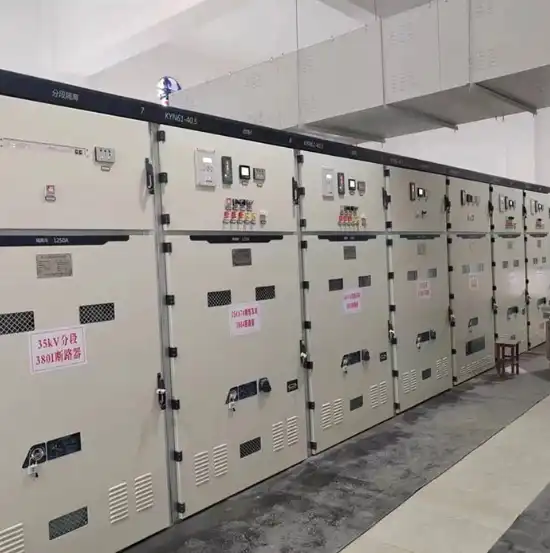
Air-Insulated Switchgear (AIS) and Gas-Insulated Switchgear (GIS) are the two principal technologies that are used in mining operations. Each of these technologies offers various benefits that are determined by the individual application needs. When it comes to exterior installations and applications that need simple maintenance access, AIS systems provide cost-effective solutions. On the other hand, GIS systems thrive in situations that are space-constrained and areas that require excellent environmental protection.
Applications of voltage classifications in mining power systems range from low-voltage distribution (up to 1 kV) to high-voltage transmission systems (6 kV-40.5 kV). Voltage classifications play an important role in mining power systems. Switchgear used in high-voltage mining generally combines cutting-edge technologies such as vacuum arc extinguishing technology and permanent magnet working mechanisms. These characteristics allow for maintenance-free operation and a prolonged service life.
Essential Components and Their Mining-Specific Requirements
Within mining switchgear systems, circuit breakers are the most important components since they are responsible for halting fault currents and safeguarding equipment further downstream. Vacuum circuit breakers have emerged as the dominant technology for mining applications because to their better performance in severe environments, reduced maintenance needs, and dependable arc extinction capabilities.
A switchgear assembly is not complete without busbars, isolators, and protection devices. Each of these components is designed to endure the specific difficulties that are present in mining operations. These components are required to exhibit extraordinary resistance to corrosion, mechanical stress, and environmental pollutants, all while having the ability to retain exact electrical performance over long periods of operation.
Choosing the Right Switchgear for Mining Applications: Criteria and Comparisons
Strategic Decision-Making Framework
In order to choose the most suitable switchgear for mining operations, it is necessary to do a thorough analysis of a number of criteria, such as the voltage needs, the ambient conditions, the load characteristics, and the future development plans. Therefore, dependability is the most important factor to take into account when selecting switchgear for mining facilities since these facilities often perform continuous operations in which power disruptions immediately convert into output losses. Mining Switchgear must be robust and reliable to ensure minimal downtime and maximum productivity.
Environmental hazards that are specific to mining activities include being exposed to dust that is abrasive, chemicals that are corrosive, temperatures that are very high, and high saturation levels. These circumstances need the implementation of switchgear solutions that include improved sealing qualities, materials that are resistant to corrosion, and resilient mechanical design. In order to offer vital protection against environmental deterioration, enclosures with an IP67 rating and specialist surface treatments need to be used.
Comparative Analysis of Switchgear Technologies
The analysis of the similarities and differences between AIS and GIS technology demonstrates that every mining situation has its own unique set of benefits. Additionally, AIS systems have been shown to be reliable in outdoor settings, in addition to having reduced startup costs and simpler access to maintenance. It is important to note that they need bigger installation footprints and may be more prone to contamination from the surrounding environment.
By virtue of their enclosed architecture, GIS systems provide improved protection to the environment, decreased space needs, and increased safety measures. Even if the initial investment costs are greater, Geographic Information System (GIS) systems often produce better long-term value by reducing the amount of maintenance that is required and increasing their dependability in difficult conditions.
Metal-enclosed and metal-clad switchgear configurations provide additional possibilities for mining applications. Metal-clad systems provide superior arc fault prevention and increased safety via compartmentalization compared to metal-enclosed switchgear layouts. These characteristics prove to be especially useful in underground mining operations, where the protection of workers and the avoidance of fires are considered to be of utmost importance.
Cost Considerations and Lifecycle Value
The total cost of ownership is something that procurement managers need to take into consideration rather than only concentrating on the initial purchase pricing. Costs associated with installation, operating expenditures, maintenance needs, and anticipated service life are all taken into consideration by this all-encompassing approach. Switchgear solutions for modern mining operations that use vacuum circuit breakers and permanent magnet mechanisms often justify greater initial expenditures by reducing the amount of money spent on maintenance and extending the amount of time that the switchgear is operational.
When doing a lifecycle cost analysis, it is important to take into account a variety of aspects, including the availability of replacement parts, the difficulty of maintenance, and the possibility of output losses during maintenance operations. Additional value is created by suppliers that provide full service packages that include installation instructions, maintenance agreements, and the delivery of replacement parts. These suppliers eliminate operational risks, which results in increased value.
Best Practices for Switchgear Design and Maintenance in Mining
Design Principles for Mining Environments
When designing switchgear for mining applications, it is important to place an emphasis on features like modularity, resilience, and strict adherence to safety requirements. The use of modular structure makes installation, maintenance, and future extension simpler, while also offering the flexibility to adapt to changing operating needs. In order to maximize the usage of space while also assuring long-term dependability, integrated modular designs that have tiny footprints and robust sealing capabilities are utilized. Mining Switchgear solutions that incorporate these features ensure both efficiency and longevity in challenging environments.
Choosing materials that are resistant to corrosion and modern coating methods are two of the most important factors in determining the lifespan of switchgear. These materials provide critical protection against the deterioration caused by the environment. Ceramic coating and powder coating treatments strengthen the component's resistance to corrosion and aging, while aerospace-grade precision technology and specialist tooling maintain the quality of the production process and the dependability of the component.
Maintenance Protocols and Preventive Strategies
When it comes to mining switchgear, routine maintenance methods place an emphasis on preventative efforts to reduce unexpected downtime and increase the lifespan of the equipment. During routine inspections, it is important to pay attention to important components such as the functioning of circuit breakers, the quality of insulation, the tightness of connections, and the performance of protective relay machines. These procedures need to strike a balance between the needs for operational continuity and the thoroughness of maintenance.
Functional performance verification, insulation testing, and protective system validation should all be included in the testing methods. Switchgear systems that are more advanced and include permanent magnet working mechanisms and vacuum arc extinction technology need minimum regular maintenance. This helps to reduce the amount of time that operations are disrupted and the amount of money that is spent on maintenance.
Safety Considerations and Arc Flash Protection
Within the realm of mining switchgear operations, worker safety continues to be of the utmost importance, with arc flash prevention being a significant issue. Protection against electrical dangers is very important, and it may be achieved by the use of appropriate personal protective equipment, well-established safety procedures, and extensive people training. The emergency response techniques that are implemented need to take into account the many possible fault situations and give clear rules for the safe isolation and restoration of equipment.
Enhanced safety features, including as compartmentalization, positive isolation verification, and better arc fault containment, are included into the designs of modern switchgear. The presence of these characteristics considerably lessens the dangers to safety while simultaneously making maintenance procedures safer.
Procuring High-Quality Mining Switchgear: Suppliers, Products, and Services
Supplier Evaluation and Selection Criteria
It is necessary to form partnerships with suppliers that can provide a demonstrated level of competence in mining applications and extensive service capabilities in order to achieve successful procurement. Leading manufacturers have broad product portfolios that encompass voltage ranges ranging from 6 kilovolts to 40.5 kilovolts. These portfolios also include customized solutions that satisfy specific mining needs, such as frequent operating situations and extreme environmental conditions. Mining Switchgear products from reputable suppliers offer the reliability and flexibility required for these demanding applications.
A supplier's production capabilities, quality certifications, technical support resources, and worldwide service networks should all be taken into consideration throughout the assessment process. A dedication to quality and innovation is shown by businesses that have been granted the status of national high-tech firm, have been granted many patents, and have received authoritative certifications such as ISO 9001:2015. Suppliers of mining switchgear should also provide evidence of successful installations in mining environments that are comparable to their environments.
Customization Capabilities and Technical Support
Mining operations often need for tailored switchgear solutions that take into account the specific site circumstances, load requirements, and integration issues for each individual operation. Companies that have exceptional scenario-based customisation skills are able to modify basic goods to match the unique requirements of the mining sector. These adjustments may include adaptations to harsh environments and alterations that are industry-specific.
Consultation on design, engineering calculations, installation instructions, and aid with commissioning are all included in comprehensive technical support. The scope of this full-chain service strategy include not only the provision of products but also the provision of continuing technical support, strategies for maintenance planning, and suggestions for performance enhancement.
Value-Added Services and Long-Term Partnerships
Here are the essential value-added services that distinguish superior mining switchgear suppliers:
• Installation guidance and on-site technical support ensuring proper equipment commissioning and integration with existing systems
• Comprehensive maintenance agreements providing scheduled inspections, testing, and component replacement services
• Reliable spare parts supply with guaranteed availability and rapid delivery to minimize downtime risks
• Free modification plan development addressing changing operational requirements and system upgrades
• Cross-border service capabilities supporting international mining operations with consistent technical support
These comprehensive service offerings ensure sustained operational excellence throughout the equipment lifecycle while building strong supplier partnerships that support long-term operational success. The combination of technical expertise, global reach, and commitment to customer success creates significant value for mining operations seeking reliable electrical infrastructure solutions.
Emerging Trends and Future Outlook for Mining Switchgear
Digitalization and Smart Monitoring Integration
Through the incorporation of digital technology, intelligent monitoring systems, and capacities for predictive maintenance, the mining power infrastructure continues to undergo the process of evolution. Mining Switchgear systems of the modern era contain sophisticated sensors, communication protocols, and data analytics platforms, which make it possible to monitor performance in real time and identify faults in advance. The use of these technologies improves operational visibility while simultaneously lowering maintenance costs and creating a more reliable system.
The temperature, vibration, insulation integrity, and contact wear are some of the key factors that are continuously evaluated by intelligent monitoring systems. Condition-based maintenance methods are made possible by this data, which allows for the optimization of maintenance schedule while also avoiding unexpected breakdowns. Integration with mining management systems makes it easier to coordinate operational planning and optimize resource use.
Renewable Energy Integration and Efficiency Improvements
The increasing focus placed on the integration of renewable energy sources provides mining electrical infrastructure with both new obstacles and brand new possibilities. Switchgear solutions that are technologically advanced and capable of regulating bidirectional power flows, voltage variations, and grid synchronization requirements are necessary for solar, wind, and energy storage systems. Switchgear systems used in mining must be able to accept a wide variety of energy sources while yet preserving the system's stability and reliability characteristics.
Enhanced energy efficiency achieved via the use of cutting-edge switchgear technology results in decreased operating expenses and a smaller effect on the environment. When it comes to switching performance, vacuum circuit breakers that are equipped with permanent magnet working mechanisms exhibit greater switching performance while using less control power. When it comes to large-scale mining operations that have considerable electrical infrastructure, these efficiency advantages become more important.
Strategic Infrastructure Planning and Future-Proofing
For mining operations to be successful, proactive infrastructure planning is required. This planning must take into account future growth requirements, technology advancements, and regulatory shifts. This allows for cost-effective capacity expansions and technology upgrades to be implemented without the need for a full system replacement. Scalable switchgear designs with modular construction are particularly useful.
As a result of top manufacturers providing consultancy services, technological roadmaps, and upgrade routes, supplier alliances are becoming an increasingly significant component of the planning process for infrastructure. With the help of these collaborations, mining operations are able to adjust to ever-changing needs while simultaneously increasing their return on investments in infrastructure.
Conclusion
Mining power infrastructure success depends on strategic switchgear selection, proper installation, and ongoing maintenance excellence. Modern solutions featuring vacuum circuit breakers, permanent magnet mechanisms, and modular designs provide the reliability and performance required for demanding mining environments. Comprehensive supplier partnerships offering customization capabilities, technical support, and value-added services ensure long-term operational success while minimizing the total cost of ownership of Mining Switchgear.
FAQ
Q1: What makes mining switchgear different from standard electrical switchgear?
A: Mining switchgear requires enhanced environmental protection, superior mechanical strength, and maintenance-free operation to withstand harsh conditions including dust, moisture, temperature extremes, and mechanical vibrations. These systems incorporate specialized features such as IP67-rated sealing, corrosion-resistant materials, and vacuum arc extinction technology.
Q2: How do I determine the correct voltage rating for my mining switchgear application?
A: Voltage rating selection depends on your power distribution system design, load requirements, and transmission distances. Mining operations typically utilize medium-voltage systems (6kV-40.5kV) for efficient power distribution across large facilities. Consult with qualified electrical engineers to perform load flow analysis and determine optimal voltage levels.
Q3: What maintenance requirements should I expect with modern mining switchgear?
A: Advanced mining switchgear with vacuum circuit breakers and permanent magnet mechanisms requires minimal routine maintenance. Typical schedules include annual visual inspections, periodic insulation testing, and protection system verification. Many modern systems operate maintenance-free for extended periods, significantly reducing operational costs.
Q4: How long does custom switchgear manufacturing and delivery typically take?
A: Standard mining switchgear products typically require 7-15 days for delivery, while customized solutions may require 30-60 days depending on complexity and specific requirements. Reputable manufacturers provide detailed project schedules and maintain clear communication throughout the manufacturing process.
Q5: What certifications and standards should mining switchgear meet?
A: Mining switchgear should comply with relevant IEC standards, national electrical codes, and industry-specific safety requirements. Look for suppliers with ISO 9001:2015 certification, national inspection reports, and proven compliance with high-voltage electrical appliance standards. Mining-specific certifications may be required depending on your operational location and regulatory requirements.
Partner with Yuguang for Superior Mining Electrical Solutions
Yuguang Electric stands ready to transform your mining power infrastructure with cutting-edge switchgear solutions designed specifically for industrial applications. As a trusted mining switchgear manufacturer with 39 patents and comprehensive certifications, we deliver reliable, maintenance-free systems covering the complete 6kV-40.5kV voltage range. Our integrated modular designs, aerospace-grade manufacturing processes, and full-chain services from R&D through after-sales support ensure your operations maintain peak performance. Contact our team at ygvcb@hotmail.com to discuss your specific requirements and discover how our customized solutions can enhance your mining power infrastructure reliability and efficiency.
References
1. Smith, J.R., "High-Voltage Switchgear Design and Application in Mining Operations," Journal of Mining Electrical Engineering, Vol. 45, No. 3, 2023.
2. Anderson, M.K., "Reliability Analysis of Vacuum Circuit Breakers in Underground Mining Applications," IEEE Transactions on Industry Applications, Vol. 59, No. 2, 2023.
3. Chen, L.W., "Environmental Impact Assessment of Switchgear Systems in Open-Pit Mining Operations," Mining Technology Review, Vol. 38, No. 4, 2023.
4. Thompson, R.D., "Cost-Benefit Analysis of Modular Switchgear Designs for Mining Power Distribution," Industrial Power Systems Conference Proceedings, 2023.
5. Martinez, C.A., "Predictive Maintenance Strategies for Mining Electrical Infrastructure," Mining Equipment Maintenance Quarterly, Vol. 12, No. 1, 2024.
6. Wilson, P.H., "Integration of Renewable Energy Systems with Mining Power Infrastructure," Sustainable Mining Technology Journal, Vol. 15, No. 2, 2023.

Send Inquiry
You may like
