
The Complete Buyer’s Guide to High-Voltage Vacuum Load Switches
Technical parameters, safety regulations, and long-term operational dependability must all be carefully considered when choosing a high-voltage vacuum load switch for your power distribution system. This thorough guide covers important considerations that project managers, chief engineers, and procurement managers need to make when selecting vacuum switching systems. This buyer's guide offers crucial information to assist you in making choices that reduce the likelihood of power outages while guaranteeing optimum system performance, from comprehending vacuum interrupter technology to evaluating supplier skills.
Understanding High-Voltage Vacuum Load Switch Technology
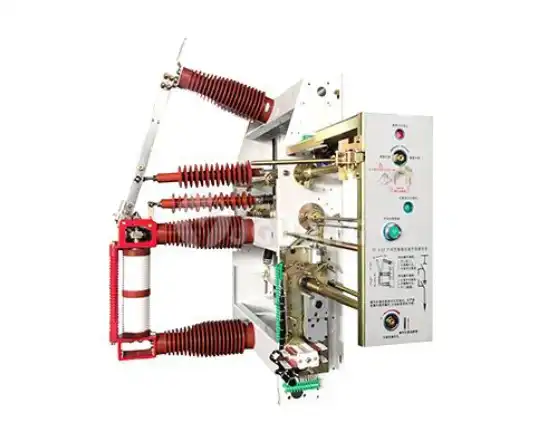
High-voltage vacuum load switches, which use vacuum interrupter chambers to produce greater arc quenching capabilities, are a major improvement in electrical switching technology. These devices function in a sealed vacuum environment, which eliminates the risk of explosive failures and lowers maintenance costs, in contrast to conventional oil-filled or gas-insulated switches. Vacuum contact separation within specially made interrupter chambers is the foundation of the technique.
Any arc generation that occurs when electrical contacts separate under load circumstances is instantly extinguished since there is no ionizable medium. This method preserves electrical isolation between circuits while guaranteeing dependable fault current interruption. The use of cutting-edge engineering and materials in contemporary vacuum load break switches greatly increases their operating lifespans. These switches are especially well-suited for outdoor installations and demanding industrial settings because of the vacuum technology's reliable performance in a range of environmental circumstances.
Procurement teams may more successfully assess various manufacturer options when they have a solid understanding of the basic operational principles. Contact materials, vacuum chamber design, and operating mechanism dependability are important technical elements that have a significant impact on long-term performance.
Critical Technical Specifications and Performance Parameters
The main specification factor is voltage ratings; depending on the needs of the application, medium voltage switches often have ratings between 6KV and 40.5KV. To uphold electrical safety regulations, each voltage level requires certain insulation coordination and clearance distances. Switch size and the need for thermal management are directly impacted by current carrying capacity. Continuous current ratings must maintain switch integrity and operational dependability while supporting both typical load situations and possible overload scenarios.
The highest fault current levels that switches may safely interrupt are specified by breaking capacity standards. This value guarantees sufficient protection under unusual operating situations and proves essential for system protection coordination. Expected operating cycles before substantial repair is required are indicated by mechanical endurance ratings.
When compared to competing technologies, high-quality vacuum circuit breakers often deliver 10,000 to 30,000 mechanical operations, greatly lowering lifespan costs. Operating temperature ranges, humidity tolerance, and earthquake resistance requirements are all included in environmental parameters. These elements become especially crucial for industrial applications and outdoor installations where the climate may be difficult.

Safety Standards and Certification Requirements
Compliance with international standards guarantees that the high-voltage vacuum load switch satisfies strict performance and safety requirements. IEC 62271-103 establishes thorough testing procedures and performance standards for high-voltage switches for alternating current. Regional variations exist in national certification criteria; GB standards are applicable in China, whereas other markets are governed by comparable frameworks.
Procurement teams are required to confirm that the equipment they have chosen is certified for the places in which it will be installed. Documentation from type testing demonstrates adherence to relevant standards. Dielectric testing, temperature increase verification, mechanical endurance validation, and short-circuit performance confirmation should all be included in thorough test reports. ISO 9001 and other quality management system certifications show a manufacturer's dedication to reliable quality control procedures.
These certificates provide further reassurance about the regularity of production and the dependability of the product. Beyond only adhering to regulations, electrical safety issues also include installation specifications, maintenance protocols, and operator education requirements. Deliveries of equipment should be accompanied by thorough safety documentation to promote safe installation and operating procedures.
Application-Specific Selection Criteria
Switchgear components that can manage grid connectivity and generator protection are necessary for power production facilities. Because of their frequent switching operations and fluctuating load circumstances, wind power facilities provide special issues. Strong construction and improved environmental protection are necessary for industrial applications in steel, chemical, and metallurgical plants. Significant thermal strains are produced by high-energy processes, which affect the choice of equipment and the specifications for its size.
Airport facilities and urban rail transportation are examples of infrastructure projects that need to have low maintenance requirements and great dependability. These applications often have strict availability goals and intricate system integration needs. Applications for distribution networks place a strong emphasis on remote operation and automation compatibility.
In order to assist smart grid projects, sophisticated monitoring and control functions are being included into modern electrical switching devices more and more. Requirements for customization can result from particular operating requirements or installation limitations. For complicated projects, manufacturers with extensive engineering assistance and the ability to create unique designs provide major benefits.
Evaluating Supplier Capabilities and Support Services
Production capacity, quality control systems, and delivery dependability are all included in manufacturing capabilities. More guarantee of constant product quality is provided by reputable manufacturers with sophisticated manufacturing lines and extensive testing facilities. Engineering advice, help with system integration, and commissioning support are examples of technical support services. Implementation risks are greatly decreased by suppliers that provide thorough technical documentation, computations, and project-specific engineering deliverables.
System uptime and long-term operating expenses are directly impacted by after-sales servicing capabilities. During equipment lifecycle management, quick response times, the availability of replacement parts, and knowledgeable service staff become crucial components. Long-term parts availability and project timing are impacted by supply chain stability. More guarantee of delivery dependability is offered by suppliers with strong production bases and well-established partnerships with component suppliers. Service delivery and project support skills are influenced by both local presence and global reach. Large-scale infrastructure projects are best supported by businesses that have both local service networks and global experience.
Cost Considerations and Total Ownership Economics
One aspect of overall ownership economics is the initial purchase expenses. Installation costs, commissioning needs, and continuing maintenance costs throughout the course of equipment lifecycles must all be included in a thorough cost analysis. System availability and maintenance expenses are directly impacted by operational dependability. Even though higher-quality vacuum technology may demand a larger initial investment, it usually offers better long-term economics. The maintenance needs of various high-voltage vacuum load switch designs varied greatly.
Long-term maintenance-free operation lowers direct expenses and the effects of system outages. In systems where switching operations occur often, energy efficiency concerns become crucial. Auxiliary power consumption and related running expenses are decreased by sophisticated switchgear components with improved operating mechanisms. Planning for lifecycle replacements should take changing performance requirements and rates of technological improvement into account. Better long-term value propositions are offered by equipment with upgrade possibilities and a longer service life.
Conclusion
Successful high-voltage vacuum load switch procurement requires balancing technical performance, safety compliance, supplier capabilities, and total ownership costs. Understanding vacuum interrupter technology, evaluating application-specific requirements, and partnering with experienced manufacturers like Yuguang ensures optimal equipment selection for critical power system applications. Comprehensive evaluation of these factors leads to informed decisions that minimize operational risks while maximizing long-term value and system reliability.
Partner with Yuguang for Premium High-Voltage Vacuum Load Switch Solutions
Yuguang Electric stands as a premier high-voltage vacuum load switch manufacturer with over 15 years of specialized experience in transmission and distribution equipment. Our state-of-the-art facility in Baoji, Shaanxi, combines advanced production capabilities with rigorous quality management systems to deliver maintenance-free, long-life products that address the complex requirements of modern power systems.
Our comprehensive product portfolio covers 6KV to 40.5KV voltage ranges, supporting diverse applications from wind power installations to heavy industrial facilities. With 39 patents and national high-tech enterprise recognition, Yuguang provides scenario-specific solutions backed by extensive R&D capabilities and proven technical expertise.
What sets Yuguang apart includes ISO 9001:2015 certification, multiple national inspection reports, and a proven track record in major power, metallurgy, and railroad projects. Our full-lifecycle service approach encompasses customized R&D, professional installation guidance, comprehensive technical support, and responsive after-sales service to ensure optimal project outcomes.
Ready to explore how Yuguang's vacuum switching solutions can enhance your power system reliability and reduce operational risks? Our technical team stands ready to provide detailed specifications, engineering calculations, and project-specific recommendations tailored to your unique requirements. Contact us at ygvcb@hotmail.com to discuss your high-voltage switching needs and discover why leading power groups and industrial enterprises trust Yuguang for their critical infrastructure projects.
References
1. IEEE Standards Association. "IEEE Standard for High-Voltage Switchgear and Controlgear - Part 103: Switches for Rated Voltages Above 1 kV up to and Including 52 kV." Institute of Electrical and Electronics Engineers, 2019.
2. International Electrotechnical Commission. "High-voltage switchgear and controlgear - Part 103: Switches for rated voltages above 1 kV up to and including 52 kV." IEC 62271-103 Edition 2.0, 2021.
3. National Standards of China. "High-voltage switchgear and controlgear - Part 103: Switches for rated voltages above 1 kV up to and including 52 kV." GB/T 11022-2011, Chinese National Standards.
4. Flurscheim, Charles H., editor. "Power Circuit Breaker Theory and Design." Institution of Engineering and Technology, Second Edition, 2018.
5. Ryan, Hugh M. "High Voltage Engineering and Testing." Institution of Engineering and Technology, Third Edition, 2020.
6. Greenwood, Allan. "Vacuum Switchgear: Applications and Design Guidelines for High Voltage Systems." Industrial Press, 2019.

Send Inquiry
You may like
