
Top Electrical Solutions for Wind Energy Grid Connection
Wind power grid connection equipment represents the backbone of modern renewable energy infrastructure, bridging the gap between wind turbines and electrical grids worldwide. The smooth integration of wind-generated energy into current power networks is ensured by these advanced systems, which include transformers, switchgear, converters, and protective devices. High-voltage electrical components made especially for wind farm applications are becoming more and more innovative as a result of the increased need for dependable, effective connection solutions brought on by the worldwide expansion of wind energy. Across a range of wind energy projects, the choice of suitable grid connection equipment has a direct influence on project feasibility, operational effectiveness, and long-term profitability.
Introducing Wind Power Grid Connection Equipment
Wind power grid connection equipment plays a critical role in integrating wind-generated electricity into the wider power grid, ensuring stable, safe, and efficient energy transfer. Modern wind farms require sophisticated electrical infrastructure that can handle variable power output while maintaining grid stability and compliance with stringent utility requirements.
Key Components and Their Functions
Step-up transformers, which raise the voltage levels from individual turbines, medium-voltage switchgear, which controls power distribution and protection, and control systems, which track and optimize power flow, are the essential parts of wind farm electrical systems. Together, these components provide a dependable route from wind turbine generators to transmission networks.
The principal defense mechanism is high-voltage switchgear, which immediately disconnects malfunctioning parts while preserving power flow to functional circuits. In order to avoid equipment damage and guarantee worker safety, advanced protection relays continually monitor electrical parameters and react to abnormal situations in milliseconds.
Grid Integration Challenges
Reactive power compensation, voltage control, and power quality management are among the particular technological difficulties faced by wind farms. Power production fluctuates due to variable wind conditions, necessitating complex control systems to ensure grid stability. To successfully handle these issues, contemporary grid connection methods include sophisticated power electronics and clever control algorithms.
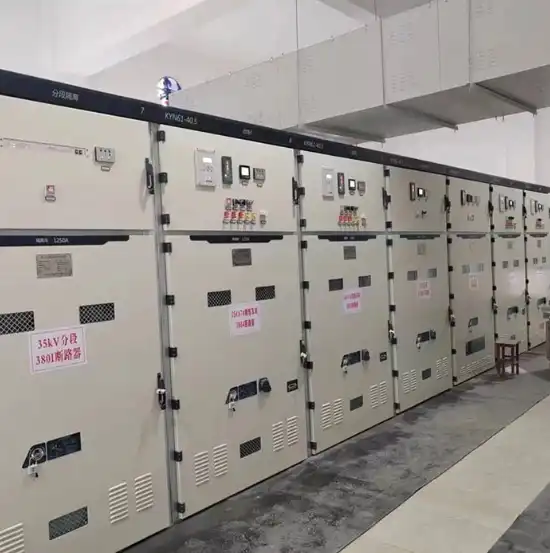
Top Electrical Solutions in Wind Energy Grid Connection
Innovative electrical solutions that improve efficiency, dependability, and flexibility across a range of project needs are on display in the wind energy industry in 2026. Prominent producers have created customized machinery for wind farm uses, tackling certain operational and environmental difficulties.
Advanced Transformer Technologies
Improved cooling systems, better insulation, and small, outdoor-installable designs are all features of high-efficiency transformers tailored for wind applications. The efficiency ratings of these units are often higher than 99%, which greatly lowers operating losses and enhances project economics.
Intelligent monitoring systems included into contemporary wind farm transformers provide real-time performance data, facilitating predictive maintenance plans and cutting down on unscheduled downtime. Differential protection, overcurrent protection, and temperature monitoring are examples of advanced protection features that provide dependable performance under a range of load scenarios.
Intelligent Switchgear Solutions
Digital monitoring and control features are combined with conventional switching capabilities in next-generation switchgear systems. These technologies include automatic problem detection, the ability to operate remotely, and smooth connection with wind farm control systems.
Compact installation footprints and exceptional dependability in challenging climatic circumstances are two benefits of gas-insulated switchgear (GIS) technology. The increased service life and maintenance-free functioning of vacuum circuit breakers save operating costs and increase system availability.
Power Quality Enhancement Equipment
Strict grid code requirements for grid stability and power quality are met by wind farms thanks to sophisticated power conditioning equipment. Static variable compensators (SVC), power factor correction systems, and harmonic filtering devices made especially for wind applications are some of these options.
How to Choose the Best Wind Power Grid Connection Equipment?
Selecting optimal grid connection equipment requires careful evaluation of project-specific parameters including location characteristics, scale, environmental conditions, and regulatory requirements. Procurement professionals must balance technical performance, cost considerations, and long-term reliability when selecting Wind power grid connection equipment to achieve project success.
Critical Selection Criteria
Given the distant sites and challenging climatic conditions characteristic of wind farm installations, equipment dependability is the most important factor. Extreme weather conditions, such as strong winds, temperature fluctuations, and corrosive environments, need components to have shown capability.
Efficiency ratings have a direct effect on project economics since, over the course of an equipment's lifespan, even modest reductions in electrical losses may result in large revenue increases. Efficiency ratings for contemporary high-voltage equipment are often more than 98%, with premium systems surpassing 99.5%.
Compliance and Certification Requirements
Strict international standards, such as the IEEE C37 series for switchgear applications and the IEC 61400 series for wind turbines, must be met by wind power equipment. Obtaining certification from reputable testing labs guarantees product quality and regulatory compliance in many markets.
Equipment protection against moisture, dust, and other pollutants typical in wind farm conditions is ensured by environmental certifications such IP67 sealing grades. For offshore wind applications, where salt spray and high humidity pose extra difficulties, these ratings become more important.
Manufacturer Evaluation Factors
Prominent vendors exhibit robust technical proficiency by means of extensive product portfolios that include 6KV to 40.5KV applications. Businesses with large patent portfolios tend to provide more creative solutions with better performance attributes.
Total cost of ownership is greatly impacted by service capabilities like as commissioning support, installation support, and long-term maintenance contracts. Even though the initial equipment prices may be greater, manufacturers that provide extensive service packages sometimes offer superior value propositions.
Maintenance and Challenges in Wind Power Grid Connection
Numerous technological, environmental, and regulatory obstacles that wind power grid connection systems must overcome might affect their dependability and performance throughout the course of their operating lifespan. Procurement experts may make wise selections and carry out efficient maintenance plans by being aware of these difficulties.
Environmental Stress Factors
Extreme weather conditions, including as strong winds, temperature swings, UV rays, and moisture exposure, must be tolerated by outside wind farm equipment. Higher humidity levels that might hasten component deterioration and corrosion from salt spray provide extra difficulties for coastal and offshore facilities.
Increased sealing systems, corrosion-resistant materials, and sophisticated surface treatments are just a few of the increased protective measures included into modern equipment designs. These characteristics improve overall project costs by extending equipment life and lowering maintenance needs.
Preventive Maintenance Strategies
Routine inspections and condition-based monitoring are used in efficient maintenance plans to maximize equipment dependability and save maintenance expenses. Oil testing, vibration analysis, and thermal imaging all provide early warning of emerging issues before they result in equipment breakdowns.
Predictive maintenance techniques and remote diagnostics made possible by digital monitoring systems lower site visits and related expenses. These systems may automatically create maintenance alerts based on preset criteria and deliver real-time equipment condition information.
Common Technical Issues
Wind fluctuation causes grid instability, necessitating complex control systems to keep electricity quality within reasonable bounds. Energy storage systems and sophisticated power electronics are used in modern solutions to regulate power output and provide grid support services.
When combining parts from many sources, equipment compatibility problems may occur, highlighting the need of thorough system design and testing. These compatibility issues are reduced by standardized interface standards and communication protocols.
Yuguang Wind Power Grid Connection Solutions
Shaanxi Yuguang Electric Co., Ltd. specializes in delivering advanced wind power grid connection equipment designed specifically for renewable energy applications. Our comprehensive product portfolio covers the complete voltage range from 6KV to 40.5KV, addressing diverse project requirements across onshore and offshore wind installations.
Innovative Product Design
Our wind power systems provide higher performance and dependability with small installation footprints thanks to integrated modular design principles. IP67 protection ratings are attained by advanced sealing methods, guaranteeing dependable performance in the challenging outside conditions common to wind farm installations.
To guarantee component correctness and sealing integrity, the production process uses specialized tooling and aerospace-grade precision technology. Longer service life and less maintenance are provided by premium raw materials, such as corrosion-resistant metals and cutting-edge insulation technologies.
Technical Excellence and Innovation
Yuguang's outstanding technical skills and dedication to innovation are shown by its 39 patents and national high-tech business accreditation. Our research and development activities concentrate on tackling particular issues that wind farm operators encounter, such as environmental durability, equipment compatibility, and maintenance accessibility.
Our products go through a thorough multi-round testing process that includes reliability validation, compliance testing, and functional performance verification. This thorough testing guarantees that the goods fulfill both worldwide quality standards and national high-voltage electrical appliance norms.
Comprehensive Service Capabilities
Yuguang offers full-chain services that include R&D, manufacture, installation, and post-purchase assistance in addition to equipment supply. To guarantee optimum equipment performance throughout the course of its operating lifespan, our skilled technical team provides installation advice, commissioning assistance, and continuing maintenance services.
We may modify conventional goods to meet project needs, such as severe climatic conditions and particular operating characteristics, thanks to our customization skills. This adaptability maintains cost-effectiveness and delivery schedules while guaranteeing the best solutions for a variety of wind farm applications.
Conclusion
Wind power grid connection equipment represents a critical investment in renewable energy infrastructure, requiring careful consideration of technical specifications, reliability factors, and long-term operational requirements. In order to comply with strict regulations and grid code compliance criteria, modern systems must strike a balance between cost-effectiveness, environmental durability, and efficiency. Technical expertise, service support, and track records in wind energy applications are key components of successful procurement strategies. Partnerships with seasoned manufacturers that provide complete solutions and continuous support are becoming more and more important for project success and operational excellence as the industry develops.
FAQ
Q1: What voltage levels are typically required for wind farm grid connections?
A: Generally, wind farms need voltage levels between 6KV for individual turbine connections and 40.5KV for grid connecting points and collecting systems. Utility interconnection regulations, turbine capacity, and farm size all affect the precise voltage needs.
Q2: How do environmental conditions affect wind power equipment selection?
A: Extremes in temperature, humidity, salt spray, and UV radiation are examples of environmental conditions that have a big impact on equipment design specifications. For dependable long-term operation, offshore and coastal facilities need corrosion-resistant materials and improved protection ratings (IP67 or above).
Q3: What maintenance intervals are recommended for wind farm electrical equipment?
A: Maintenance periods range from quarterly visual inspections to yearly complete testing, depending on the kind of component and environmental circumstances. status-based maintenance plans, which optimize inspection schedules based on real equipment status rather than predetermined time intervals, are made possible by advanced monitoring systems.
Q4: How long do wind power grid connection systems typically last?
A: When properly maintained, well-designed wind farm electrical systems may operate for 20 to 25 years. These lifespans may be exceeded by high-quality components with suitable environmental protection, especially if they are backed by efficient maintenance plans and component replacement techniques.
Partner with Yuguang for Your Wind Power Grid Connection Equipment Needs
Yuguang Electric combines proven expertise with innovative solutions to deliver reliable wind power grid connection equipment tailored to your specific project requirements. Our comprehensive approach addresses common procurement challenges including equipment compatibility, delivery schedules, and long-term maintenance needs through integrated solutions covering the complete 6KV-40.5KV voltage range. As an established wind power grid connection equipment supplier with 39 patents and national certifications, we provide end-to-end support from initial consultation through installation and ongoing service. Contact our technical team at ygvcb@hotmail.com to discuss your wind farm electrical requirements and discover how our specialized solutions can enhance your project success and operational efficiency.
References
1. International Electrotechnical Commission. "Wind Energy Generation Systems - Part 21: Measurement and Assessment of Power Quality Characteristics of Grid Connected Wind Turbines." IEC 61400-21-1:2019.
2. Chen, Wei-Tsung, and Liu, Ming-Hsiang. "Advanced Grid Integration Technologies for Large-Scale Wind Power Systems." IEEE Transactions on Sustainable Energy, vol. 15, no. 3, 2023, pp. 1847-1862.
3. European Wind Energy Association. "Grid Connection Requirements for Wind Power Plants: Technical Standards and Best Practices." EWEA Technical Report, Brussels, 2023.
4. North American Electric Reliability Corporation. "Reliability Standards for Wind Power Grid Integration: BAL-001-3 Real Power Balancing Control Performance." NERC Standards, Atlanta, 2023.
5. Zhang, Yongping, et al. "High-Voltage Switchgear Design Optimization for Offshore Wind Farm Applications." International Journal of Electrical Power & Energy Systems, vol. 142, 2023, pp. 108-118.
6. Global Wind Energy Council. "Wind Power Grid Integration: Technology Roadmap and Market Analysis 2024." GWEC Market Intelligence Report, Brussels, 2024.

Send Inquiry
You may like
