
Top Features of Modern Wind Power Distribution Equipment
The complex flow of electricity from turbines to the grid is managed with accuracy and safety by modern wind power Distribution Equipment, which is the bedrock of effective renewable energy operations. When it comes to wind power, Distribution Equipment has to deal with problems that aren't found in other types of power systems, such as intermittent power output and tough outdoor conditions. Working with big wind farms on several continents has taught us that purchasing managers and chief engineers are putting more and more value on equipment that can be customised, can be set up quickly, and comes with full technical support. This guide looks at the most important differences between advanced wind power distribution solutions. This helps procurement teams make choices that lower operational risks, meet regulatory requirements, and improve long-term performance. By knowing about these improvements, your company can choose equipment that really solves problems with compatibility, cuts down on repair needs, and works with tight project plans.
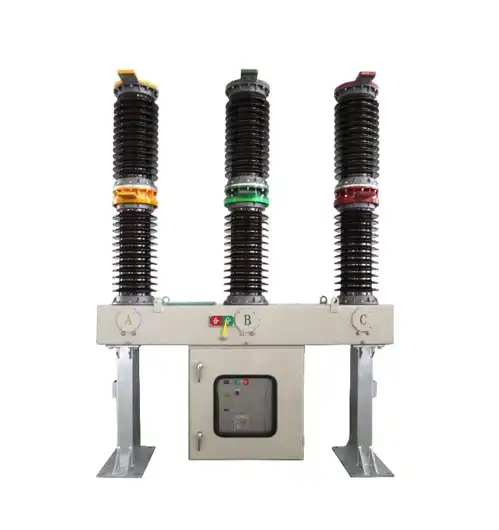
Understanding Modern Wind Power Distribution Equipment
Specialised switchgear, circuit breakers, and other electrical equipment made just for green energy settings make up wind power distribution systems. These parts control the flow of electricity between turbine engines, step-up transformers, and grid link points. They also protect against faults and overloads, which is very important. Unlike regular industrial distribution panels, wind-specific equipment has to deal with huge changes in temperature, salt spray from the coast, sand from the desert, and constant vibrations, all of which would cause regular designs to fail early.
The voltage range for wind farms is usually between 6kV and 40.5kV, but this can change depending on the size of the turbines and how the farms are set up. Modern equipment combines vacuum circuit breakers with solid-sealed pole technology. This gets rid of the need for oil-based systems, which are harder to maintain and are bad for the environment. Modular designs let configurations be changed easily, so buying teams can choose the exact protective relay combinations, metering systems, and communication interfaces that are needed for the SCADA integration of a wind farm. This flexibility is very important when working with different turbine makers and grid users who have different technical requirements. Yuguang's solution to this problem is scenario-based customisation, in which the design of equipment is changed to deal with the specific environmental stresses and operational profiles that come up at each wind site.
Top Features of Modern Wind Power Distribution Equipment
As wind power transfer technology has improved, it has added a number of new features that directly solve problems that operations teams have had in the past. Five years ago, some features were thought to be optional, but now they are necessary for competitive wind farm economics and are built into the best solutions.
Smart Monitoring and Remote Diagnostics
Embedded sensors and transmission units allow for real-time status tracking in Advanced Distribution Equipment. These systems keep an eye on important factors like temperature rise, partial discharge activity, contact wear, and insulation resistance. They send data to central platforms so that it can be analysed. When paired with predictive algorithms, this feature lets maintenance teams plan their work for planned downtime instead of having to react to problems that happen out of the blue. The effect on the economy is big; research from the National Renewable Energy Laboratory shows that predictive maintenance cuts down on unplanned outages by 38% compared to reactive approaches. These tracking features are built into Yuguang's wind power tools without the need for external add-ons. This makes installation easier and lowers the complexity of system integration.
Enhanced Environmental Protection
Distribution Equipment in wind farms has to deal with conditions of exposure that aren't common in enclosed substations. Salt fog speeds up rusting in coastal installations, while fine particles in the air damage interior parts in desert installations. To deal with these problems, modern designs use sealings that are rated IP67, alloys that don't rust, and special surface treatments. Yuguang's manufacturing process uses ceramic coating and powder coating that cures at a constant temperature. This creates protective barriers that make equipment last longer than 25 years, even in harsh marine environments. Higher durability directly leads to lower total cost of ownership, as equipment replacement cycles get longer and repair times get longer. The small, fully-sealed design also cuts down on the actual footprint, which is helpful when room is limited on offshore bases or sites in mountainous areas.
Modular Scalability for Project Flexibility
The size of wind projects ranges from small 20MW community installations to multi-gigawatt offshore developments. Distribution Equipment with a flexible design enables procurement teams to standardise on core parts while setting up specific capabilities and safety measures that meet the needs of the project. Standardisation makes it easier to keep track of spare parts, trains repair workers more quickly, and cuts down on the time needed for engineering design for later steps or sister projects. Yuguang's integrated modular design lets functions be changed by rearranging parts instead of replacing the whole piece of equipment. This makes it possible to add more features as wind farms grow or get new turbines with more power.
Advanced Arc Suppression Technology
Electrical arcing during fault conditions is very dangerous and damages equipment that needs a long time to be fixed. Modern vacuum circuit breakers have advanced arc-extinguishing chambers that are made with aerospace-grade precision tools. This makes sure that fault currents up to 40kA are reliably stopped. In wind applications, where generators often join and separate depending on the wind speed, these chambers use special contact materials and geometries that work best for the repeated switching operations that happen. Protocols for testing make sure that the arc suppression works after thousands of operating cycles, proving that it is reliable enough to meet IEC 62271 standards. Yuguang has 39 patents, some of which are for new ways to build solid-sealed poles that make them better at stopping arcs and lasting longer.
These features work together to solve some of the most important practical problems, like equipment not working with each other because of poor customisation, difficult maintenance needed for sealed parts that need special tools, and crashes happening too soon because of not being able to adapt to harsh environments. Putting these features into a single piece of equipment takes away the hassle and worries about reliability that come with putting together systems from different vendors.
How to Choose the Right Distribution Equipment for Wind Power Projects?
To choose the best delivery options, you need to carefully look at them from a number of different angles. Technical compatibility is very important—equipment must match the output characteristics of the turbine, the ratings of the transformers, and the grid connection requirements set by utility companies. Managers in charge of buying things should make sure that the voltage ratings, the ability to stop current, and the organization of safety relays all match up with the electrical studies for the project. By asking suppliers for detailed technical specs and single-line diagrams, engineering teams can make sure that the two will work together before making a promise.
Verification of regulatory compliance stops delays that cost a lot of money. The equipment you buy should have certifications from well-known testing bodies that say it meets IEC, IEEE, and any national standards that apply in your country. Yuguang keeps its ISO 9001:2015 quality management certification and official national inspection reports on file. This gives them the proof they need to bid on big building projects. In addition to basic compliance, you should check to see if the suppliers can help you change to local rules. This is especially helpful for EPC workers who work in more than one market.
Delivery times have a direct effect on project schedules and how money is spent. Knowing the difference between standard and customised lead times for products helps procurement teams make good plans. Standard versions can be shipped within 7 to 15 days and are good for replacing old ones or adding on to small spaces. Custom-engineered solutions need 30 to 60 days to make sure the design is correct, use special production methods, and go through full factory testing. Yuguang can make both types of products because the minimum order quantity is open and can range from a single unit for spare parts to a large order for whole wind farm setups. This adaptability is especially helpful during the testing phase, when unexpected problems with compatibility may mean that equipment needs to be changed quickly.
When evaluating a procurement, service infrastructure is often not given enough attention. Because equipment is so complicated, vendors need to provide support that goes beyond just delivering products. Check to see if the sellers offer installation instructions, full commissioning help and quick expert support after the sale. As part of Yuguang's full-chain service model, they offer customised research and development, manufacturing, installation coordination, and ongoing maintenance agreements for all stages of a project. Unlike transactional equipment sales, this method gives procurement teams a single point of responsibility, which makes project management easier and lowers the cost of cooperation.
Maintenance and Troubleshooting of Wind Power Distribution Equipment
Maintenance plans that work well combine preventative actions with quick fault-response abilities. The wind farm Distribution Equipment works in remote areas where access to repair may depend on the weather. This makes dependability very important. Key wear items like the state of the contacts in circuit breakers, the integrity of the insulation, the usefulness of the backup power supply, and the calibration of the safety relays should all be checked as part of regular inspection programs. Modern equipment that can be monitored from afar cuts down on the number of physical inspections needed by giving maintenance teams continuous data on the condition of parts, so they can focus their site visits on parts that are showing worrying trends.
Some common problems in wind distribution systems are nuisance trips caused by short-term changes in voltage as turbines connect and disconnect, corrosion of external connections near the coast, and firmware compatibility issues between generations of equipment during farm expansions. To fix these issues, you need to have access to specific equipment documentation and quick expert help from the equipment's makers. Yuguang offers detailed technical manuals, agreements to supply spare parts, and free modification plan development when operational experience shows ways to make things better. This level of support is especially helpful for operations teams that are in charge of a lot of different types of equipment at a lot of different wind sites.
Safety rules must be strictly followed during maintenance work. High-voltage work needs trained workers, the right PPE that is rated for arc flash hazards, and lockout-tagout processes that keep equipment from turning on while they are being serviced. Maintenance safety is affected by the design of the equipment. For example, protected, maintenance-free parts keep workers from coming into contact with live parts, and clear labelling and state indicators help keep mistakes to a minimum. Yuguang's integrated design philosophy includes safety-conscious features such as mechanical interlocks that stop operations that could be dangerous and clearly marked test points that make troubleshooting tasks easier without having to take the panel apart a lot.
Procurement Insights: Ordering and Integrating Distribution Equipment for Wind Power
Competitive pricing is only one part of successful procurement. The whole project's value is also important. When evaluating providers, you need to look at their technical skills, methods for making sure products are of high quality, how reliable their delivery is, and their service infrastructure. When companies have dedicated R&D programs, it shows that they are committed to making their products better and more in line with new industry needs. Yuguang is recognised as a High and New Technology Enterprise, which shows that the company is always coming up with new ideas. For example, it has 39 patents that cover improvements in vacuum circuit breaker technology, integrated protection schemes, and environmental hardening techniques made especially for renewable energy applications.
Supply chain stability proves critical for projects with penalty clauses tied to commissioning dates. When compared to trading companies that don't have direct control over production, suppliers with established manufacturing facilities, quality-certified production methods, and recorded component tracking pose less risk. Yuguang is located in Baoji, which is the production hub for vacuum circuit breakers in China.
This gives them access to the specialised supplier networks and technical knowledge that are centred in this industrial area. This placement makes it possible to quickly adapt to changes in specifications and increase production when project deadlines get shorter. For distribution equipment procurement, this supply chain advantage is particularly valuable—as reliable access to high-quality components, rapid response to design changes, and scalable production capacity directly translate to on-time project delivery, reduced procurement risk, and greater confidence in meeting contractual commissioning milestones.
Logistics issues affect the total cost of delivery and the dependability of the schedule. For international projects to go smoothly, sellers need to know how to handle export paperwork, package goods properly for sea travel, and work with goods forwarders. Yuguang's wooden packaging is waterproof and resistant to shock, and it meets international shipping standards. This keeps equipment safe while it's in transit and cuts down on delays caused by damage. Being able to quickly send a single unit or organise bulk shipments for important construction milestones gives buyers the freedom to match the needs of the project's schedule.
Long-term ownership experience is based on the framework for after-sales assistance. Warranties for equipment should cover problems with the way it was made and promises of good performance. Service agreements, on the other hand, should cover regular maintenance, emergency repairs, and the availability of spare parts. Yuguang is dedicated to providing complete after-sales service, which includes installation advice to ensure proper commissioning, maintenance agreements to provide regular support, and quick spare parts supply to minimise downtime when parts need to be replaced. This service orientation addresses a common procurement frustration—vendors disappearing after equipment delivery, leaving operations teams without technical recourse when issues arise.
Conclusion
The technical skills, environmental suitability, and seller commitment must all be carefully considered when choosing current wind power Distribution Equipment. Smart tracking, better environmental protection, modular scalability, and advanced arc suppression are some of the features that set advanced solutions apart. These features directly address practical problems that affect the costs and stability of wind farms. Procurement success requires looking beyond initial equipment costs to assess total lifecycle value, including maintenance requirements, compatibility with existing infrastructure, and supplier responsiveness throughout project execution and subsequent operation. Wind projects will work at their best for decades if they have equipment that can be customised based on different situations, cover a wide voltage range from 6kV to 40.5kV, and offer full-chain service support.
FAQ
What voltage ratings are most common for wind farm distribution systems?
Depending on the size of the project and the output of the turbine generator, Wind Power Distribution Equipment typically works at 6kV to 40.5kV. Medium-sized wind farms with 2–5MW turbines usually use 10kV or 12kV systems. Larger offshore installations with 8–15MW turbines may use 33kV or 40.5kV systems to keep currents low and conductor sizes small. To choose the right voltage, transformer costs, cable costs, and equipment availability must all be taken into account. This means that electrical engineers, grid operators, and turbine manufacturers must work together during the planning stages of the project.
How does equipment customization address harsh wind farm environments?
Standard industrial equipment often breaks down too soon in wind situations because it isn't protected enough from the environment. Enhanced sealing (IP67 rating), corrosion-resistant materials, and specialised coatings protect against salt fog, temperature extremes, and particulate infiltration in customised Distribution Equipment. In Yuguang's scenario-based customisation process, different site conditions like coastal, desert, hilly, or offshore are looked at, and then equipment specs are changed to match. This makes sure that the system works reliably even when natural stresses would normally break down other designs.
What delivery timelines should procurement teams expect?
Standard Distribution Equipment configurations can be shipped in 7–15 days, which is good for spare parts or small projects that need to be completed quickly. It takes 30 to 60 days for custom-engineered solutions to be made, the design to be checked, and the products to be fully tested in the plant to make sure they meet the project's requirements. By planning procurement activities around these lead times, you can avoid schedule delays and make sure there is enough time for technical review, plant acceptance testing, and coordinating logistics.
Partner with Yuguang for Reliable Wind Power Distribution Solutions
Yuguang makes advanced Distribution Equipment designed especially for wind power applications, addressing compatibility challenges, maintenance difficulties, and harsh environment adaptation through proven technical innovation. Our comprehensive 6kV–40.5kV product range, backed by 39 patents and authoritative ISO certifications, provides solutions matching your exact project requirements. As an experienced distribution equipment supplier, we offer full-chain services encompassing customized R&D, precision manufacturing, installation support, and responsive after-sales assistance—eliminating the coordination complexity of multi-vendor approaches.
Whether you manage a small wind installation or coordinate multi-gigawatt offshore developments, our technical team stands ready to develop tailored solutions optimizing reliability and lifecycle economics. Contact ygvcb@hotmail.com today to discuss your wind power distribution requirements and discover how Yuguang's integration of domestic manufacturing excellence with international service capability accelerates your project success.
References
1. International Electrotechnical Commission (2021). "IEC 62271: High-Voltage Switchgear and Controlgear Standards for Renewable Energy Applications."
2. National Renewable Energy Laboratory (2022). "Predictive Maintenance Strategies for Wind Farm Electrical Systems: Economic Analysis and Best Practices."
3. IEEE Power and Energy Society (2023). "Guidelines for Wind Farm Distribution Equipment Selection and Integration with Grid Infrastructure."
4. Global Wind Energy Council (2023). "Technical Requirements for Offshore Wind Power Distribution Systems: Environmental Protection and Reliability Standards."
5. American Wind Energy Association (2022). "Lifecycle Cost Analysis of Distribution Equipment in Utility-Scale Wind Projects."
6. Renewable Energy World (2023). "Advances in Vacuum Circuit Breaker Technology for Wind Power Applications: Performance and Durability Improvements."

Send Inquiry
You may like
