
Understanding Arc-Flash Protection in 35kV Switchgear
Arc-flash events in high-voltage switchgear can be very dangerous and cause a lot of damage, so it is very important to have the right security for safety and equipment reliability. This is especially true for 35kV switchgear, which works with voltages high enough to cause arc flashes that are very dangerous. This detailed guide will go over the most important parts of arc-flash protection for 35kV switchgear. It will cover important technologies, best practices, and new ideas in this very important area of electrical safety. Facility managers and engineers can make power grids safer and more reliable by learning more about how arc flashes happen and how current systems reduce these risks.
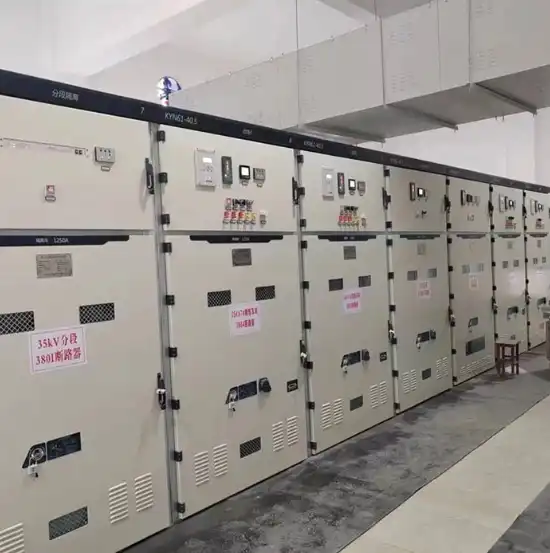
The Fundamentals of Arc-Flash Hazards in 35kV Switchgear
Before getting into ways to protect yourself, it's important to know what arc-flash dangers are in 35kV switchgear. If an electric current goes off its planned path and through the air between conductors or to ground, this is called an arc flash. At 35kV, an arc-flash event releases a huge amount of potential energy that can cause pressure waves that can explode, molten metal spray, and very high temperatures.
Even a short arc event can get hotter than 19,000°C, which is a lot hotter than the sun's surface. In milliseconds, this kind of event can damage internal parts, mess up power flow, and put people in danger. Learning these basics can help you understand why you need special safety plans for 35kV equipment.
Causes and Consequences of Arc Flashes in 35kV Systems
Arc flashes in 35kV switchgear can be caused by a number of things, such as broken equipment, human mistake, or contamination. Some common conditions that can cause an ignition event are insulation wearing down due to age, conductive dust buildup, loose connections, or accidental touch during maintenance. Even small problems can become big ones in 35kV circuits because of the higher fault currents.
Sometimes the results are terrible. Vaporized materials can burn people, harm their hearing, or hurt their lungs. Downtime, replacing technology, and fines from the government can all be very expensive for facilities. The higher voltage levels in 35kV switchgear make these risks much worse, so prevention strategies must be the top concern.
Unique Challenges of Arc-Flash Protection at 35kV
When it comes to 35kV switchgear, protecting against arc flashes is not easy. Because the voltage is higher, there is more energy available to keep an arc going. It is very important to find and stop the arc quickly. How protection technologies are set up and adjusted is also affected by bigger gaps, thicker insulation, and busbar structures with more parts.
When the power is this high, environmental factors also matter more. Arc initiation is more likely to happen when there is moisture, particle contamination, or partial discharge action. For this reason, 35kV systems need both advanced equipment design and strict upkeep procedures.
Regulatory Standards for Arc-Flash Safety in 35kV Equipment
IEEE 1584 and NFPA 70E are two standards that guide arc-flash protection in 35kV switchgear. These rules explain how to do an arc-flash hazard analysis, what personal protective equipment (PPE) is needed, and how to safely work with high-voltage equipment like 35kV switchgear.
Compliance not only makes sure that rules are followed, but it also leads to better risk management. A lot of companies use these standards as part of their own safety rules to make sure that their engineering teams and repair workers always follow the same, tested steps.
Advanced Arc-Flash Protection Technologies for 35kV Switchgear
Because 35kV switchgear comes with more risks, makers have come up with more advanced protection technologies. These new ideas are all about quickly finding and stopping arc-flash events, which makes things a lot safer and longer-lasting. Protection methods are changing toward faster and more accurate designs as systems become more connected and digitally watched.
Optical Sensing and Fast-Acting Relays in 35kV Systems
Combining optical sensing with fast-acting switches is one of the best ways to protect 35kV switchgear from arc flash. This system has light sensors that can pick up the bright light that an arc flash gives off and take safe action in milliseconds.
Response time is very important in 35kV circuits because arc energy rises very quickly. Breakers may trip much more quickly with fast-acting relays than with regular overcurrent protectors, which greatly reduces damage. These systems are also made to work in harsh substation settings with high voltages and electromagnetic interference.
Arc-Resistant Switchgear Design for 35kV Applications
Arc-resistant switchgear is designed to contain and redirect the energy of an arc flash, keeping people and close equipment safe. Because of the higher energy levels, this design is especially important in 35kV switchgear. Some of the things that may be included are pressure relief systems, insulated bus bars, and venting systems that keep arc gases away from workers.
If you design arc-resistant switchgear well, it can lower the amount of energy that can be released into the air. This lets people work close with less protective gear, which makes them safer and more comfortable without sacrificing productivity.
Remote Operation and Monitoring Solutions for 35kV Equipment
To further enhance safety, many modern 35kV switchgear installations incorporate remote operation and monitoring capabilities. This lets operators handle and watch over the equipment from a safe distance, making them less likely to be hurt by an arc flash. Digital relays, SCADA integration, and intelligent monitoring sensors provide real-time data such as temperature rise, partial discharge activity, and breaker health.
Predictive analytics can let workers know about problems before they happen, which adds an extra layer of safety and lowers the cost of maintenance.
Best Practices for Implementing Arc-Flash Protection in 35kV Switchgear
Arc-flash safety in 35kV switchgear that works well needs more than just cutting-edge technology. It needs an all-around method that includes the right way to design, install, maintain, and run it.
Conducting Thorough Arc-Flash Hazard Assessments for 35kV Systems
For 35kV switchgear, arc-flash risk studies must be done on a regular basis. When these evaluations are done, they should take into account the unique features of 35kV systems, such as their higher fault currents and longer arc lengths. Using specialized software and knowledge makes sure that risks are correctly assessed and the right safety steps are taken. Also, assessments should be updated when things change in the system, like when new equipment is added, the load increases, or protection settings are changed.
Training and Safety Protocols for Personnel Putting together 35kV switchgear
Everyone who works with or near 35kV switchgear needs to get full training. This means knowing the risks of arc flash, using PPE correctly, and following safety rules. Facilities should stress the importance of lockout/tagout processes, non-contact work, and the right way to handle high-voltage equipment. This field changes so quickly that it's important to take refresher classes and stay up to date on new technologies and standards on a regular basis.
35kV Arc-Flash Protection Systems: How to Maintain and Test Them
Arc-flash safety systems in 35kV switchgear must be tested and maintained on a regular basis to make sure they work. This includes checking optical sensors on a regular basis, trying relay systems, and making sure the integrity of arc-resistant enclosures. Because the voltages are higher for 35kV circuits, these steps need to be done with extra care. Not only does preventive repair make things safer, it also makes things last longer and makes systems more reliable.
Conclusion
Arc-flash protection in 35kV switchgear is hard to understand but very important for electrical safety and machine dependability. Organizations can greatly lower the risks of arc-flash incidents by learning about the unique problems 35kV systems face and using cutting-edge technologies and best practices. As technology continues to evolve, staying informed about the latest developments in arc-flash protection for 35kV switchgear remains essential for maintaining the highest standards of safety and operational efficiency.
FAQ
Q: What makes arc-flash protection in 35kV switchgear different from lower voltage systems?
A: Because 35kV switchgear works at higher voltages, arc flashes are stronger and more likely to cause damage. This calls for stronger safety measures, like specialty designs that can withstand arcs and faster-acting safety devices.
Q: How often should arc-flash tests be done on 35kV switchgear?
A: Arc-flash tests should be done on 35kV switchgear at least once every five years or whenever the electrical system goes through big changes. In high-risk areas, though, exams may need to be done more often.
Q: Can solutions that are added after the fact make older 35kV switchgear safer against arc flash?
A: Yes, retrofit options can make older 35kV switchgear safer against arc flash. Some of these are adding optical sensors, improving relay systems, or putting up blocks that can't conduct electricity. However, a full evaluation is needed to find the best way to proceed.
Expert 35kV Switchgear Solutions for Enhanced Arc-Flash Protection | Yuguang
At Yuguang, we specialize in providing cutting-edge 35kV switchgear solutions with advanced arc-flash protection. Our products are built on decades of expertise and innovation, backed by 39 patents and ISO 9001:2015 certification. We offer customized R&D and manufacturing services, ensuring our 35kV switchgear meets the unique needs of diverse industries. With our state-of-the-art production facilities and rigorous quality control, we deliver reliable, long-lasting, and safe switchgear solutions. For expert consultation on 35kV switchgear with superior arc-flash protection, contact our team at ygvcb@hotmail.com.
References
1. IEEE 1584-2018: IEEE Guide for Performing Arc-Flash Hazard Calculations
2. NFPA 70E: Standard for Electrical Safety in the Workplace
3. Electrical Safety Foundation International (ESFi): Arc Flash Safety Guide
4. International Electrotechnical Commission (IEC) 62271: High-voltage switchgear and controlgear
5. Occupational Safety and Health Administration (OSHA): Electric Power Generation, Transmission, and Distribution Standard

Send Inquiry
You may like
