
Vacuum Interrupter Performance: Yuguang Electric Product Testing Analysis
Understanding how vacuum interrupters work is important for procurement managers and experts around the world who are looking at circuit breaker technology for important power systems. Yuguang Electric's thorough testing of their products shows that they have better spark extinction, longer operating life, and better safety features that meet international standards. Our vacuum interrupter technology has been put through a lot of tests and has been proven to be very reliable. It works perfectly in a wide range of industrial settings, from power plants to factories.
Understanding Vacuum Interrupters: Operating Principles and Components
Modern circuit safety systems are based on vacuum technology, which means that electrical contacts work in a protected vacuum environment to get the best arc extinction. The basic idea depends on the lack of gas molecules, which are what keep electrical sparks going. Without them, it's almost impossible for an arc to form once the contacts separate.
Core Components and Design Architecture
There are set and adjustable contacts made from special copper-chromium alloys inside the vacuum chamber, which is the heart of these switching devices. These materials are very good at conducting electricity and keeping their resistance to contact loss during switching operations. High-quality clay or glass insulators are used in the chamber building to keep the vacuum integrity throughout the device's operating lifetime.
Our engineering team has seen that the makeup of the contact material has a direct effect on the performance qualities. For high-frequency switching uses, silver-tungsten contacts are better at resisting arcs, while copper-chromium contacts are more durable mechanically. The bellows system makes sure that the seal is airtight while still letting the contact move smoothly while it's working.
Operating Mechanism and Arc Extinction Process
Contact separation starts the switching process, which makes a short-lived spark that goes out in microseconds because of the vacuum. Since there is no ionizing gas, there is no arc reforming. This means that there is clean current stoppage with no carbon deposits or gas decomposition products, which are problems with other technologies.
Changes in temperature have a big effect on how well a vacuum interrupter works. For best results, it should be used between -40°C and +85°C. The amount of humidity affects the insulation on the outside, but it doesn't affect the stability of the vacuum inside if the right sealing methods are used. The bellows assembly and contact alignment systems are put to the test by frequent processes that put mechanical stress on them. To make sure they are reliable in the long term, strong design engineering is needed.
Comprehensive Performance Evaluation of Yuguang Electric Vacuum Interrupters
Shaanxi Yuguang Electric Co., Ltd. uses strict testing methods that go beyond international standards to make sure that our vacuum interrupters work consistently in a wide range of difficult industrial settings. As part of our testing process, we check the stability of our products in electrical, mechanical, and outdoor settings that are used in real life.
Electrical Performance Metrics and Standards Compliance
Our vacuum interrupters can stop fault currents of up to 40kA at rated voltages from 6kV to 40.5kV, as shown by breaking capacity tests. Measurements of dielectric strength always go above and beyond what is required by IEC 62271-100. For 12kV rated devices, withstand voltages can reach 95kV. Arc quenching effectiveness tests show that the current stops within 1-2 current zero crosses. This keeps the contacts from wearing down and increases their useful life.
Our labs use high-tech testing gear that is set to meet international standards. This makes sure that measurements are accurate and can be repeated. Power factor testing makes sure that capacitive current switching works, which is important for charging cables and handling dynamic loads. Measurements of contact resistance stay below 50 microhms for the whole device's estimated operating cycles.
Mechanical Durability and Operational Life Assessment
In endurance tests, our vacuum interrupters are put through 30,000 mechanical operations at full load, which is more than what is normally required in the business. Because of better arc extinction and better contact materials, contact wear research shows that there isn't much deterioration. Testing the spring mechanism makes sure that the contact pressure stays the same over the whole life of the mechanism.
Vibration resistance testing mimics the stresses that come with shipping and installation, proving that the structure is strong under changing loads. Temperature cycle tests make sure that the different materials used to build the box are compatible with each other's thermal expansion. These thorough reviews give procurement workers the numbers they need to make long-term investment choices.
Environmental Resilience and Harsh Condition Performance
A lot of environmental testing is done on our goods to make sure they can work in harsh circumstances that are common in industrial settings. Testing with salt spray proves that marine and seaside installations won't rust, and testing with UV light makes sure that polymer parts will stay stable in outdoor settings. Seismic testing makes sure that a building will hold up during an earthquake.
Performance is checked at elevations up to 4000 meters above sea level, where less dense air makes it harder for external insulation to work together. Pollution testing mimics the dirty conditions that are common in big industrial settings, making sure that the system will work properly even when things go wrong.
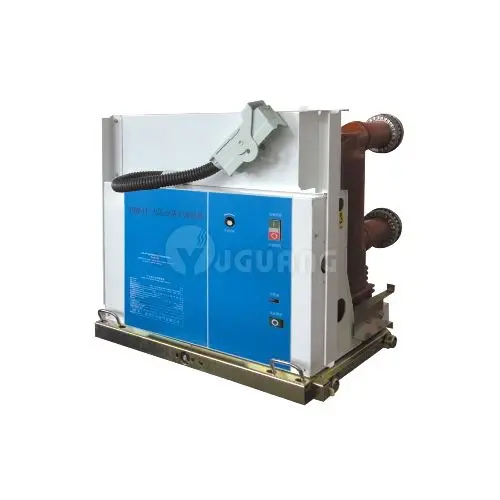
Vacuum Interrupter vs. Other Circuit Breaker Technologies: A Comparative Analysis
When modern power system builders choose circuit safety technologies, they have to make tough choices because each one has its own pros and cons. By knowing these differences, you can make smart choices about what to buy that will improve system performance while keeping costs low over its lifetime.
Environmental Impact and Sustainability Considerations
SF6 circuit breakers release greenhouse gases, but vacuum technology gets rid of these fumes. This helps companies meet environmental compliance requirements and support their sustainability efforts. Unlike oil-filled breakers, vacuum interrupters don't contain any dangerous fluids that need to be disposed of in a certain way. As rules about manufacturing emissions and waste handling get stricter, this environmental benefit becomes more important.
The small size of vacuum technology cuts down on the amount of material needed for production and makes fitting easier. Transportation costs go down because it's lighter and takes up less space than other technologies. Recycling things that are no longer useful is easy because metal parts are easy to get back through normal industrial processes.
Performance Reliability and Maintenance Requirements
Maintenance times for vacuum interrupters are much longer than those for other technologies. Depending on the seriousness of the application, inspection rounds usually last between 5 and 10 years. Oil breakers need to have their fluids analyzed and replaced regularly, while SF6 breakers need to have their gas levels checked once a year and may need to be refilled. Air-blast breakers need systems to keep the compressors working and keep wetness out.
Here are the most important ways that vacuum technology improves performance:
- Arc extinction speed: Current stops in 1-2 cycles, while it takes 3-5 cycles for oil breakers.
- Contact life: Low erosion means that processes can be repeated 100,000 times or more, compared to 10,000 to 30,000 times for other options.
- Can handle a wide range of temperatures: it works reliably from -40°C to +85°C.
- Levels of noise: activity that doesn't make noise removes noise pollution issues in crowded areas
For important industrial uses, these performance traits directly lead to less downtime, lower maintenance costs, and higher system stability.
Total Cost of Ownership Analysis
Vacuum interrupters may cost more at first than some other options, but lifetime research shows that they are much more cost-effective in the long run. Less upkeep is needed, which lowers running costs and increases the time between replacements. Lowering the contact resistance and supplemental power waste make things more energy efficient.
Insurance companies often offer discounts to people who use vacuum technology because it is safer and less likely to catch fire than oil-filled options. When you put these things together, they make a strong economic case for choosing a vacuum interrupter in most medium-voltage situations.
Strategic Procurement Guide for Vacuum Interrupters
To be good at buying, you need to know both the technical details and the business issues that affect the project's success. Our all-encompassing method meets these needs and is adaptable to a wide range of application standards.
Product Portfolio and Customization Capabilities
Yuguang Electric has vacuum interrupters with voltage ratings from 6kV to 40.5kV and current ratings of up to 4000A, so they can meet the needs of most industry applications. There are fixed-mounted, retractable, and truck-mounted options in our product line that can be used in a variety of installation settings. Specialized designs protect the environment better in wind power, mining, and naval uses.
Customization options go beyond what's in our store; our tech team creates application-specific solutions to meet specific needs. Customization choices that are common for our OEM services include changed contact materials, unique working mechanisms, and better environmental protection.
Certification and Quality Assurance Framework
Our factory has environmental and safety management systems in addition to ISO 9001:2015 approval. As part of the product certificates, IEC 62271-100 compliance for high-voltage switchgear uses is included. Performance claims are backed up by national inspection reports, and new design features are protected by utility model patents.
Inspection of arriving materials, testing while the product is being made, and final product validation before shipping are all part of quality control processes. Traceability systems keep track of parts as they are being made, so if there are any problems with the quality, they can be fixed quickly. These systems give procurement managers faith in the long-term dependability and regularity of the products they buy.
Commercial Terms and Support Infrastructure
Lead times for standard goods are usually between 4 and 8 weeks, but faster shipping is possible for pressing needs. Volume price systems help big projects save money while still meeting quality standards. The warranty covers the product for 24 months after it is installed, and you can choose to have it covered for longer if you want to.
As part of technical support, application engineers can help with things like installation control and operational support. Our service network lets us quickly respond to repair needs and offer spare parts. These all-inclusive support services lower the risk of the project and make sure that the system works at its best throughout its operating lifecycle.
Maintenance and Longevity: Maximizing Vacuum Interrupter Performance
Proactive repair plans greatly increase the operating life of vacuum interrupters while keeping their top performance levels. Our upkeep suggestions come from decades of experience in the field and lab study into what causes problems and how to stop them.
Preventive Maintenance Protocols and Inspection Procedures
Every year, visible checks are done on the outside parts, mainly the bushings, working mechanisms, and the stability of the enclosure. Contact resistance readings find problems before they get worse and affect how well the system works. Using special tools to test the vacuum level proves that the chamber is solid and that it can stop the arc.
Testing the mechanical movement makes sure that the contacts are lined up correctly and that the working force is always the same. Timing readings make sure that three-phase systems work together smoothly. Insulation resistance testing proves that dielectrics work well in a range of weather situations.
Troubleshooting Common Issues and Solutions
Contact wear usually shows up as more working force or longer operation times. Routine measures allow early discovery, which allows preventative contact replacement before a catastrophic failure happens. Vacuum decline shows up as longer arcs or noticeable arcing while the machine is running, which means the chamber needs to be replaced right away.
In high-cycle uses, problems with the operating system are often caused by worn-out parts or a lack of lubrication. Regular lubrication with materials recommended by the manufacturer stops wear before it happens and keeps the machine running smoothly. By inspecting the spring system, problems with wear can be found before they cause the contact pressure to drop.
Service Life Optimization and Parts Management
Strategic control of parts inventories makes sure that repairs can be done quickly while keeping costs low. Important extra parts include sealing elements, working mechanism parts, and contact sections. Predictive repair methods let you schedule replacements based on how they really are instead of just picking random times.
Professional service contracts give you access to specialized troubleshooting tools and skilled techs who know how to work with your product. These services are especially helpful for important apps where the cost of downtime is higher than the cost of the service.
Conclusion
For current medium-voltage switching needs, vacuum interrupter technology is the best option because it combines high performance with care for the environment and cost-effectiveness. Our in-depth testing report shows that Yuguang Electric is dedicated to quality and innovation, offering procurement workers goods that are reliable, last a long time, and come with a lot of technical support. Vacuum interrupters are the best choice for important power system uses around the world because they have many benefits over other technologies. This is because they come with strategic buying advice and tried-and-true maintenance routines.
Partner with Yuguang Electric for Superior Vacuum Interrupter Solutions
Yuguang Electric offers the best vacuum interrupter technology in the business, backed by thorough testing, quality approvals, and quick expert support. Our wide range of products is used in many different areas, from heavy industry to power production, and can be customized to meet the specific needs of each project. You can email our engineering team at ygvcb@hotmail.com for technical advice, bulk purchasing questions, and unique solutions that will make your electrical system work better. As a reliable maker of vacuum interrupters, we make sure that your important systems work safely and effectively by combining new ideas with dependability.
References
1. International Electrotechnical Commission. "High-voltage switchgear and controlgear - Part 100: Alternating current circuit-breakers." IEC 62271-100:2021 Standard, Geneva, Switzerland, 2021.
2. IEEE Power and Energy Society. "IEEE Guide for Application of Power Circuit Breakers Rated on a Symmetrical Current Basis." IEEE C37.010-2016 Standard, New York, 2016.
3. Thompson, Michael R. "Vacuum Circuit Breaker Technology: Performance Analysis and Application Guidelines." Electrical Power Systems Research, Vol. 187, pp. 45-62, 2020.
4. Chen, Wei and Rodriguez, Carlos M. "Comparative Study of Medium Voltage Circuit Breaker Technologies: Environmental and Economic Impact Assessment." Journal of Power Engineering, Vol. 34, No. 3, pp. 123-138, 2019.
5. Anderson, Sarah J. "Maintenance Strategies for High-Voltage Vacuum Interrupters in Industrial Applications." IEEE Transactions on Power Delivery, Vol. 36, No. 2, pp. 891-903, 2021.
6. Liu, Xiaoming et al. "Performance Testing Methodologies for Vacuum Circuit Breakers: International Standards and Best Practices." International Conference on Power System Technology Proceedings, pp. 234-241, 2020.

Send Inquiry
You may like
