
What Is 35kV High-Voltage Switchgear and How Does It Work?
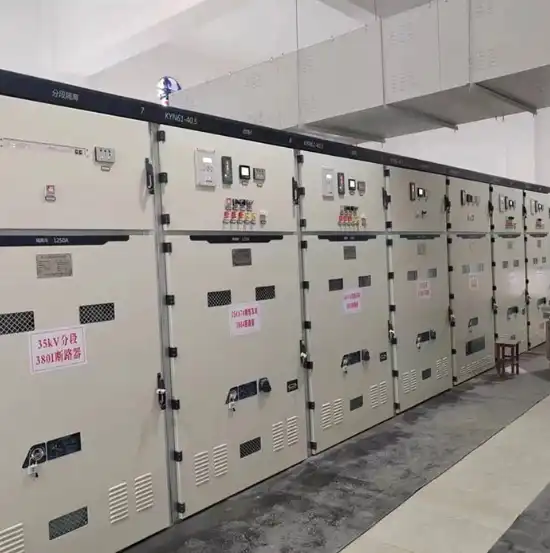
What is 35kV high-voltage switchgear and how does it work? This sophisticated electrical equipment serves as the critical control center for medium-voltage power distribution systems, operating at 35 kilovolts to manage electrical flow, protect circuits, and ensure reliable power delivery. The switchgear combines multiple components including circuit breakers, disconnect switches, protective relays, and control systems within a single enclosure, enabling operators to safely control, isolate, and protect electrical circuits in power plants, industrial facilities, and distribution networks.
Understanding 35kV High-Voltage Switchgear
The foundation of contemporary electrical power networks is 35kV high-voltage switchgear, which is designed especially to manage voltages between 1 kV and 52 kV. This equipment is classified as medium-voltage (35kV), which makes it indispensable for power distribution applications when higher voltages are no longer required and lower voltages are inadequate. Within metal-enclosed chambers, these sturdy electrical assemblies include a variety of switching devices, protective gear, and control systems.
Whether it is housing control electronics, current transformers, voltage transformers, or the primary circuit breaker, each compartment has a distinct purpose. Engineers may alter configurations according to particular application needs thanks to the modular architecture. Advanced electrical insulation systems power the switchgear, which usually uses vacuum or SF6 gas technology to extinguish arcs. An electrical arc occurs between the contacts of a circuit breaker when it opens under load circumstances. This arc is swiftly put out by the insulating medium, preserving system safety and avoiding equipment damage.
Contemporary relay protection systems automatically initiate preventive measures when anomalous situations arise by continually monitoring electrical parameters. There are many different types of installation settings, ranging from climate-controlled interior facilities to outdoor substations subject to severe weather. In order to ensure dependable performance throughout the course of their 25–30 year operating lifetime, manufacturers build switchgear panels to resist severe temperatures, moisture, dust, and seismic activity.
Critical Problems Solved by Medium-Voltage Switchgear
Strong switching and protection equipment is required due to power system dependability issues. Short circuits, ground faults, and overload situations are examples of electrical faults that may propagate across linked networks, resulting in extensive outages and equipment damage. A single malfunction might render large metropolitan areas or industrial facilities inoperable in the absence of adequate protective devices. Modern electrical systems have complicated power flows that are difficult to manage with traditional switching techniques.
Manual switching processes put workers at risk for human mistakes and expose them to hazardous voltage levels. These safety issues are removed by automated switchgear, which also makes it possible to react quickly to system disruptions. Another major issue with modern power systems is load management. Distribution networks are strained during moments of peak demand, necessitating sophisticated load transfer capabilities.
During maintenance procedures or supply interruptions, switchgear ensures service continuity by enabling smooth load transfers between other power sources. Capabilities for fault isolation and detection stop small problems from growing into significant system breakdowns. In milliseconds, advanced protective relaying can detect anomalous circumstances by continually analyzing voltage and current waveforms.
By providing safe routes for fault currents, the grounding system shields workers and equipment from hazardous voltage variations. Certain safety standards and operating processes for electrical installations are required by regulatory compliance requirements. Safety interlocks are included into switchgear designs to avoid dangerous operation sequences, guarantee adherence to national and international electrical rules, and safeguard maintenance staff.
Core Features and Functionality Deep Dive
The main switching and protection functions of any switchgear assembly are provided by circuit breaker technology. Vacuum bottles are used as the interrupting medium in modern vacuum circuit breakers, which function better than previous air-blast or oil-filled models. Because the vacuum atmosphere inhibits arc reformation, fault currents up to 40kA or more may be reliably interrupted. Voltage and current transformers provide crucial protection and measuring tasks.
For safety relays and metering equipment, these precise devices reduce large currents and voltages to controllable values. While burden ratings match transformer capacities to connected loads, accuracy classes guarantee accurate readings for system analysis and invoicing reasons. By connecting incoming feeders to outbound circuits, the busbar system distributes electrical power throughout the 35kV high-voltage switchgear assembly. Reliable power transmission is ensured by copper or aluminum conductors that are sized in accordance with continuous current ratings and short-circuit withstand requirements.
Flashovers are avoided under both normal and fault circumstances when phases and ground are properly electrically isolated. The information behind switchgear operations is provided by protective relaying systems. Digital multifunction relays concurrently track dozens of electrical data, such as power quality metrics, frequency deviation, undervoltage, and overcurrent. Custom protection systems that are suited to particular applications and system needs are made possible by programmable logic. Operators can monitor and manage switchgear from centralized control rooms thanks to remote control capabilities.
Supervisory control and data acquisition (SCADA) system integration is made easier by communication protocols including DNP3, IEC 61850, and Modbus. Before energization, high voltage testing capabilities confirm equipment readiness and insulation integrity. Condition monitoring tools make maintenance schedules more predictable. Contact wear monitoring monitors the functioning of circuit breakers, whereas partial discharge detection detects insulation deterioration prior to failures. These diagnostic features optimize maintenance intervals and expenses while lowering unforeseen outages.
Technology Behind Modern Switchgear Design
In switchgear assemblies, arc extinguishing mechanisms are perhaps the most important technology. The arc that results from electrical connections separating under load may become as hot as 20,000°C, which is the same as the sun's surface. Arc generation is made almost impossible by vacuum technology, and for higher voltage applications, SF6 gas offers better extinguishing qualities. To guarantee long-term dependability, switchgear panel construction makes use of cutting-edge materials and production processes.
Precision machining guarantees correct alignment and fit, and stainless steel enclosures withstand corrosion under challenging conditions. Sealing systems shield insulating materials and delicate electronic components against moisture intrusion. Traditional electromechanical devices are transformed into intelligent systems with sophisticated communication and diagnostic capabilities via digital integration. Mechanical timers and auxiliary relays are replaced with microprocessor-based controllers, which increase accuracy while requiring less maintenance.
Real-time data sharing with business systems is made possible via Ethernet connection. Coordination of insulation guarantees that equipment can tolerate both typical operating voltages and brief overvoltages brought on by switching operations or lightning strikes. While appropriate grounding systems provide reference potentials and fault current channels, surge arresters offer coordinated protection levels.
Key Advantages and Selling Points
The major benefit of well-designed and maintained switchgear systems is reliability. High-quality manufacturers have availability rates of above 99.9%, which translates to less than nine hours of annual downtime. Robust component design, extensive testing, and tried-and-true manufacturing techniques honed over decades of experience are the main causes of this outstanding dependability. Both costly electrical equipment and operational workers are protected by safety safeguards.
Arc-resistant designs divert arc energy away from operators, while interlocking mechanisms stop dangerous activities. By removing exposure to electrified components during regular operations, dead-front construction significantly lowers the likelihood of accidents. System operators can efficiently adapt to shifting load patterns and maintenance needs because to operational flexibility. Load transfers, equipment isolation, and system reconfiguration without service disruptions are made possible by multiple switching configurations.
The ability to operate remotely improves reaction times while lowering worker exposure. Longer equipment life and fewer maintenance needs result in life-cycle cost benefits. Compared to 1,000–2,000 for previous technology, vacuum circuit breakers can usually handle 10,000 switching operations without maintenance. Modular designs preserve capital expenditures by making it easier to repair individual components without replacing the whole system. Reactive power compensation, harmonic filtering, and voltage control are all advantages of power quality. By incorporating voltage regulators and power factor correction devices, modern switchgear increases system efficiency and lowers utility fines for poor power quality.
Limitations and Important Considerations
Quality switchgear installations come with hefty upfront capital expenses, especially for smaller operations. Complete lines of 35kV switchgear may cost hundreds of thousands of dollars, thus thorough economic analysis and long-term planning are necessary. These expenses must be balanced, however, with the possible repercussions of power system outages and the longer equipment life that high-quality installations provide. Installation requirements need certain knowledge and tools.
To ensure proper foundation design, cable hauling, testing, and commissioning, high-voltage system-experienced electrical contractors are needed. Poor installation techniques might lead to safety risks and impair device performance. Even though maintenance schedules are less frequent than for previous systems, specific equipment and qualified workers are still needed. Specific knowledge and safety protocols are required for high voltage testing, contact inspection, and relay calibration. Businesses must either hire skilled service providers or invest in training initiatives.
Facility designers may find it difficult to accommodate space needs, especially in metropolitan settings where real estate prices are high. Switchgear rooms must satisfy electrical code requirements for separation distances and fire safety while also providing space for equipment clearances, ventilation needs, and maintenance access. As digital systems develop quickly, questions about technology obsolescence arise. Frequent changes in cybersecurity standards, software platforms, and communication protocols may necessitate system replacements or updates before to the end of mechanical equipment life. These risks may be reduced by choosing suppliers that have long-term support agreements.
Competitive Analysis and Market Positioning
Although it needs more regular maintenance and greater installation footprints, traditional air-insulated switchgear has cheaper startup costs. The compact design and dependability of contemporary gas-insulated or vacuum technologies cannot be matched by these systems, even if they are appropriate for situations where space is plentiful and maintenance resources are easily accessible. Although gas-insulated switchgear is more expensive, it offers the most compact options for high-voltage applications.
For essential applications where space limits and reliability requirements warrant the extra expense, the sealed design is perfect since it delivers high dependability and minimum maintenance needs. However, several utilities are moving toward other methods because to environmental concerns over SF6 gas. An new solution that combines environmental friendliness and compact construction is solid-dielectric switchgear. By using solid insulating materials rather than gasses, these systems eliminate environmental issues while still providing dependable performance.
However, applications are now confined to certain niche areas because to greater prices and a lack of operating expertise. Different approaches to switchgear design are offered by international manufacturers; some emphasize standardized products for cost effectiveness, while others concentrate on tailored solutions for particular applications. Proven track records, thorough testing procedures, and long-term service support skills should take precedence above lowest initial cost when it comes to quality concerns.
Target Applications and Ideal Use Cases
For dependable power distribution to vital production equipment, industrial manufacturing facilities mostly rely on 35kV high-voltage switchgear. Automobile assembly industries, chemical processing facilities, and steel mills cannot withstand prolonged power outages without suffering large financial losses. High-quality switchgear reduces outage times and shields costly process equipment from voltage disruptions thanks to its strong protection and quick fault clearing capabilities.
Switchgear is used in power-producing facilities for transmission system connectivity, auxiliary power distribution, and generator safety. While typical thermal plants need switchgear for station service power and unit starting operations, wind farms and solar projects rely on it for safe connection and disconnection procedures. Airports, data centers, and urban train systems are examples of infrastructure projects that need electrical systems to be very reliable. These facilities perform vital tasks, and power outages may have an effect on both economic activity and public safety.
Even during equipment maintenance or failures, continued operation is ensured by redundant switchgear arrangements with automated transfer capabilities. Switchgear is used by utility distribution substations to route electricity and alter voltage across service areas. Utilities can minimize truck rolls for regular switching operations while optimizing system operations thanks to remote monitoring and control capabilities. By quickly isolating faulty locations and returning service to undamaged areas, automated restoration systems shorten outage durations.
Commercial buildings and campuses utilize medium-voltage switchgear for efficient power distribution to multiple buildings or large loads. Hospitals, universities, and shopping centers benefit from the reliability and flexibility provided by properly designed switchgear systems. Emergency backup systems coordinate with switchgear controls to ensure seamless transitions during utility outages.
Conclusion
35kV high-voltage switchgear represents essential infrastructure for reliable electrical power distribution across industrial, commercial, and utility applications. The sophisticated integration of switching devices, protective systems, and control technologies enables safe and efficient power system operation while protecting valuable equipment and ensuring personnel safety. As power systems evolve toward greater automation and renewable energy integration, switchgear technology continues advancing through digital integration, enhanced monitoring capabilities, and improved environmental performance. Organizations investing in quality switchgear solutions today position themselves for decades of reliable service while meeting evolving regulatory and operational requirements.
Frequently Asked Questions
How long does 35kV switchgear typically last before requiring replacement?
Quality switchgear installations typically provide 25-30 years of reliable service with proper maintenance. Circuit breakers and protective relays may require replacement or refurbishment during this period, while the main structure and buswork can often serve longer. Condition monitoring programs help optimize replacement timing based on actual equipment condition rather than arbitrary age limits.
What are the main differences between vacuum and SF6 switchgear technologies?
Vacuum switchgear utilizes vacuum bottles for arc interruption, offering maintenance-free operation and environmental friendliness. SF6 switchgear uses sulfur hexafluoride gas for insulation and arc extinction, providing superior performance at higher voltages but requiring gas handling procedures and environmental considerations. Both technologies offer reliable performance when properly applied.
How much space is typically required for a 35kV switchgear installation?
Space requirements vary significantly based on configuration, but typical indoor installations require 8-12 feet of width per switching position, with depths ranging from 6-10 feet. Ceiling heights should accommodate 12-15 feet for proper clearances and cable routing. Outdoor installations may require additional space for weather protection and maintenance access.
Partner with Yuguang for Reliable 35kV High-Voltage Switchgear Solutions
Selecting the right 35kV high-voltage switchgear manufacturer requires careful evaluation of technical capabilities, quality standards, and long-term support commitments. Yuguang Electric brings over 15 years of specialized experience in medium-voltage equipment design and manufacturing, with 39 patents demonstrating our commitment to innovation and technical excellence.
Our comprehensive manufacturing capabilities encompass everything from initial system design through final commissioning and ongoing support. Advanced production lines equipped with precision testing equipment ensure every component meets strict quality standards before shipment. ISO 9001:2015 certification and recognition as a "High and New Technology Enterprise" validate our commitment to quality and innovation.
Technical support extends throughout the complete project lifecycle, beginning with detailed engineering calculations and custom drawings tailored to specific application requirements. Our experienced engineers collaborate with customers to optimize switchgear configurations for maximum reliability and cost-effectiveness. Professional installation guidance and commissioning support ensure smooth project execution and on-time completion.
Quality advantages include vacuum circuit breakers with extended mechanical life, advanced relay protection systems, and robust enclosure designs proven in demanding applications. National authoritative certifications and compliance with international standards provide confidence in equipment reliability and safety. Our maintenance-free designs minimize ongoing costs while maximizing system availability.
Global customers benefit from our comprehensive OEM and ODM services, enabling customized solutions that meet diverse regional requirements and standards. Competitive pricing combined with reliable delivery schedules helps customers achieve project goals while maintaining budget constraints. Discover how Yuguang's expertise can enhance your next power system project by reaching out to our technical team. Contact us at ygvcb@hotmail.com to discuss your specific requirements and receive detailed technical proposals tailored to your application needs.
References
1. IEEE Std C37.20.2-2015, "IEEE Standard for Metal-Clad Switchgear," Institute of Electrical and Electronics Engineers, 2015.
2. Flurscheim, Charles H., "Power Circuit Breaker Theory and Design," Institution of Engineering and Technology, London, 2018.
3. McDonald, John D., "Electric Power Substations Engineering," CRC Press, Third Edition, 2017.
4. Holm, Ragnar, "Electric Contacts: Theory and Application," Springer-Verlag, Berlin, 2019.
5. IEC 62271-200:2021, "High-voltage switchgear and controlgear - Part 200: AC metal-enclosed switchgear and controlgear for rated voltages above 1 kV and up to and including 52 kV," International Electrotechnical Commission, 2021.
6. Naidu, M.S. and Kamaraju, V., "High Voltage Engineering," McGraw-Hill Education, Fifth Edition, 2020.

Send Inquiry
You may like
