
What is the difference between a breaker and a load break switch?
The primary difference between a breaker and a load break switch lies in their protection capabilities: circuit breakers provide both normal switching and fault current interruption, while load break switches handle normal load switching but cannot interrupt fault currents. A load break disconnect switch specifically enables safe isolation of circuits under normal load conditions without short-circuit protection, making it ideal for maintenance operations in medium-voltage applications where visible disconnection is crucial for worker safety.
Introduction to Breakers and Load Break Switches
Electrical experts and procurement workers who work with power distribution systems need to know the main differences between circuit breakers and load break switches. In power plants, utility networks, and industry sites, these devices all play different roles in keeping the electricity safe and running smoothly.
Circuit breakers are all-around safety devices that are meant to automatically cut off electrical lines when something goes wrong. They find cases with too much current, short circuits, and ground problems and open the circuit right away to stop damage to equipment and safety risks. Modern circuit breakers have complex trip systems that work in both thermal and magnetic situations. This makes them essential for keeping expensive electrical equipment safe.
On the other hand, load break switches allow controlled switching activities when the load is normal, but they don't stop fault currents. These tools let workers safely turn circuits on or off during regular repair, load transfers, or system reconfigurations. The main difference is that they can't stop fault currents on their own, so they need to work with safety systems further upstream.
Understanding Load Break Disconnect Technology
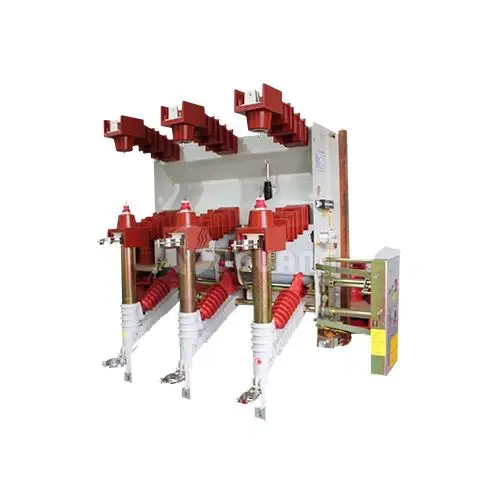
Load break disconnect switches are a special type of switching equipment that can stop a load and easily separate it from the power source. Advanced arc extinction technologies, like pneumatic systems or SF6 gas insulation, are used by these devices to safely stop load currents up to their maximum capacity. The clear gap made during opening operations lets workers know for sure that the circuit is cut off, which meets safety standards for repair work.
The difference in language between load break switches and load break disconnect switches often causes problems when buying things. Both devices can switch loads, but disconnect switches are better at isolating them because the contacts are clearly separated. This makes them very useful in situations where lockout/tagout processes are important for worker safety.
Technical Comparison Between Breakers and Load Break Switches
When you look at how circuit breakers and load break switches work, you can see that they are very different in ways that affect how they can be used. Circuit breakers use complex trip units with current transformers, computer controls, and timing devices that keep an eye on the conditions of the circuit all the time. When fault currents go over certain limits, these systems use spring-loaded or magnetic actuators to quickly separate the contacts. A load break disconnect, by contrast, is designed only to safely interrupt normal load currents and provides no fault current interruption capability.
The mechanisms that make load break switches work can be either manually or automatically, and they are meant to switch activities on purpose. In contrast to breakers, they don't have automatic trip features and need to be controlled by a person. The switching mechanism's main job is to safely put out the arc that forms when contacts separate under normal load conditions. This can be done with air blast, vacuum, or gas-insulated technologies.
Voltage and Current Ratings Analysis
Different switching devices have different performance traits that can be seen in their technical specs. At middle voltage levels, circuit breakers can usually stop currents between 10kA and 63kA, which means they can clear large fault currents. Their continuous current rates range from 630A to 4000A, so they can handle a wide range of load needs in industry settings.
Load break disconnect switches generally provide lower interrupting capabilities. They can handle load currents of up to 1250A at voltages up to 38kV. But they can only stop fault currents at certain levels, and they usually need to work with circuit breakers or fuses further up the line to make sure the whole system is protected.
Meeting international standards is a very important part of choosing tools. Load break switches must meet IEC 62271-103 standards, while circuit breakers must meet IEC 62271-100 or IEEE C37.04 standards. These standards spell out how to test, what performance is needed, and what safety standards are needed to make sure that things work reliably in tough industrial settings.
Real-World Application Scenarios
There are clear uses for each type of device in industrial power plants. Circuit breakers keep generator feeds, main transformers, and important motor circuits safe by cutting off fault current as soon as possible. Their automatic operation makes sure that they respond quickly to problems without any help from a user, keeping the system stable in case of an emergency.
Load break switches are great for tasks that need to switch between states often, like controlling capacitor banks, changing transformer taps, or sectionalizing feeders. Their strong switching mechanisms can handle repeated operations and provide reliable service in normal operating situations where fault protection is handled by different devices.
Detailed Analysis of Load Break Disconnect Switch
Load break disconnect switches are highly advanced devices that are made to meet specific operating needs in medium-voltage settings. These devices have both load switching and visible disconnection features, making them a complete option for places that need a lot of repair and where worker safety and working efficiency meet.
These switches work by managing the arc current in a controlled way while they are switching. Compressed air is used to quickly put out switching sparks in advanced pneumatic systems, like those found in 24kV pneumatic type load break switches. During the starting stroke, the piston-cylinder arrangement squeezes the air, causing a high-speed blast that cools and de-ionizes the arc path, stopping re-strike conditions.
Safety Features and Maintenance Considerations
Most modern load break disconnect switches have a number of safety features that make them easier to use. Interlocking devices stop operations that could be dangerous and make sure that the right switching processes happen during repair work. There are position indicators that make it easy to see what the state of a switch is, and mechanical locks that keep the switch from being used during long repair periods.
The maintenance plans for these devices stress preventative care to make sure they work well for a long time. Equipment lasts longer when the touch areas are checked regularly, the moving parts are oiled, and the arc extinguishing systems are checked. Many of the parts can be seen, which makes maintenance easier than with covered circuit breaker designs. This makes diagnosis easier and lowers the cost of maintenance.
The advantages of load break disconnect switches extend beyond basic switching functionality. Here are the core benefits these devices provide:
• Enhanced Safety: Visible isolation gaps eliminate uncertainty about circuit status during maintenance
• Environmental Compatibility: Air-blast designs avoid SF6 gas environmental concerns while maintaining performance
• Cost Effectiveness: Lower initial costs compared to circuit breakers for applications not requiring fault interruption
• Maintenance Accessibility: Open designs enable direct inspection of critical components
• Operational Flexibility: Both manual and automatic operation choices meet a range of control needs.
These benefits directly address common problems in the industrial world, like cutting down on repair downtime, making workers safer, and keeping capital costs low while keeping electricity operation reliable.
However, there are problems with distribution, such as limited fault current capability that needs to be coordinated with protective devices, possible exposure to environmental conditions that could affect reliability, and practical complexity in some switching sequences. Knowing these limits lets you use them correctly in general system security schemes.
Making the Right Choice: Breaker vs Load Break Switch
To choose between circuit breakers and load break disconnect, you need to carefully look at a number of technical and financial factors. When choosing a device, the type of load is very important. For example, continuous loads work best with load break switches for regular switching, while changeable or fault-prone loads need circuit breakers.
Analysis of switching frequencies shows important selection factors. Load break switches are better for applications that need to switch things on and off every day or once a week than circuit breakers that are mostly meant for emergencies because they can handle repeated mechanical processes better. On the other hand, important safety applications value circuit breaker reliability more than switching endurance.
Budget and Infrastructure Compatibility Assessment
Cost analysis needs to look at both the starting prices of the equipment and the long-term costs of running it. Load break disconnect switches usually cost 30–50% less to buy than similar circuit breakers, which makes them a good choice for projects that need to stay within a budget. But based on how the system is set up, the need for different safety devices may cancel out any initial savings.
To make sure that two pieces of infrastructure can work together, you have to look at the current security, control, and repair systems. Load break switches are easy to add to systems that already have enough protection upstream, while circuit breakers offer full protection packages that are good for new installs or big system upgrades.
Comparative study with similar switching systems makes the limits of the choices clear. Fuse switches are cheaper, but they can't be used again and again. Vacuum contactors, on the other hand, can switch quickly, but they can only handle a certain voltage. It's cheaper to use air break switches for high voltages, but they take up more room when installed than small circuit breaker designs.
To choose a supplier, you have to look at makers who have a history of success in certain application areas. Eaton, Siemens, ABB, and Schneider Electric are just a few of the companies that make a wide range of products and have well-established support networks. Other companies may be able to provide cost-effective solutions for certain uses. Different ways to buy things, like directly from manufacturers, authorized dealers, and engineering companies, each have their own benefits that depend on the size and needs of the project.
Conclusion
The main difference between circuit breakers and load break disconnect is how they protect and how they’re used. With their automatic trip features, circuit breakers offer full fault protection. Load break switches, on the other hand, are best for routine switching tasks without the ability to stop faults. Load break disconnect switches are a good compromise because they move the load while also allowing for obvious isolation to improve safety. Selection is based on factors unique to the application, such as the type of load, the frequency of switches, the budget, and how well it works with the current infrastructure. By knowing these differences, you can make smart purchasing choices that improve both safety and working efficiency in electricity distribution systems.
FAQ
What is the main difference between a circuit breaker and a load break switch?
Circuit breakers can do both normal switching and automatic fault current stoppage. Load break switches, on the other hand, can only do normal switching and can't protect against faults. Circuit breakers naturally trip when there is too much current, but load break switches need to be operated by hand and rely on devices upstream to protect them from faults.
When should I choose a load break disconnect switch over a circuit breaker?
If you need to do regular switching tasks and want to make sure that workers are safe while doing maintenance, choose a load break disconnect switch. Fault protection is given by devices further upstream. These switches work great for moving capacitor banks, isolating transformers, or dividing feeders into sections when they need to be used often and clearly show when they are disconnected.
How do I test a load break disconnect switch properly?
During testing, the mechanical action is checked by going through full open-close cycles, the contact resistance is measured to make sure the link is solid, and dielectric tests are done to confirm the insulation works. For reliable operation, it's just as important to check the accuracy of the position signal as it is to look at the arc extinction components.
What safety considerations apply when using load break switches?
Some important safety factors to think about are making sure that upstream protective devices stop the fault current properly, checking that the interlocking steps are correct to avoid dangerous operations, and making sure that the system is clearly isolated before starting any maintenance. Operators need to know what the limits of the device are and should never use load break switches to try to stop fault currents.
Call to Action – Partner with Yuguang for Superior Load Break Disconnect Solutions
To choose the best switching option for your electricity infrastructure, you need to get advice from a professional. Yuguang Electric has been making products for more than 15 years and has advanced research and development (R&D) skills. They have 39 patents and ISO certifications that guarantee their reliable, high-quality load break disconnect products. Our wide range of products includes solutions for 6kV to 40.5kV uses, as well as custom made options for power plants, factories, and utility networks. As a trusted load break disconnect provider, we offer full professional help from the beginning of the planning process to the end of the maintenance period. Get in touch with our engineering team at ygvcb@hotmail.com for a customized chat and find out why top companies choose Yuguang for their most important switching needs.
References
1. IEEE Standards Association. "IEEE Standard for AC High-Voltage Circuit Breakers Rated on a Symmetrical Current Basis." IEEE C37.04-2018.
2. International Electrotechnical Commission. "High-voltage switchgear and controlgear - Part 103: Switches for rated voltages above 1 kV up to and including 52 kV." IEC 62271-103:2021.
3. Naidu, M. and Kamaraju, V. "High Voltage Engineering: Fundamentals of High Voltage Engineering." McGraw-Hill Education, 2013.
4. Flurscheim, Charles H. "Power Circuit Breaker Theory and Design." Institution of Engineering and Technology, 2018.
5. Greenwood, Allan. "Electrical Transients in Power Systems: Analysis, Recognition, and Mitigation." John Wiley & Sons, 2020.
6. Ryan, Hugh M. "High Voltage Engineering and Testing: Practical Aspects of High Voltage Technology." Institution of Engineering and Technology, 2019.

Send Inquiry
You may like
