
What is the purpose of a load break switch?
A load break switch's job is to safely cut off and separate electrical lines that are carrying load current. It is an important safety feature in medium and high-voltage distribution systems. Standard disconnect switches can only work when the power is off. A load break disconnect, on the other hand, can open circuits safely when the power is on without risking arcing or damaging the equipment. Because of this, it is necessary for planned repair, system reconfiguration, and emergency isolation in power delivery networks that serve data centers, steel factories, and other businesses. The device physically splits electrical contacts and uses arc extinction technologies, like pneumatic air blasts or insulating materials, to quickly put out the electrical arc that is made during switching operations. This protects people and the stability of the system.
Understanding the Load Break Switch: Definition and Core Functions
What Makes Load Break Switches Different from Standard Disconnectors
In electricity distribution systems, load break switches play a unique role. Load break technology interrupts energized circuits directly while they are still carrying normal operating currents. Conventional disconnect switches only provide obvious isolation after circuits are de-energized through upstream breakers. This difference changes the way upkeep is done and how flexible the system is. The device has arc extinction chambers or systems that cool and de-ionize the plasma arc that forms when two contacts are put apart by voltage. If this feature wasn't there, starting a circuit that is already on would cause a deadly arc that could hurt people and damage equipment.
Arc Extinction Mechanisms and Operational Principles
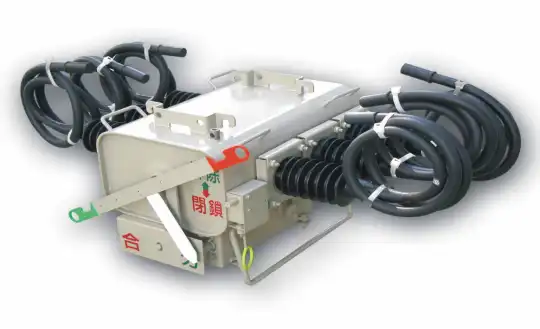
Several types of technology are used in modern load break switches to control arc extinction. Some pneumatic systems, like the 24kV Pneumatic Type Load Break Switch LBS, use piston-cylinder sets that squeeze air during the release stroke. The high-speed blast of compressed air across the contact gap cools the spark and spreads out ionized particles that carry electricity. Even in tough conditions, the mechanical linkage makes sure that the strength of the air blast rises in a straight line with the opening speed. This stops the circle from striking again. Other designs use SF6 gas or pressure bottles, but pneumatic systems are better for the environment and have clear gaps between components that maintenance teams like during service work.
Core Functional Advantages in Industrial Applications
The practical gains go beyond just cutting the circuit. Load break switches cut down on equipment downtime by getting rid of the need to organize multiple swapping tasks through remote circuit breakers. Maintenance teams can safely turn off certain parts of distribution networks while leaving neighboring circuits fully charged. This keeps factories running, even when unexpected power outages cost a lot of money per minute. Safety for workers is improved by the controlled switching action and clear separation gap, which makes it clear that circuits are no longer live. The stability of the system goes up because the upstream protective devices don't have to do as much regular switching work, which isn't their main job when there's a fault.
Types and Ratings of Load Break Disconnect Switches
Classification by Design and Isolation Visibility
Knowing the different types of load break switches makes it easier to match tools to specific work needs. Visible break designs have an air gap between the contacts that can be seen. This lets repair workers make sure that the circuit is completely cut off before they touch equipment further downstream. In fields with strict lockout-tagout rules, this function is very useful. For applications requiring a load break disconnect with visible isolation, these designs are often the preferred choice. In harsh industrial settings like steel mills and cement plants, where dust and corrosive atmospheres make equipment last less long, non-visible break switches keep contacts inside covered rooms. These switches have small sizes and better protection from environmental contaminants.
Critical Rating Parameters and Selection Criteria
To choose the right load break switches, you have to understand how several electrical grades affect each other. Rated voltage tells you the highest system voltage that the device can safely cut off and disconnect. Most devices have values for 12kV, 24kV, or 36kV. Rated current tells you how much steady current it can take in a certain environment. It can be anywhere from 200A for small distribution uses to 3,150A for main substation lines. The interrupting capacity tells you how much of the rated power the switch can safely break. This is usually given as a number, like 100% for motor loads and resistive circuits.
The Basic Insulation Level shows how much voltage stress the circuit can handle during short-term events. A 24kV class switch that is designed to BIL 125kV can handle lightning impulse voltages of 125 kilovolts without flashover, which keeps equipment further down the line from being damaged by surges. Procurement managers should make sure that these rates are higher than what the system actually needs with enough safety gaps, especially in places where there are a lot of moving activities or where the environment is harsh.
Industrial versus Residential Grade Distinctions
Load break switches made for industrial use are built to last and can handle high duty cycles and harsh environments. Heavy-duty contact materials don't wear down from repeated arcing, and chemical exposure in petroleum plants doesn't damage corrosion-resistant shelters. According to IEC standards, mechanical endurance rates hit M1 or M2 classification, which means that the machine will work 1,000 to 2,000 times before it needs major repair. These switches work well with motor control centers, variable frequency drives, and safety plans for transformers.
For homes and small businesses, simpler designs work best because the distribution transformers and service doors only need to be switched on and off sometimes. Costs go down while safety margins stay the same for these less demanding uses because mechanical endurance requirements and short-circuit withstand rates are lowered.
Comparison and Decision-Making: Load Break Switches vs. Alternative Solutions
Load Break Switches versus Circuit Breakers
Choosing between load break switches and circuit breakers comes down to how much safety you need and how much it costs. Circuit breakers automatically stop faults by opening circuits when short-circuits or overloads happen thanks to built-in overcurrent monitoring. Having this kind of safety costs more and is harder to keep up because it requires electronic trip units or electromechanical switches. Load break switches can only be controlled by hand or from a distance because they don't have built-in problem monitoring. But when used with current-limiting fuses, they make cheap safety systems that work for transformer primaries, capacitor banks, and distribution lines where automatic reclosing is not needed.
There are big differences between operational traits. Circuit breakers stop faults with currents many times their estimated capacity. In medium-voltage settings, this is usually between 25kA and 63kA. Load break switches can't be used as main fault protection devices because they can only stop normal load currents. In situations where upstream circuit breakers protect against faults and load break switches do normal separation and switching, this limitation doesn't matter. The difference in price can be as much as 40 to 60 percent, which makes load break switch options appealing for projects that need to stay within their budgets without sacrificing safety.
Load Interrupters and Fuse Switch Combinations
As a middle-ground device, load interrupters combine the ability to switch loads with the limited ability to interrupt faults through built-in current-limiting fuses. When room is limited, these units work especially well in pad-mounted transformers and underground distribution systems that need small designs. The fuse element handles fault currents, and the load break device safely stops regular loads. This makes for a cheap safety system. To evaluate these options, you need to look at how they might fail and how much it would cost to fix them.
After fault operations, fuse parts need to be replaced, which adds to the cost of materials and downtime. Circuit breakers can be reset after a fault without having to repair any parts, but their higher starting cost means that they take longer to pay for themselves. When you pair load break switches with separate fuse cutouts, you get modularity. For example, replacing blown fuses costs less than replacing whole interrupter units, but you still have working freedom.
Air Break Switches and Isolation Applications
In systems where upstream devices stop load currents, traditional air break switches that can't break loads only serve as isolators. For low-cost uses that need visible isolation for maintenance safety but don't need to switch activities very often, these disconnectors are a good choice. Their weaknesses become clear in situations where they need to be used in ways that require regular circuit reconfiguration or sectionalizing. Changing current air break installations to load break disconnect technology increases operating flexibility without having to buy all new equipment. This is a cost-effective way to meet changing system needs.
Installation, Maintenance, and Safety Precautions for Load Break Disconnect Switches
Standards-Compliant Installation Procedures
A careful site survey and equipment verification are the first steps to a proper installation. When there is a fault, the highest fault current stresses on the mounting structures must be able to keep their shape. This includes electromagnetic forces that can reach several tons in high-current setups. Terminal torque specs must be strictly followed. Connections with too little tightening create high resistance, which causes them to boil, while connections with too much torque damage conductor strands and contact surfaces. To make sure the dielectric strength is good even when the environment is dirty, clearance distances to grounded buildings and phase-to-phase spacing must meet or go beyond the values in IEC 60694 and any local electrical rules that apply.
Environmental safety factors affect the choice of covering and the stability of the seal. For placements outside, you need enclosures that are labeled NEMA 3R or IP54 and can keep out dust and rain. Stainless steel gear and conformal coats on internal parts are needed in coastal or industrial settings with salt spray or corrosive air. Extreme temperatures can change the performance of working mechanisms and contact resistance. In cold places, heaters are needed, and substations that are closed off need to have air flow.
Preventive Maintenance and Fault Diagnosis
Maintenance intervals match the need for efficiency with the limits of what can be done. In industrial settings, checks are usually done once a year, but in places like airports and data centers, inspections may happen every six months. Contact erosion is looked at in inspection processes by comparing the thickness of the leftover material to the manufacturer's minimum requirements. Micro-ohmmeters are used to test the resistance of contacts to find decline before they fail. If the resistance rises above 20% of the normal value, the contacts should be replaced or refurbished. Lubricating the operating mechanism stops it from locking and makes sure that the arc ends at the right time.
Pneumatic systems need to have their piston seals and air tubes checked on a regular basis to make sure that compressed air is being made during the opening strokes. Seals that are worn out lower the blast strength, which makes arc extinction less reliable. Insulation resistance testing between phases and to ground shows that the dielectric remains intact. For medium-voltage equipment, numbers below 1,000 megohms are usually not acceptable. By plotting these measures against time, you can see how the insulation is breaking down over time, which lets you plan your maintenance ahead of time.
Critical Safety Protocols During Operation and Servicing
When making safety rules, they need to take into account the risks of electricity exposure and saved energy. A lot of the time, operating devices have strong springs that store energy during charging cycles and quickly release it during switching operations. Technicians must follow lockout-tagout processes to make sure that the spring is fully discharged before doing any internal repair. Before assuming that circuits are de-energized, voltage checks must be done on both the source and load sides for safety reasons. Induction from parallel circuits or backfeeds through transformers can cause unexpected dangers. Personal safety equipment needs change based on the power class and the distance of the work.
Arc-rated clothing guards against thermal dangers from sudden arc flash events. According to IEEE 1584 guidelines, the minimum ratings are found by calculating the incident energy. Insulated gloves and tools that are approved for system voltage protect you while you are checking and moving. A load break disconnect is often used as a visible isolating point, and comprehensive technician training that includes working methods and emergency reaction plans unique to each piece of equipment helps keep the workplace safe while still meeting OSHA and NFPA 70E standards.
Procurement Guide: How to Buy Load Break Disconnect Switches and Select Trusted Suppliers
Specification Development and Certification Requirements
For procurement to work well, it starts with clear specs that represent the real needs of the system and how it will be used. Voltage and current levels need to be able to handle future load growth. 125 to 150% of current demand is usually enough to keep capacity from being limited too soon. Environmental standards talk about things like height, high temperatures, pollution levels, and, if needed, seismic requirements. These factors have a direct effect on the cost of the equipment—universal specs that cover the worst-case scenarios drive up costs needlessly when site conditions allow standard designs. The kinds of certifications needed depend on the market and the job.
In North America, installations usually need to meet IEEE and ANSI standards and have UL or CSA approval marks. As part of international projects, load break switches must meet IEC standards, such as 62271-103, and be tested and approved by a third party, such as KEMA or CESI. A lot of the time, government projects and utility requirements need type testing paperwork that shows the product meets the limits for mechanical endurance, electrical withstand, and temperature rise. Instead of taking old test reports, procurement managers should make sure that sellers keep their certifications up to date.
Evaluating Supplier Capabilities and Lead Times
An evaluation of a supplier includes more than just the original price. It also looks at professional assistance, shipping reliability, and the long-term availability of parts. Well-known companies like ABB, Siemens, Eaton, and Schneider Electric have a lot of technical resources and service networks around the world. However, normal product shipping can take up to 24 weeks for complicated setups. Regional providers usually have shorter wait times and lower prices, and they keep the quality high by following international standards.
The ability to be customized is useful for projects that need non-standard bus arrangements, special environmental grades, or connection with certain control systems. These needs can be met by suppliers with in-house engineering teams and flexible production methods that don't charge too much more. Shaanxi Yuguang Electric is a good example of this method. They use their 39 patents and extensive research and development (R&D) skills to make custom solutions for tough problems in heavy industry, building projects, and power generation.
Total Cost of Ownership and Value Analysis
The price of the purchase is only one part of lifetime economics. Installation costs depend a lot on the type of equipment being used. For example, modular assemblies with tools already installed at the plant require less field work than devices that need to be put together and wired on-site. Maintenance costs depend on how easy it is to get to parts, how many new parts are available, and how often they need to be serviced. Lifecycle costs are kept low by switches with longer upkeep intervals and field-replaceable parts, even if the original investment may be higher. Risk levels and hidden costs are affected by warranty terms and help after the sale. Full warranties that cover production flaws for 24 to 36 months keep products from breaking down too soon, and quick technical help cuts down on downtime while problems are being fixed.
Suppliers who offer fast delivery of extra parts and help with field service go above and beyond the purchase price. This is especially true for sites where long outages cause big losses in production or service interruptions. When working on big projects that need a lot of the same units, bulk purchasing can be helpful. Volume prices usually start at 10 units, and for sales of 50 units or more, you may be able to negotiate savings of 15 to 25 percent. Custom production for big projects lets you tailor the process to your exact needs, which could lead to better value than changing standard catalog goods. When requirements are still open, procurement strategies should look into these choices early on in the project development process.
Conclusion
In modern electrical distribution, load break switches are very important because they safely cut off energized lines during normal operations and repair. Their ability to physically separate circuits while putting out electrical arcs keeps people and equipment safe and increases working freedom. Knowing the differences between load break disconnect technology and other options like circuit breakers or simple disconnectors helps you make smart purchasing choices that fit your application needs and your budget. When you choose, install, and maintain something correctly, you get the most out of its stability and long-term value. Load break switches are still very important in medium-voltage distribution networks around the world because they provide safety, performance, and cost-effective operating even as power systems get more complicated and dependability needs rise in infrastructure and industry.
FAQ
What distinguishes load break switches from standard circuit breakers?
Load break switches safely stop standard load currents and offer obvious isolation, but they don't protect against faults automatically. Breakers for circuits can instantly stop fault currents that are many times their maximum capacity when they sense overcurrent. When you pair load break switches with fuses, you can make cheap protection systems that don't need automatic reclosing. Circuit breakers, on the other hand, are best for situations where problems need to be fixed right away.
How frequently should industrial load break switches undergo maintenance?
In industrial settings, maintenance checks should be done once a year to check the state of the contacts, lubricate the moving parts, and test the insulating resistance. To improve dependability, critical infrastructure sites like data centers, airlines, and hospitals may use schedules that run every six months. In harsh settings with high or low temperatures, high or low humidity, or contamination, checks should be done more often, like every three or six months, to find wear and tear before it causes problems.
Which manufacturers offer reliable load break switch solutions in 2026?
Well-known global names like ABB, Siemens, Eaton, and Schneider Electric have strong records for quality and large support networks. Competitive options are made by local companies like Shaanxi Yuguang Electric, which has ISO 9001:2015 approval, national inspection reports, and a lot of experience with 6kV to 40.5kV systems. Yuguang's pneumatic load break switches are compliant with IEC standards and can be customized. They also come with quick technical help for tough industrial uses.
Partner with Yuguang for Reliable Load Break Disconnect Solutions
Shaanxi Yuguang Electric designs and manufactures specialized load break disconnect switch solutions for tough power distribution tasks in the utility, infrastructure, and industry sectors. Our 24kV Pneumatic Type Load Break Switch LBS is good for the environment and has been shown to stop arcs. It does this without SF6 greenhouse gas issues and with clear isolation and strong mechanical durability. Yuguang makes sure that every product is of high quality and new ideas with 39 patents, ISO 9001:2015 approval, and recognition as a High and New Technology Enterprise. Our full range of services includes personalized research and development, installation support, and quick after-sales help.
We can do all of this thanks to our advanced production facilities in Baoji, China, which is the world's vacuum circuit breaker manufacturing hub. Procurement managers, engineers, and EPC contractors are free to look through our large catalog and talk to us about unique solutions that meet your voltage, current, and environmental needs. You can email our team at ygvcb@hotmail.com or visit ygvcb.com to get technical specifications, price quotes, or engineering advice. Work with a reputable load break disconnect manufacturer that is dedicated to providing safe, reliable, and cost-effective solutions for your important power system needs.
References
1. International Electrotechnical Commission. "High-voltage switchgear and controlgear – Part 103: Switches for rated voltages above 1 kV up to and including 52 kV." IEC 62271-103:2021 Standard.
2. IEEE Power and Energy Society. "IEEE Guide for the Application of Gas-Insulated Substations 1 kV to 52 kV." IEEE Std C37.122.3-2011.
3. Flurscheim, C.H. "Power Circuit Breaker Theory and Design." Institution of Electrical Engineers, London, 1982.
4. Garzon, Raul D. "High Voltage Circuit Breakers: Design and Applications." Marcel Dekker Inc., New York, 2002.
5. National Fire Protection Association. "NFPA 70E: Standard for Electrical Safety in the Workplace." 2024 Edition.
6. Steinmetz, Thilo et al. "Switching Equipment: Design, Testing and Application of Medium-Voltage Switchgear." Siemens Technical Publications, 2019.

Send Inquiry
You may like
