
When should a vacuum breaker be used?
When your electrical system needs to reliably stop an arc in medium-voltage situations (usually between 3.6kV and 40.5kV), you should use vacuum circuit breakers. These devices work great in places where moving happens a lot, repair workers can't get to everything, and safety is the most important thing. Instead of using dangerous insulating fluids like older technologies did, vacuum circuit breakers work better in harsh industrial conditions, are more reliable when switching, and need less maintenance, which is why they are the best choice for power plants, manufacturing facilities, and critical infrastructure installations.
Understanding Vacuum Circuit Breakers: Features and Working Principles
Vacuum interrupters are a big step forward in the technology used to protect electricity systems. In the middle of these gadgets is a sealed area where electrical circuits work in a nearly vacuum-like atmosphere, usually with a pressure below 10^-4 torr. When contacts separate during a fault situation, the vacuum's unique dielectric qualities quickly put out the electrical spark, stopping the flow of current for a long time.
Core Components and Their Functions
As the main disrupting element, the vacuum bottle holds fixed and moving contacts made of copper-chromium or copper-bismuth metal. These materials are very good at conducting electricity, but they don't let solder when the spark stops. Whether it's an electromagnetic or spring-charged mechanism, the working mechanism gives the kinetic energy needed for fast contact separation. At 60Hz, full stoppage happens in less than three cycles.
The vacuum interrupter is surrounded by an insulating housing that keeps the appropriate gaps and protects the internal parts from external contamination. During normal operation, the contact pressure system makes sure that links have low resistance. This keeps heat from building up and voltage drop across wires to a minimum. Modern designs include position markers and extra switches that let control systems know what the state of the breaker is, which allows security plans to work together.
Advantages Over Conventional Technologies
There are several differences between vacuum technology and options that use air, oil, or SF6. Air circuit breakers have bigger physical areas and have trouble with performance dropping with elevation. Oil breakers can start fires and need to have their insulation fluid replaced often. Even though SF6 breakers work, they are getting more and more attention from regulators because they contain a strong carbon gas.
These worries are completely taken away by vacuum technology. The sealed vacuum environment stays the same for the whole time the device is working, which is usually more than 30 years with proper use. Without replacing the contacts, switching operations can go up to 30,000 mechanical cycles and 100 short-circuit breaks, which is a service life that no other technology can match. People are safer when there aren't any dangerous gases or flammable liquids around, both when things are working normally and when there is a problem.
Environmental perks go beyond keeping operations safe. More and more, manufacturing sites have to follow rules that limit SF6 pollution. Vacuum technology offers an option that is legal without sacrificing performance. The small size cuts down on the amount of material needed and the cost of shipping, which helps the product leave a smaller carbon footprint over its entire lifetime.
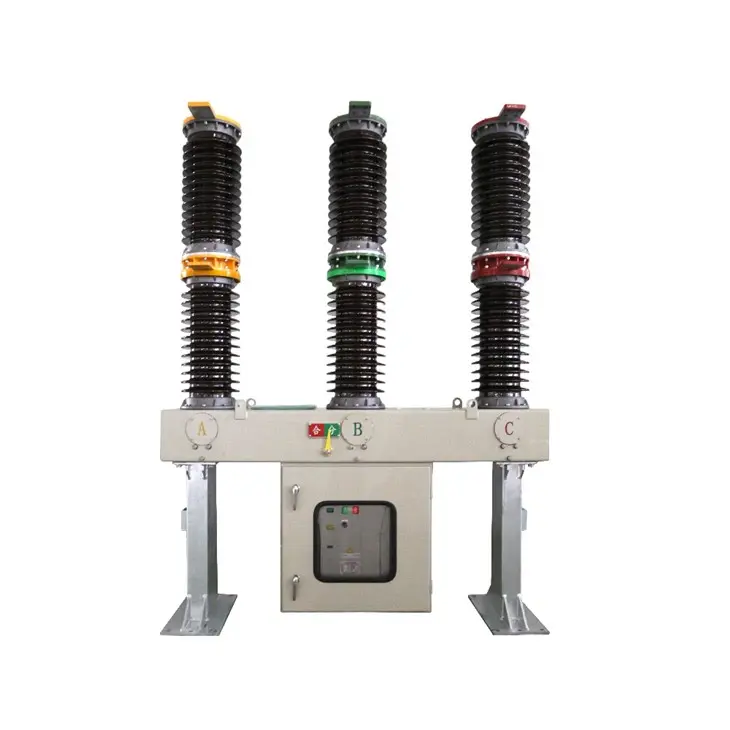
When to Choose Vacuum Circuit Breakers: Evaluating Use Cases and Conditions
To choose the right application cases, you need to know both the system standards and the operational limits. In some electrical settings and load levels, vacuum interrupters work better than others.
Suitable Operating Environments
Heavy industrial sites have their own problems, like having to deal with a lot of switching cycles, stopping the capacitive load, and being exposed to dust, moisture, or toxic atmospheres. In these situations, vacuum circuit breakers work great because their protected design keeps important parts from getting contaminated by the surroundings. This toughness is good for steel mills, chemical processing plants, and mining operations because they have fewer unexpected outages than with open-contact options.
Another great use is for commercial buildings that are hard to get to for upkeep. A lot of the time, underground substations, distribution centers in high-rise buildings, and remote renewable energy sites don't have enough committed electrical staff. The fact that vacuum technology doesn't need to be maintained makes operations easier while keeping security reliable.
Load Characteristics and Fault Current Performance
Circuit interruption devices are put under a lot of stress when capacitor switching is done, like when empty transformers, cable networks, or capacitor banks are disconnected. If the medium can't handle rapid recovery voltage, restrikes and reinitions can happen. In this case, vacuum interrupters work great because their better dielectric recovery stops voltage spikes that damage equipment that is attached. This feature is especially useful for wind farms and solar sites that need to switch capacitive elements a lot when there are cloud changes or power problems.
Breaker points are under the most stress during short-circuit breakdown. When there is a fault, the current can hit 40kA or more, which creates huge electric and thermal forces. The vacuum arc has a distributed, non-concentrated plasma that spreads energy across the surfaces that are in touch with each other instead of making hot spots in one place. This property makes it possible for effective stoppage without contact erosion, which would lower the breaking strength later on.
When starting a motor, there are high inrush currents and a lot of processes, which make the contacts wear out faster in regular breakers. This type of duty cycling doesn't affect vacuum technology in any way, so it can be used to run big pump stations, compressor installations, and conveyor systems where uptime directly affects production throughput.
Performance Comparison Across Technologies
Procurement teams can better match technology to applications when they know how each one works. Air breakers are cheaper to buy at first, but they need to be maintained more often and take up a lot more panel room. This trade-off only makes economic sense in very cost-sensitive situations where upkeep tools are easy to get.
Because they are unsafe and bad for the environment, oil breaks aren't used in most new setups anymore. However, older systems are still in use. When replacing something, people often choose vacuum technology because retrofits can often fit into existing spaces and get rid of the costs of managing fluids on a regular basis.
From 12kV to 40.5kV, SF6 breakers go up against vacuum systems head-to-head. SF6 is better for ultra-high-density substations because it has slightly higher interruption rates in smaller packages. Vacuum technology, on the other hand, has made this gap much smaller, and the way regulations are moving toward low-GWP options makes vacuum the best choice for new projects.
Procurement Considerations: How to Select the Right Vacuum Circuit Breaker
To get through the decision process, you have to balance professional requirements with business concerns. By knowing which factors really affect system performance, you can avoid over-specification and make sure that there are enough safety gaps.
Critical Electrical Specifications
The breaker's rated voltage tells you the highest system voltage it can safely handle when it's working normally. Common distributing voltages are 7.2kV, 12kV, 15kV, 24kV, and 36kV, which are the standard rates. Choosing a voltage class one above the standard system voltage gives you room for short-term overvoltages without lowering the life of the insulation.
Continuous current-carrying ability is based on the rated current. Generators and incoming power breakers may need 3150A or more, while industrial feeds usually need 630A to 2000A ratings. When doing thermal estimates, you should think about things like the temperature outside, the air flow inside the enclosure, and the altitude derating, all of which lower the real current capacity below the nameplate rates.
The breaker's breaking ability tells you the biggest problem current it can safely stop. This requirement must be higher than the short-circuit current that is available at the placement point. It also needs to cover future system growth. Asymmetrical breaking capacity takes into account the DC offset component that is present during the first cycle of fault current, which makes it harder to interrupt. Making sure there is enough asymmetrical rating stops total failure in the worst-case fault situations.
Operational and Maintenance Factors
Expectations for service life vary a lot between brands and product lines. Premium goods have electrical endurance of more than 100 fault delays at peak capacity and mechanical endurance of more than 30,000 actions. Other budget options might only list 10,000 mechanical processes, which would mean that the machine would need to be replaced or fixed up sooner. When considering choices, the total cost of ownership should take into account how often the item needs to be replaced.
Warranty covering shows how confident the maker is. Comprehensive guarantees that last five years or more are a sign of strong design and high-quality making. On the other hand, warranties that only cover one year may mean that cost-cutting measures were taken. Instead of just covering manufacturing flaws, warranty terms should clearly cover vacuum integrity, mechanical parts, and stopping capability.
Supplier Evaluation and Market Landscape
In the premium group, global companies like ABB, Siemens, and Schneider Electric are the market leaders. They offer a wide range of products and offer extensive tech support and service networks around the world. Their goods cost more at first, but they have been shown to work reliably in tough situations where the cost of downtime is higher than the cost of saving equipment.
There are good options from local producers, especially when projects focus on cost savings without sacrificing important performance. This group is led by Shaanxi Yuguang Electric, which has ISO 9001:2015 approval, 39 utility model patents, and national inspection reports. Our company was founded in 2008 in Baoji, China, which is known as the world's largest producer of vacuum circuit breakers. We serve customers in the power generation, metallurgy, petrochemical, and infrastructure sectors in both local and foreign markets.
Procurement teams should look at a supplier's production capacity, expert help, and spare parts inventory when they are reviewing them. Due to problems in the supply chain, lead times have become an important way to set one product apart from another. For some foreign goods, delivery times have been pushed back from the usual 8–12 weeks to 20 weeks or more. Suppliers who keep enough supplies on hand and are flexible with production plans are very helpful for project schedules.
Prices have changed a lot in 2026 because of changes in raw materials, especially copper and silver used in contact systems. Prices are usually better for bulk purchases and long-term ties with suppliers than for one-time purchases. When demand is high, volume agreements may also open up priority production slots, making sure that important project goals can still be met.
Maintenance and Lifecycle Management of Vacuum Circuit Breakers
To get the best return on investment, organized maintenance plans must be put in place that are in line with what the maker recommends and what has been done in the past. Vacuum circuit breakers technology doesn't need as much care as other options, but skipping simple maintenance increases the chance of failure and shortens the life of an asset.
Routine Inspection Protocols
Visual checks should be done every three months to look for physical harm, loose connections, or buildup of contamination on the outside parts. Pay close attention to terminal connections because resistance rises at bolted joints, which lowers power and makes heat. Using thermal images during energized rounds helps find problems early on, before they become major fails.
Testing the mechanical action makes sure that the timing, contact motion, and spring charging systems work as they should. Over years of use, these factors change because bearings and springs wear out. Every year, values are compared to baselines set during commissioning. If differences are too big, repair work needs to be done. Measuring the contact gap makes sure there is enough electrical space, which keeps the voltage from dropping across open contacts.
High-potential insulator tests and measuring contact resistance are two types of electrical testing. Micro-ohm meters check the health of contacts by finding resistance rises that show surface contamination or wear. By applying voltage across open contacts, high-pot testing proves the integrity of the vacuum. Sudden current flow suggests loss of vacuum, which means the interrupter needs to be replaced.
Common Wear Points and Servicing Schedules
The most likely to wear parts are those in operating systems. When spring-charged systems rest, the stored energy goes down and the closing time goes up. Lubrication gets worse, which makes friction worse and speeds up mechanical wear. Overhauling a device every three years keeps it from breaking down without warning and keeps preventative work from being too much.
Because they use less power, the contacts on auxiliary switches that handle interlocks and show where the breaker is wear out faster than the contacts on main switches. By replacing auxiliaries during planned maintenance windows, you can avoid annoying trips and fake signals that make fixing harder when the system is actually broken.
Vacuum interrupters rarely break down on their own unless they are severely overloaded or poorly made. But after 25 to 30 years of service or 100 or more problem delays at rated capacity, the risk of failure due to age is gone because the system has been replaced. Trending readings of contact resistance let you know early on when end-of-life situations are about to happen.
Performance Testing and Replacement Indicators
In primary injection testing, regulated current is sent through the main contacts, and voltage drop and temperature rise are measured. Values that are too high mean that links are breaking down or there is contact loss that needs to be looked into. This checking usually happens when the system is first set up and after a fault has happened. During normal service, it is checked every five years.
Breaker timing studies measure how fast the contacts separate and how long the arc lasts. Slow operation means there are problems with the system, and long arcing means the vacuum is getting worse. These days, computer test sets record whole timing patterns and compare the results to factory specs to find small changes in performance.
When deciding what to replace, you have to weigh the state of the tools against your budget and the need for system reliability. Time-in-service alone is enough to support proactive replacement for critical applications, while less important circuits may be able to handle run-to-failure methods as long as there are enough spares on hand. Condition-based maintenance strategies find the best mix between these two things by changing parts based on how badly they are breaking down instead of just when they need to be replaced.
Case Studies and Industry Best Practices for Vacuum Circuit Breakers
Implementation experiences in the real world show practical issues that go beyond theory requirements. These cases show measurable results that can be reached by choosing the right vacuum circuit breakers and following a plan.
Thermal Power Plant Auxiliary System Upgrade
A 600MW coal-fired plant replaced old air magnetic breakers that served extra motor loads with vacuum technology. The original equipment needed to be serviced every three months, and every three years, it had to be replaced because of contact damage. An average of two unplanned failures happened each year, and each one caused unit loss and production costs of more than $50,000.
Since the vacuum was replaced, there was no longer any planned upkeep other than eye checks once a year. In five years of use, there were no unexpected breaker failures, which raised the uptime of the backup system from 97.2% to 99.8%. Less maintenance work saved $35,000 a year, and avoiding outages saved a total of $425,000 over the review time. Even though the original tools cost more, the project paid for itself in 2.8 years.
This example shows the total cost benefits of vacuum technology in situations where dependability has a direct effect on making money. When capital planning, methods that only look at the cost of acquisition consistently undervalue lowering upkeep costs and increasing availability.
Wind Farm Collector System Implementation
The 34.5kV collection system that connects the turbine transformers to the project center had to have vacuum breakers for a 150MW wind installation. The harsh coastal climate made people worry that water and salt would get into technology and shorten its life.
The vacuum breaks didn't lose their effectiveness after seven years of use during several violent storms. In comparison, projects that used oil breakers had multiple failures that needed to be replaced right away, while installs that used SF6 caused environmental reporting requirements after small leaks. The vacuum installation met the uptime goals without adding to the upkeep work that other options would have required.
Important information about end connections were stressed in lessons learned. Standard aluminum wires were immediately bolted to breaker terminals for the first installs. Galvanic corrosion between metals that are not the same led to higher resistance and burning at some points. Adding anti-oxidant chemicals and bimetallic transition washers fixed the problem, showing that proper installation methods are still important no matter the quality of the breaker technology.
Manufacturing Facility Power Distribution Modernization
The distribution system that served motor control centers and furnace transformers at a steel rolling mill was rebuilt after 40 years of use. The first oil breakers were dangerous for fire in the small substation space and needed to be inspected every week, which took twenty hours a month.
Installing vacuum breakers cut down on the number of inspections needed to once a month, which took a total of two hours. Operating costs dropped by $18,000 a year when methods for handling oil and following environmental rules were taken away. More importantly, the small vacuum design freed up 30% of the floor room in the center, which made it possible to add more feeder capacity to support production growth.
This project shows that choices to modernize have effects that go beyond just replacing old tools. The building grew without having to spend a lot of money on substation development because it made better use of room and needed less upkeep.
Conclusion
In conclusion, when choosing vacuum circuit breakers, you need to make sure that the technical specs match the needs of the business and that you take into account costs that go beyond the initial purchase price. These devices work best in medium-voltage situations (5kV to 36kV) where dependability is very important because of frequent switching, harsh conditions, or limited entry for repair. To get the best return on investment, you should understand basic technology concepts, check the skills of potential suppliers, and set up structured upkeep programs. The case studies show that deploying the right technology can lead to measured gains in system availability, lower maintenance costs, and more operating freedom. As environmental laws push for more environmentally friendly options, vacuum technology, which doesn't use greenhouse gases, becomes the best choice for both new installs and upgrades.
FAQ
In real life, what makes vacuum breaks different from SF6 technology?
Both systems are very good at stopping, but they have very different environmental profiles and upkeep needs. SF6 is still a very strong greenhouse gas that can cause 23,500 times as much heat as CO2. It is also being regulated more and more. Vacuum technology doesn't use climate gases and doesn't need to be checked for gases on a regular basis or handle gases when it's time to shut down. When it comes to maintenance, SF6 systems need to have their pressure checked and possibly their gas refilled on a regular basis. Vacuum circuit breakers, on the other hand, don't need any maintenance between overhauls. Performance benefits change based on the application. For example, SF6 works best in very small installations and ultra-high voltage applications above 40kV. Vacuum, on the other hand, is the best choice for applications between 5kV and 36kV because it has the best performance, cost, and environmental characteristics.
Approximately how often do vacuum circuit breakers need to be serviced?
In most workplace settings, vacuum circuit breakers work for three to five years without needing to be serviced. Visual checks are done every three months to make sure there is no physical damage, but thorough mechanical testing only happens during planned downtimes. After 10 to 15 years of use or more than 10,000 processes, it's time to do a mechanism repair. This includes fresh lubrication, new springs, and service for the auxiliary switch. If no faults happen that are worse than the breaker's grade, the vacuum interrupter usually lasts the whole 30+ year service life without needing to be replaced. This low level of upkeep is very different from air breakers, which need to have their contacts inspected every six months, and oil breakers, which need to have their fluids tested and replaced every year.
When it comes to distribution systems, can vacuum breaks handle all voltage classes?
From 3.6kV to 40.5kV, vacuum technology is most common, and it's used in most industry and utility distribution systems. Breakers with a plastic case or an air frame are cheaper options below 1kV. Above 72kV, SF6 technology today offers better technical and economic results, but vacuum technology is still making progress in higher voltage classes. Vacuum circuit breakers can handle almost any type of load as long as the voltage is within their optimal range. This includes motors, transformers, capacitor banks, cable networks, and overhead lines, as long as the interrupting rates and working mechanisms are set correctly.
Partner With Yuguang for Reliable Vacuum Circuit Breaker Solutions
With 39 patents and ISO 9001:2015 approval, Shaanxi Yuguang Electric can make custom vacuum circuit breakers options for you. Our factory in Baoji uses high-tech production lines and strict quality control to make 6kV to 40.5kV equipment for clients around the world in industries like steel, rail transit, power generation, and more. As a well-known High and New Technology Enterprise, we provide a wide range of services, including special research and development, equipment modification, installation support, and quick help after the sale.
Our engineering team does technical figures, analyzes compatibility, and gives advice on system integration to make sure you choose the best tools for your needs. If procurement managers are looking for reliable vacuum circuit breakers suppliers, they can email us at ygvcb@hotmail.com to get full product specifications, cheap quotes, and advice from experts. Visit ygvcb.com to see our full line of products and learn how our reliable, maintenance-free solutions lower the total cost of ownership while making systems safer and more available.
References
1. IEEE Standard C37.04-2018, IEEE Standard for Ratings and Requirements for AC High-Voltage Circuit Breakers with Rated Maximum Voltage Above 1000V, Institute of Electrical and Electronics Engineers, 2018.
2. Slade, P.G., The Vacuum Interrupter: Theory, Design, and Application, Second Edition, CRC Press, 2017.
3. IEC 62271-100:2021, High-voltage switchgear and controlgear – Part 100: Alternating current circuit-breakers, International Electrotechnical Commission, 2021.
4. Smeets, R.P.P., et al., Switching in Electrical Transmission and Distribution Systems, John Wiley & Sons, 2015.
5. Dullni, E., "Vacuum Interrupter Technology for Future Medium Voltage Switchgear," Proceedings of the 27th International Symposium on Discharges and Electrical Insulation in Vacuum, Suzhou, China, September 2016.
6. Ryan, H.M., High Voltage Engineering and Testing, Third Edition, Institution of Engineering and Technology, 2013.

Send Inquiry
You may like
