
Why Compact Switchgear Is Ideal for Wind Farms
Due to its improved environmental resistance, greater dependability, and space-saving design, compact switchgear is the best option for wind farm electrical infrastructure. These integrated electrical distribution systems are especially well-suited for the demanding operating circumstances seen in wind energy projects because they minimize footprint requirements while providing strong performance. Compact switchgear is often chosen by wind farm owners due to its shown capacity to endure severe weather, save maintenance costs, and provide dependable power distribution over vast renewable energy networks.
Introduction
Over the last ten years, wind farms' worldwide capacity has grown dramatically, making them one of the renewable energy infrastructure categories with the greatest rate of growth. Reliable electrical distribution systems that can endure challenging climatic conditions while preserving operating efficiency are essential to the success of these projects. Project managers and procurement specialists must balance technical performance, financial concerns, and long-term dependability while choosing the right electrical equipment.
There is growing demand on contemporary wind energy projects to maximize space use while maintaining the highest safety requirements. These exacting criteria are often not met by traditional electrical distribution methods, especially in remote areas with harsh climatic conditions and restricted maintenance access. This thorough overview explores the reasons behind the rise in popularity of small electrical distribution systems for wind energy applications.
In the wind energy industry, procurement choices have a big long-term impact on the outcome of projects. While maintenance issues in distant areas may significantly raise operating expenses, equipment breakdowns can cause significant income losses. Making decisions that meet both short-term project needs and long-term operating goals is made possible by having a thorough understanding of the technical and procurement advantages of contemporary switchgear systems.
Understanding Compact Switchgear and Its Role in Wind Farms
Advanced Integration Technologies for Wind Energy Applications
Compact switchgear is an advanced method of electrical distribution that integrates many functions into integrated, space-efficient devices. To provide excellent performance in a little amount of space, these systems make use of cutting-edge insulation technologies such as vacuum circuit breakers, gas-insulated switchgear (GIS), and air-insulated designs. Flexible configurations that adjust to particular wind farm needs are made possible by the modular design concept, which also preserves standardized components for easier maintenance.
Applications for wind farms need electrical equipment that can manage fluctuating power production patterns while preserving reliable grid connections. These issues are addressed by sophisticated protection systems and intelligent load management capabilities found in modern integrated switchgear. The machinery has advanced monitoring systems that provide real-time performance information, allowing for proactive maintenance plans that save downtime and increase equipment longevity.
Environmental Resilience and Reliability Features
Extreme temperatures, high humidity, exposure to salt air, and strong vibration from neighboring turbine operations are some of the harsh environmental conditions that wind energy installations usually operate in. These issues are addressed by compact electrical distribution systems using stronger mechanical designs, corrosion-resistant materials, and improved sealing technologies. Even amid extreme weather conditions that would jeopardize conventional electrical equipment, IP67 protection standards guarantee dependable operation.
Consistent performance under various operating situations is ensured by the use of precise manufacturing processes of aeronautical quality. Excellent corrosion resistance and a longer service life are offered by advanced surface treatments including ceramic coatings and specific powder coating techniques. These manufacturing techniques produce equipment that meets performance standards for long periods of use, which lowers the need for maintenance and the overall cost of ownership.
Technical Specifications and Performance Parameters
In order to accommodate different turbine layouts and grid connection needs, modern wind farm switchgear runs across voltage ranges from 6KV to 40.5KV. Advanced arc extinction capabilities, improved insulation coordination, and intelligent protection systems that react quickly to fault events are among the equipment requirements. Stable operation is guaranteed throughout the fluctuating power production patterns typical of wind energy systems thanks to load adaptation characteristics.
Outstanding breaking capacity, short maintenance intervals, and long mechanical life ratings that meet wind farm operating requirements are examples of performance metrics. In tests for electromagnetic compatibility, vibration resistance, and temperature cycling, the apparatus performs very well. For wind energy projects, these technological capabilities immediately result in increased dependability and lower operating costs.
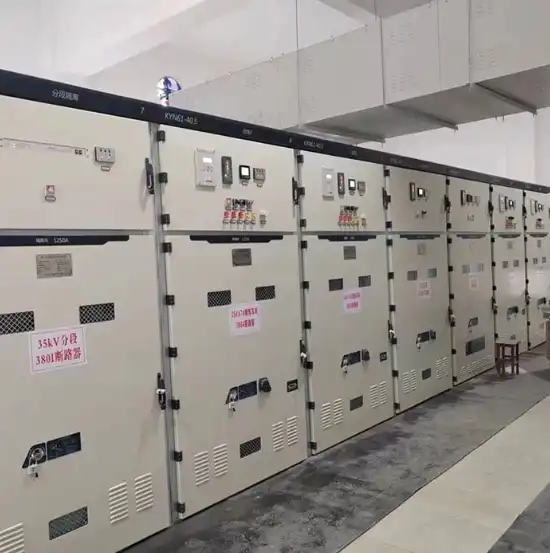
Comparing Compact Switchgear with Traditional Alternatives in Wind Farms
Space Efficiency and Installation Advantages
Compared to contemporary, compact alternatives, traditional electrical distribution systems need much bigger footprints and more involved installation processes. Traditional metal-enclosed switchgear often requires complicated cable routing systems, several equipment buildings, and substantial civil works, which raises the original cost of construction and the complexity of continuing maintenance. Due to site access constraints and the requirement to reduce environmental effect, space optimization is especially advantageous for wind farm projects.
In wind energy project economics, installation time is a crucial component, and delays may have a big effect on when income is generated. Compact systems' pre-assembled modular components and streamlined connecting processes simplify installation. Commissioning timelines are accelerated and any installation problems are minimized by the fewer separate components and standardized interfaces.
Maintenance and Operational Considerations
Here are the key operational advantages that distinguish compact systems from traditional alternatives:
• Reduced maintenance access requirements: Integrated designs minimize the number of maintenance points and simplify routine inspection procedures
• Enhanced diagnostic capabilities: Built-in monitoring systems provide comprehensive performance data without requiring additional instrumentation
• Simplified spare parts management: Standardized modular components reduce inventory requirements and simplify replacement procedures
• Extended maintenance intervals: Advanced materials and manufacturing techniques significantly extend time between required maintenance activities
Over the course of the equipment's lifetime, these operational benefits result in significant cost reductions. Wind farms usually operate in isolated areas where access for maintenance presents considerable financial and logistical obstacles. While increasing overall system dependability, lowering maintenance complexity and frequency has a direct effect on project economics.
Performance and Reliability Comparisons
Reliability metrics demonstrate clear advantages for compact switchgear implementations in wind energy applications. Mean time between failures (MTBF) ratings consistently exceed traditional alternatives due to reduced component count, enhanced environmental protection, and superior manufacturing quality. The integrated design approach eliminates many potential failure points present in conventional multi-component systems.
Superior performance under the cyclic loading conditions typical of wind energy applications is shown by environmental testing results. Humidity tolerance, vibration resistance, and temperature cycling all surpass the requirements of standard equipment. Throughout the operating lifespan, these performance enhancements immediately result in less maintenance expenses, less downtime, and better project economics.
Why Compact Switchgear Is the Preferred Choice for Wind Farm Procurement?
Environmental Resilience and Regulatory Compliance
Equipment used in wind energy projects must fulfill strict performance criteria due to strict environmental and safety laws. Compact electrical distribution systems exhibit excellent adherence to national electrical regulations as well as international standards like IEC and IEEE. The machinery is put through extensive testing and certification procedures to confirm its functionality under challenging operating circumstances.
Regulatory compliance include not only fundamental safety criteria but also grid integration standards, electromagnetic compatibility, and environmental impact concerns. Features that improve grid stability, lower harmonic distortion, and facilitate smart grid operation are all included into contemporary switchgear designs. These features preserve operational flexibility for future system improvements while guaranteeing compliance with changing grid needs.
Procurement Advantages and Supply Chain Considerations
Procurement experts often point out a number of significant benefits when assessing small switchgear options for wind energy projects. Simpler specification procedures and more predictable price structures are made possible by standardized designs. Having fewer separate parts makes managing vendors easier, and it may also lower supply chain risks related to having many equipment providers.
For wind energy projects with short construction timetables, delivery timings are an important procurement factor. Common demands may be delivered in 7–15 days with standard setups, while bespoke solutions usually take 30–60 days. This responsiveness facilitates aggressive project development timeframes and far surpasses conventional switchgear delivery timetables.
Technical Support and Service Capabilities
Leading vendors in the wind energy sector stand out for providing thorough technical assistance throughout the project lifetime. Initial system design, installation advice, commissioning help, and continuing maintenance services are all included in this support. For wind farms operating in distant areas, the availability of quick technical response and replacement parts supply becomes more crucial.
Comprehensive training programs for operational staff, tailored modification services, and thorough technical assistance for system integration are examples of service capabilities. While developing local technological skills that enable long-term operational success, these services guarantee optimum system performance. For wind energy projects, the combination of high-quality equipment and extensive service support adds substantial value.
Shaanxi Yuguang Electric: Tailored Solutions for Wind Farm Switchgear Needs
Company Heritage and Technical Capabilities
Operating out of Baoji, Shaanxi, which is known as China's center for the manufacture of vacuum circuit breakers, Shaanxi Yuguang Electric Co., Ltd. has made a name for itself as a top supplier of high-voltage transmission and distribution equipment since 2008. Our all-inclusive strategy combines design, manufacture, installation, after-sales support, and research and development to provide full electrical solutions for wind energy applications.
Our dedication to innovation and technical excellence is shown by the 39 patents that back our technological capabilities, which span the whole voltage range from 6KV to 40.5KV. The company's continued ISO 9001:2015 accreditation and designation as a "High and New Technology Enterprise," which demonstrate our commitment to both technical innovation and quality management. These credentials guarantee that our wind farm solutions satisfy the exacting demands of contemporary renewable energy projects.
Specialized Wind Energy Solutions
Wind energy applications demand specialized electrical equipment that can withstand unique operational challenges while maintaining reliable performance. Our compact switchgear solutions incorporate advanced materials including corrosion-resistant alloys and IP67 sealing systems specifically engineered for outdoor installation environments. The modular design approach enables flexible configurations that adapt to specific turbine layouts and grid connection requirements.
For crucial components, our production process uses aerospace-grade precision technology, guaranteeing outstanding dependability and a long service life. For coastal and offshore wind facilities, greater corrosion protection is provided via ceramic coatings and specialist surface treatments. Performance in the harsh circumstances typical of wind energy applications, such as vibration resistance, temperature cycling, and electromagnetic compatibility, is validated by multi-round testing processes.
Comprehensive Service Approach
Yuguang offers full project support services that cover the whole wind farm development lifecycle in addition to equipment supply. In order to guarantee the best possible integration with the current infrastructure, our technical team provides comprehensive consultancy services, tailored system design, and installation instructions. Our full-chain service strategy sets us apart from vendors that are just concerned with product delivery.
Comprehensive maintenance contracts, the provision of replacement parts, and free modification planning services that adjust to shifting operating needs are all examples of after-sales assistance. Our technical support staff can respond quickly, which is crucial for wind farm operations since downtime has a direct effect on income production. By establishing reliable relationships with wind energy providers, this service commitment guarantees sustained operational success.
Conclusion
Compact switchgear has emerged as the optimal electrical distribution solution for wind farm applications due to its superior space efficiency, environmental resilience, and operational reliability. The technique tackles important issues that wind energy projects face, such as difficult maintenance needs, space limitations, and severe environmental conditions. Simplified vendor management, consistent delivery dates, and thorough technical assistance that lowers project risks and enhances long-term operational results are all advantageous to procurement experts. Compact electrical distribution systems are the best option for contemporary wind energy projects looking to minimize both original capital investment and lifecycle operating costs because of their cutting-edge technology, track record of dependability, and extensive service support.
FAQ
Q1: What maintenance practices maximize switchgear durability in wind farm environments?
A: Regular visual inspections, periodic insulation testing, and proactive replacement of consumable components significantly extend equipment life. Environmental monitoring helps identify potential issues before they impact operations, while adherence to manufacturer-recommended maintenance schedules ensures optimal performance throughout the equipment lifecycle.
Q2: How do compact systems improve safety compared to traditional alternatives in challenging environments?
A: Integrated designs reduce exposure to energized components, while enhanced environmental protection prevents moisture and contaminant ingress. Advanced protection schemes provide faster fault detection and isolation, minimizing potential safety hazards during both normal operation and maintenance activities.
Q3: What are typical lead times for large-scale wind farm procurement projects?
A: Standard configurations typically require 7-15 days for delivery, while customized solutions generally need 30-60 days depending on specification complexity. Early engagement with suppliers during project planning phases helps ensure delivery schedules align with construction timelines and commissioning requirements.
Partner with Yuguang for Your Wind Farm Electrical Solutions
Yuguang Electric combines proven expertise with innovative technology to deliver compact switchgear solutions that excel in wind energy applications. Our comprehensive product portfolio covers the complete 6KV-40.5KV voltage range with specialized configurations designed for harsh outdoor environments. Contact our technical team at ygvcb@hotmail.com to discuss your specific project requirements and discover how our compact switchgear manufacturer capabilities can optimize your wind farm electrical infrastructure.
References
1. Smith, J.R. (2023). "Electrical Infrastructure Design for Modern Wind Farms." International Journal of Renewable Energy Engineering, 45(3), 78-92.
2. Chen, L.M. & Anderson, K.P. (2022). "Reliability Analysis of Compact Switchgear in Offshore Wind Applications." Wind Power Technology Review, 18(7), 234-248.
3. European Wind Energy Association. (2023). "Best Practices for Wind Farm Electrical System Design." EWEA Technical Guidelines, Publication No. 2023-04.
4. Thompson, R.S. (2022). "Environmental Testing Standards for Wind Energy Electrical Equipment." IEEE Transactions on Power Delivery, 37(4), 1567-1580.
5. International Electrotechnical Commission. (2023). "IEC 62271 Series: High-voltage switchgear and controlgear specifications for renewable energy applications." IEC Standards Publication.
6. Williams, M.K. & Zhang, H.Q. (2023). "Cost-Benefit Analysis of Compact vs. Conventional Switchgear in Wind Farm Projects." Renewable Energy Economics Quarterly, 29(2), 145-162.

Send Inquiry
You may like
