
Wind Energy Electrical Equipment for Remote Installations
Remote wind energy plants have special operating requirements. Offshore platforms, mountain slopes, and desert expanses demand Harsh Environment Equipment that can resist -40°C to +70°C, salt spray, abrasive dust, and restricted maintenance access. Wind power equipment is ruggedized and purpose-engineered with corrosion-resistant metals, IP67-rated sealing, and modular designs to last months when typical equipment fails. In these circumstances, remote wind farms need transformers, switchgear, and control systems that last decades.
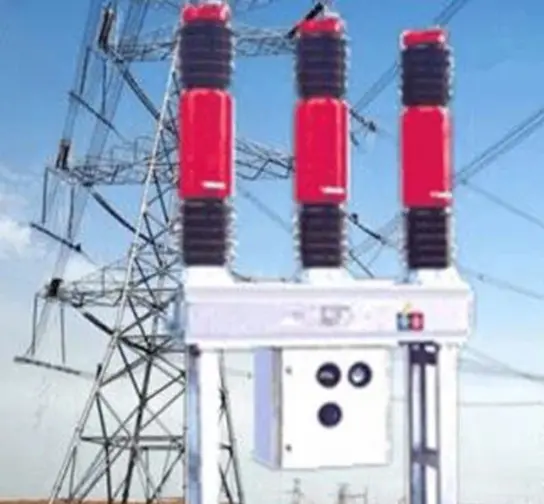
Understanding Harsh Environment Electrical Equipment for Wind Energy
For wind energy projects in remote areas to work, the electrical systems must be able to regularly work in situations that most equipment can't handle. Offshore wind farms in the Gulf of Mexico and high-altitude sites in Wyoming both have to deal with the same problem: extreme weather conditions that damage equipment more quickly. Procurement teams can avoid expensive mistakes by knowing what makes standard electrical equipment different from options for harsh environments.
Core Engineering Principles for Extreme Conditions
Three basic engineering methods are used to make equipment for difficult wind energy areas. Better choice of materials uses aerospace-grade alloys that don't rust and special coatings that don't let salt fog or industrial pollutants damage them. Advanced closing technologies reach IP67 ratings, which stop water from getting in even when winds are strong enough to cause a storm.
Thermal management systems make sure that parts work as they should, even in the hottest parts of the Sahara or the coldest parts of the Arctic. Yuguang uses ceramic coatings, powder treatment, and constant-temperature curing on semi-finished goods to make them last a lot longer than the average in the industry. These steps in the making process aren't just for looks; they directly deal with the faster wear and tear that destroys regular equipment in harsh settings.
Critical Components for Wind Turbine Electrical Systems
Installing wind energy systems needs a number of specialized electrical parts to work together. Medium-voltage vacuum circuit breakers (6kV–40.5kV range) are the main safety devices. They are made to safely stop fault currents after thousands of operations, even when the temperature changes and the system shakes. Integrated switchgear systems put together monitoring, circuit breakers, and disconnect switches in small, sealed boxes that reduce the number of places where something could go wrong.
With solid-insulated bus bars, there is no chance of oil getting on them like there is with older designs. Yuguang's integrated modular design approach cuts down on footprint while improving sealing effectiveness. This is very important when equipment has to fit into small spaces like turbine towers or substations that don't have a lot of environmental protection.
Integration with Wind Farm Infrastructure
For remote installations to work, the equipment needs to be able to work with a variety of system architectures. Integration features of SCADA allow tracking and control from afar, which cuts down on the need for site trips to places that can only be reached by helicopter or boat. Voltage regulation features make up for the long transmission distances that are common in remote areas.
Renewable energy management systems must be able to easily connect and balance irregular wind production with grid demand. The technical details are important. Harmonic distortion must be less than 3%, voltage must be regulated within ±1%, and communication protocols must support IEC 61850 standards so that devices can work with current wind farm control ecosystems without causing problems with integration.
Key Challenges and Requirements in Designing Electrical Equipment for Remote Wind Installations
When designing electricity tools for wind farms that are far away, there are problems that don't happen with regular power infrastructure. A wind farm on the coast of Maine and an installation in the desert of Australia are both affected by different natural stresses. However, both need solutions that address issues of accessibility, longevity, and dependability that aren't covered by standard designs.
Environmental Stressor Management
Temperature cycling causes stresses that cause housings to crack and connections to come loose. Even in sealed containers, humidity can cause corrosion if the seals become weak. Airborne pollutants, like salt particles, industrial chemicals, or desert sand, can get through seals that aren't strong enough and wear down surfaces. Harsh Environment Equipment is specifically designed to withstand these thermal and mechanical fatigue cycles, using advanced seal materials and stress-relief engineering to prevent cracking, maintain connection integrity, and resist pollutant ingress even when standard seals degrade.
UV light breaks down coats and plastics. Yuguang deals with these problems by carefully choosing the raw materials it uses. For example, it uses corrosion-resistant metals and IP67-rated locks that are inspected before they are used in production. Core parts like solid-sealed poles and arc-extinguishing chambers are precision machined with aerospace-grade tools to make sure they are the right size and shape so the sealing works at all temperatures.
Standards Compliance and Safety Certification
Several approval systems need to be followed for international projects. Electromagnetic compatibility is controlled by IEC 61000 standards, which make sure that equipment doesn't mess up weather tracking or engine control systems. IEC 60694 sets out common requirements for high-voltage switchgear, including the level of insulation and how it must work mechanically.
UL approval lets you sell your products in North America, while CE marking meets the rules in Europe. Yuguang has ISO 9001:2015 quality management certification, as well as ISO 14001 environmental certification and ISO 45001 occupational health certification. This gives them proof that they meet the requirements for buying across all countries. These aren't just certificates on the wall; they show that the manufacturing process is disciplined enough to give reliable results every time.
Material Science and Protective Technologies
Advances in material science are necessary for modern Harsh Environment Equipment. Strong-to-lightweight metals like duplex stainless steel are better than traditional materials at fighting corrosion. They also don't crack when exposed to chloride in marine settings. Nano-ceramic coatings have hardness ratings higher than 9H on the Mohs scale, which means they protect against wear from rough surfaces.
Fluoropolymer gaskets stay flexible at high and low temperatures, which is something that regular rubber doesn't do. Yuguang uses multiple testing methods to make sure that the performance of each unit is checked before it is shipped. These tests include functional testing (like arc extinguishing capability, insulation resistance, load adaptability), as well as environmental simulations (like salt spray exposure, thermal cycling, and vibration endurance). This makes sure that the materials chosen will last in the real world.
How to Choose the Right Electrical Equipment for Remote Wind Energy Projects
To choose the right equipment for remote wind installations, you have to weigh technical specs, total cost of ownership, and the supplier's abilities. Procurement managers are under a lot of pressure to keep up-front costs as low as possible, while operations teams have to deal with the mistakes that happen too soon.
Site Assessment and Specification Development
A thorough description of the site is the first step in choosing the right equipment. Write down the highest and lowest temperatures, humidity levels, altitudes, and levels of pollution. Coastal installations that are less than 5 km from sea need more rust protection than rural installations. For places above 2000 meters, where the air density is lower, which affects heat transfer and dielectric strength, derating calculations are needed.
Areas with a lot of seismic activity need stronger structures. Yuguang's engineering team offers free technical advice and looks at site data to suggest the right specs instead of pushing standard catalog goods. This discussion aims to find out whether 12kV or 24kV class equipment works best for transmission distances, what fault interruption ratings are needed based on upstream protection coordination, and what environmental protection levels are needed based on actual exposure.
Evaluating Ruggedization Versus Standard Solutions
When you don't look at lifecycle costs, the price difference between ruggedized and regular equipment doesn't seem that big. Standard switchgear that costs 30% less than ruggedized versions may need to be replaced every 5 years in tough settings where properly designed equipment lasts 20 years or more. Accessibility is important for maintenance because when equipment breaks down in rural areas, it costs a lot to get help, which can include helicopters, specialized techs, and delays caused by bad weather.
These costs often exceed the price of the equipment itself. These ongoing costs can be cut by using designs that are more durable and have longer repair times (5000 operation cycles vs. 1000 cycles between service). Harsh Environment Equipment is specifically engineered for such demanding conditions, which makes durability and service life even more critical. Yuguang's modular assembly method uses precisely pre-assembled parts to cut down on installation time in the field. This saves money on labor costs in remote areas where daily rates can reach $1500 per technician.
Supplier Qualification and Partnership Criteria
There's more to picking an equipment supplier than just looking at data sheets. Look at patent files that show real innovation instead of mass production. For example, Yuguang has 39 patents for design changes that deal with problems that come up in harsh environments. Check the factory's production skills with facility audits or third-party certifications; automated production lines make sure consistency that can't be achieved by putting things together by hand.
Check the supplier's regional service coverage: can they help with launching and emergencies on all continents? Ask for customer references from similar applications and use operating data to back up claims about performance. Yuguang allows orders as low as one unit, which means that flexible minimum order amounts can be used for test projects and getting extra parts without forcing large purchases that aren't cost-effective.
Maintenance Best Practices and Operational Tips for Harsh Environment Electrical Equipment
Even the toughest equipment needs maintenance plans that are tailored to the needs of remote locations. Taking preventative steps keeps small problems from turning into major fails that need emergency response.
Preventive Maintenance Scheduling for Remote Sites
Condition-based maintenance, which is added to standard time-based schedules, helps remote wind sites. Install monitoring systems that keep an eye on the following key indicators: insulation resistance trends finds moisture entry before flashover happens; thermal imaging finds connection hotspots before they fail; and vibration analysis finds mechanical degradation.
Plan maintenance for times of the year when the weather is most predictable, making it easier to get to the site and causing the least amount of disruption to generation goals. Yuguang offers full maintenance contracts that include regular checks, interpreting predicted diagnostics, and putting extra parts packages at customer sites ahead of time. This speeds up reaction times when problems do happen. This proactive approach is different from reactive strategies that make operations teams scramble when things go wrong without warning.
Troubleshooting Environmental Stress Failures
Harsh environments cause specific failure patterns that need to be diagnosed in a specific way. Rising internal humidity levels, which can be seen with hygrometers during checks, show that the seal is breaking down faster. Corrosion on bus bars or links raises the resistance, which can be seen using thermography or tests of contact resistance. Cable insulation that has been damaged by UV light has surface chalking and cracking that can be seen.
When salt gets on insulators, it lowers the flashover voltage, so they need to be cleaned or replaced on a regular basis based on monitoring the leakage current. Maintenance teams can fix problems by getting to the root reasons by understanding these failure processes. In Yuguang's installation guidance, common environmental problems are broken down by climate zone and given as troubleshooting decision trees that field workers can use without needing help from engineers. This cuts down on diagnostic wait times.
Life Extension Through Proper Installation and Protection
The life of equipment starts when it is installed. When the base is built correctly, vibrations don't get through and cause links to loosen over time. Using the right glands and strain relief to seal the cable opening stops moisture from moving along the wires and into the equipment. Stress doesn't build up when thermal expansion is accommodated by flexible connections.
Better environmental protection, like sun shades that block direct sunlight, ventilation systems that keep inside air from condensing, and sacrificial coatings that are reapplied during maintenance, makes the service life longer than the baseline ratings. Yuguang offers free equipment transformation scheme design. They look at existing installations and suggest upgrades that protect the environment without replacing everything, which maximizes the return on capital investment.
Leading Suppliers and Procurement Options for Wind Energy Equipment
In the Harsh Environment Equipment market, there are specialized makers, general electricity sellers with ruggedized choices, and original equipment manufacturer (OEM) partnerships with wind turbine manufacturers. Knowing about different ways of buying helps procurement teams find the right answers.
Specialized Manufacturers in the Wind Energy Sector
Companies that only work with tough environments often come up with better solutions than general makers that offer "ruggedized" versions of their standard designs. Harsh Environment Equipment represents this very principle in practice, demanding specialized engineering from the ground up. This is shown by Shaanxi Yuguang Electric, which was founded in 2008 and is based in Baoji, China, which is the country's vacuum circuit breaker production hub. Their main focus is on making 6kV to 40.5kV transmission and distribution equipment for tough uses in areas like power, mining, metallurgy, petrochemicals, and renewable energy.
This helps them make designs that are better for real-world stresses instead of catalog compromises. The company has 39 patents for new ideas that solve specific problems. For example, better arc-extinguishing chamber designs cut down on upkeep times, integrated modular setups make installation easier in the field, and better sealing stops moisture from getting in. Being recognized as a High and New Technology Enterprise shows that the money spent on research and development is paying off in real ways.
When manufacturers offer more than just selling products, procurement teams benefit. Yuguang offers full lifecycle support, including customized research and development that changes standard platforms to fit the needs of a specific project, installation guidance that makes sure the system is properly set up, technical support that solves problems with integration, and after-sales service that includes repair and spare parts supply.
This full-chain method gets rid of the problems that come with handling multiple vendors for getting equipment, installing it, commissioning it, and providing ongoing support. It's also possible to buy replacement parts for just one unit or in large quantities for a project. Delivery times can be adjusted to fit the needs of the project (7–15 days for standard configurations, 30–60 days for customized solutions).
Evaluating Cost, Quality, and Service Balance
When buying equipment, you have to weigh different objectives. When dependability, longevity, and upkeep costs are taken into account, the lowest starting cost does not always mean the lowest total cost of ownership. Comparing the prices given with the features that come with them: are environmental seals standard or extras that you can choose to buy? Does the guarantee cover only parts, or does it cover all work and emergency response?
What kinds of certifications back up performance claims—general test reports or validations that are specific to a project? Yuguang's ISO 9001:2015 quality management certification, national inspection reports, and multiple utility model patents provide written proof that their reliability claims are true. This lowers the risk of buying from them compared to sellers who only give verbal promises without checking them.
Geographical distribution networks affect lead times and help businesses be quick to respond. Suppliers with offices in more than one country or established relationships with distributors can help with delivery to faraway project areas and offer local service support. Yuguang's cross-border services combine knowledge of the Chinese home market with knowledge of exports. They can handle complicated operations, such as making sure that wooden packaging meets international shipping standards for being shock- and moisture-resistant. This level of operational maturity makes it easier to buy things for international projects that often have problems with coordination that throw off schedules.
Conclusion
For remote wind energy sites to work, the electrical equipment needs to be specially designed to work in tough environments. Standard designs that are only slightly ruggedized won't do. For projects to succeed, the equipment needs to really protect the environment by using high-tech materials, being carefully made, and sealing everything completely. It can't just make marketing claims that don't hold up.
Harsh Environment Equipment goes beyond ordinary ruggedization, offering truly resilient performance where standard upgrades fall short. The best total cost of ownership comes from making purchasing choices that balance original costs against dependability over the product's life, the need for upkeep, and the supplier's ability to provide support. Yuguang specializes in making 6kV to 40.5kV tools for tough jobs.
They have 39 patents and can provide a wide range of services. These help with problems like compatibility, maintenance, shipping, and customization that come up with remote wind installations. Properly engineered solutions are more like investments in reliable renewable energy generation than costs that need to be replaced all the time because they have an integrated modular design, a full-chain service model, and flexible procurement options.
FAQ
What makes electrical equipment suitable for harsh environments in wind energy projects?
Specific engineering features, not just generic "industrial-grade" ratings, determine whether or not a piece of equipment is suitable for harsh environments. Look for an IP67 security class or better to make sure it can handle being submerged in water during bad weather. Materials that don't rust, like stainless steel housings, ceramic coatings, and fluoropolymer seals, make things last longer when they are exposed to chemicals and salt fog.
Extreme weather is no problem because the working temperature range is very large (-40°C to +70°C). Vibration resistance rated for continuous operation under mechanical stress keeps parts from wearing out and connections from coming loose. Interference with turbine control systems can't happen because of certifications like IEC 61000 EMC compliance. Yuguang's designs for wind power include these features as standard, not as extras that can be added. They are confirmed by multiple rounds of testing that simulate years of exposure to the environment before they are shipped.
How does maintenance differ for equipment installed in remote wind farms?
Condition-based repair strategies must be used instead of standard calendar-based scheduling for sites that are far away. Predictive maintenance finds problems before they break by using remote monitoring systems that keep an eye on things like insulation resistance, thermal signatures, and operational parameters. Maintenance slots are timed to work with the weather and the demand cycles of power plants, which makes site entry more reliable.
Having spare parts ready at regional hubs cuts down on the time it takes to respond to emergencies when helicopter or weather delays make it impossible to get to the scene right away. Technicians can swap out parts on-site with modular component designs instead of having to do complicated fixes in the field. Yuguang's maintenance agreements cover installation help, spare parts delivery, and free planning of modifications. These plans can be changed to fit the needs of each site and their operational and accessibility limitations.
Are there leasing options available for harsh environment electrical equipment?
Leasing equipment and using flexible buying methods can help you keep an eye on project capital allocation and the risk of technology becoming obsolete. Traditional ownership is still popular, but wind farm operators who would rather have steady cash flows than big investments like operating expenditure models. Some sellers have lease-purchase plans where the rent payments are used to pay for the actual purchase of the item.
Performance-based contracts link payments to metrics for equipment availability, which aligns the supplier's incentives with the operational goals of the customer. Rental options allow for temporary setups while building is going on or replacements in case of an emergency while warranty fixes are being made. Yuguang's flexible procurement, which starts with a minimum order of one unit, supports a variety of acquisition models. This means that customers can arrange purchases to fit their project funding, rather than having to invest in inventory before installation plans require it.
Partner with Yuguang for Reliable Harsh Environment Equipment Solutions
When installing wind energy in remote areas, procurement managers and project engineers need providers who can do more than just send catalog goods. Shaanxi Yuguang Electric combines its specialized production knowledge with a wide range of support services to deal with problems like compatibility, upkeep, delivery uncertainty, and the need for customization that can threaten the success of a project.
Our equipment covers 6kV to 40.5kV and is backed by 39 patents and official ISO certifications, so you can be sure of its technical quality. The integrated modular design makes installation easier, and the aerospace-grade materials and better sealing make sure that it will work for decades. We're not just a company that sells Harsh Environment Equipment; we're also your technical partner, helping you with R&D, installation, and service after the sale.
You can talk about your project needs by emailing ygvcb@hotmail.com or visiting ygvcb.com. Our engineering team does free technical assessments to help you find solutions that work best in your setting and within your working limits. Let Yuguang's track record of dependability in the power, metals, and renewable energy industries give you peace of mind about your next remote wind project.
References
1. International Electrotechnical Commission. "IEC 61400-1: Wind Turbines - Part 1: Design Requirements." Edition 4.0, 2019.
2. Zhang, L. and Wang, H. "Corrosion-Resistant Materials for Offshore Wind Energy Electrical Systems: A Comprehensive Review." Renewable Energy Engineering Journal, Vol. 47, Issue 3, 2022, pp. 112-134.
3. National Renewable Energy Laboratory. "Remote Wind Farm Operations and Maintenance: Best Practices and Cost Optimization Strategies." Technical Report NREL/TP-5000-79483, 2021.
4. American Wind Energy Association. "Environmental Challenges in Wind Turbine Electrical Component Design: Temperature, Humidity, and Contamination Effects." AWEA Standards Publication, 2023.
5. Chen, M., Roberts, K., and Singh, A. "Predictive Maintenance Technologies for Remote Wind Energy Installations: A Case Study Analysis." Journal of Sustainable Energy Systems, Vol. 15, No. 2, 2023, pp. 78-95.
6. Global Wind Energy Council. "Harsh Environment Equipment Standards and Certification Requirements for International Wind Projects." GWEC Technical Guidelines, 2022 Edition.

Send Inquiry
You may like
