
Wind Power Substation Equipment Selection Guide
In order to transform and transmit power from wind farms to end users, wind power substation equipment is an essential piece of infrastructure connecting renewable energy generation to electrical grids. For modern wind farms to work, they need special electrical systems that can handle changing power outputs, harsh weather, and complicated grid integration needs. This complete guide talks about the special problems that buyers, engineers, and project managers face when they have to choose dependable substation solutions for wind energy projects. Knowing the technical details, compatibility needs, and operational requirements of these systems helps you make smart choices that guarantee project success, lower long-term costs, and get the most out of renewable energy in a wide range of industrial settings.
Understanding Wind Power Substation Equipment
Role and Function in Wind Energy Systems
Substations for wind power are the electrical nerve centers of renewable energy facilities. They handle the complicated process of gathering, changing, and sending the power that turbine arrays produce. Traditional power substations handle steady flows of electricity, but wind-specific installations have to deal with changing patterns of generation while still meeting safety and grid stability standards. These systems include several steps for changing voltage, from collecting voltages at the turbine level to sending high voltages over long distances for power delivery.
There are some unique problems that come up when operating wind power equipment that aren't present in regular electrical infrastructure. Coastal and high-up installations put parts at risk of corrosion from salt air, big changes in temperature, and bad weather, which calls for higher protection ratings and special materials. Modern wind substations have high-tech monitoring systems that give real-time information on how the equipment is working. This lets maintenance plans be planned ahead of time, which cuts down on downtime and increases the life of the equipment.
Types and Components of Wind Substation Systems
Usually, three different types of substations are used in wind energy projects. Each type does a different job in the power generation and transmission chain. Collection substations combine power at medium voltage levels, which are usually between 12kV and 35kV, from several turbines. This energy is changed by step-up substations into higher transmission voltages, usually between 69kV and 765kV, so they can be used in long-distance grid integration. Transmission substations, which have advanced switching and protection systems, make the final connection to utility networks easier.
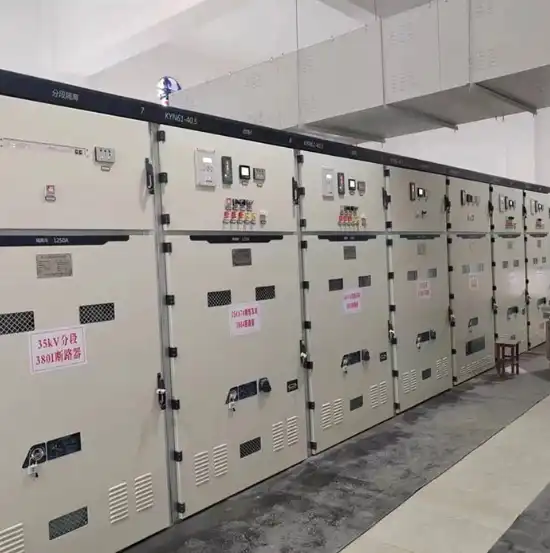
Power transformers made to work outside with better cooling systems, vacuum circuit breakers made to handle a lot of switching, and control systems with digital protection relays are some of the most important parts of these installations. Gas-insulated switchgear is used more and more in modern installations because it has small footprints and better environmental protection. Protection and monitoring gear includes current and voltage transformers, protective relays, and communication systems that let you run things from afar and check on their performance in real time.
Standards and Compliance Requirements
International organizations that set standards have made detailed rules about how to design, test, and install wind power electrical equipment. The IEC 61400 series of standards covers wind turbine systems in detail, covering electrical parts and requirements for connecting to the power grid. IEEE standards cover things like protecting power systems, how to ground things, and electromagnetic compatibility, all of which are necessary for reliable operation. These standards set minimum standards for safety and performance and make sure that equipment from different manufacturers can work with each other.
Following national electrical codes and utility interconnection rules makes the specification even more complicated. Environmental ratings, like IP65 or IP67 protection levels, make sure that equipment works well in rough outdoor conditions. Installations in areas that are prone to natural disasters need special mounting systems and structural reinforcement, so they need to be certified for seismic and wind loads.
Critical Selection Criteria for Wind Power Substation Equipment
Performance and Environmental Adaptation
To choose the right substation equipment, you need to carefully look at the operational parameters that have a direct effect on how reliable the system is and how much it costs to maintain. Voltage ratings need to be able to handle both steady-state operations and short-term conditions like when the power goes out or a switch is thrown on and off. The current ratings should give enough room above the maximum expected loads, while also taking into account the possibility of future growth. Coordination of insulation is especially important in wind applications where lightning strikes pose a higher risk of damaging equipment.
Because wind installations are out in the open, environmental requirements need extra care. Ratings for temperatures must take into account all possible environmental conditions, such as very cold temperatures that can damage switching mechanisms and very hot temperatures that can damage transformer cooling. When installing in the mountains, where air density is lower, altitude becomes important because it affects how well cooling and insulating work. Specifications for corrosion resistance make sure that things will last for a long time in harsh environments like the ocean or factories.
Here are the most important performance factors that set top-notch wind power substation equipment apart:
- High protection ratings: hardware with IP67 sealing and corrosion-resistant alloys can handle harsh outdoor conditions and keep working properly for long periods of time.
- Advanced Arc Extinguishing Technology: Vacuum circuit breakers with solid-sealed poles offer reliable switching performance with low maintenance needs, which lowers costs and raises system availability.
- Integrated Modular Design: Compact configurations make installation easier and give you the freedom to change or add to the system in the future.
These performance traits directly address the operational problems that wind power installations face, making sure that power is delivered consistently and lowering the total cost of ownership by making the system more reliable and reducing the amount of maintenance that needs to be done.
Cost Considerations and Total Ownership Value
To get the best project economics, procurement decisions need to weigh the initial capital investment against the long-term costs of running the business. Prices for equipment vary a lot depending on its technical specs, how it needs to be customized, and how well the supplier can service it. Premium parts usually cost more at first, but they are more reliable and last longer, which lowers the number of times they need to be replaced and the costs of downtime that comes with it.
The costs of maintenance make up a big part of the total cost of ownership, especially for installations that are far away and hard to get to for service. When equipment is made to work without any maintenance or with longer service intervals, it saves money because it needs less service and is more available. Long-term cost estimates are affected by warranty coverage and the availability of spare parts. This makes the service capabilities of the supplier an important selection factor.
Compatibility and Customization Requirements
Modern wind farms use turbines from different manufacturers, each with its own electrical properties. This means that the substation equipment needs to be able to handle a wide range of technical requirements. All parts of the system must agree on how to handle changes in voltage and frequency, how to coordinate protection, and how to talk to each other so that the whole system works well. Standardized interfaces make integration easier and lower the cost of engineering and the chance of compatibility problems.
When an installation has to deal with unique site conditions or unique operational needs, the ability to customize becomes essential. When the environment is very harsh, cooling systems may need to be changed, corrosion protection may need to be improved, or mounting arrangements may need to be changed. Modular design methods let you make changes that are specific to the site while keeping standard component interfaces that make it easier to do future service and growth.
Comparing Top Wind Power Substation Equipment Brands and Solutions
Market Leaders and Technical Innovation
In the global wind power substation market, there are both well-known companies with decades of experience and new companies that are coming up with creative solutions that are made to work with renewable energy. Leading companies usually have wide ranges of products that cover all voltage levels and use cases. These products are backed up by strong certification programs and worldwide service networks. Some areas of innovation that are getting more attention are digitalization projects that allow for remote monitoring and planned maintenance, environmental sustainability, and lowering costs by making manufacturing more efficient.
Spending on research and development leads to continuous improvements in how well equipment works, how reliable it is, and how well it works with the environment. Advanced applications in materials science make things less likely to rust and make them last longer. Systems for protecting and controlling digital information use artificial intelligence to improve performance and spot problems before they happen. Long-term market success and customer satisfaction levels are often linked to how committed a supplier is to new ideas.
Certification and Quality Assurance Programs
Manufacturers with a good reputation keep full quality management systems that are certified to ISO 9001 standards. This makes sure that the quality of their products stays the same and that they are always getting better. Getting an environmental management certification like ISO 14001 shows that you are committed to making your business more environmentally friendly. Product certifications from independent testing groups show that performance claims are true and that the product meets international standards.
There are big differences in what testing facilities different suppliers offer. The biggest manufacturers have facilities that can test whole systems in conditions that are similar to real life. Programs that test equipment for seismic reliability make sure that it works well during earthquakes. To make sure the product works well in tough field conditions, it is put through environmental testing that includes changing temperatures, humidity levels, salt spray tests, and vibration resistance.
Service and Support Capabilities
Comprehensive service programs offer value-added services that make projects more successful and lower operational risks. These services set leading suppliers apart from commodity providers. Installation support services include site surveys, help with foundation design, and supervision during commissioning to make sure the system is set up correctly and that it works as expected. Training programs for customer service staff help transfer the knowledge that is needed for basic maintenance and operation to work well.
After-sales support includes having access to spare parts, technical help, and emergency response services that keep downtime to a minimum when equipment breaks down. Global service networks make it possible for international projects to be handled quickly and provide local experts who know the rules and customs of the area. Predictive maintenance programs use data from monitoring equipment to find the best service intervals and stop problems before they happen.
Procurement Process and Best Practices for Buying Wind Power Substation Equipment
Requirements Definition and Vendor Qualification
A thorough definition of the requirements, including technical details, the project's constraints, and the environment, is the first step to successful procurement. Some electrical parameters are voltage levels, the amount of current that can flow during a fault, and the requirements for protection coordination. Environmental specifications talk about temperature ranges, earthquakes, effects of height, and levels of pollution in the air. Delivery schedules, installation windows, and budget limits are all examples of project constraints that affect how suppliers are chosen and how the project is bought.
Potential suppliers are judged on their technical skills, financial stability, and project experience as part of the vendor qualification process. Reference projects show how well a supplier does in similar situations, and customer feedback shows how well the service is done and how well problems are solved. A financial analysis makes sure that the supplier is stable and can keep its warranty promises for the whole life of the equipment.
Contract Negotiation and Risk Management
Costs should be taken into account, but performance guarantees and risk allocation should also be balanced to protect project interests. Performance specifications should include criteria that can be measured and consequences for not meeting them. For wind power substation equipment in particular, delivery schedules need to account for manufacturing lead times while still allowing for project delays or scope changes. The terms of payment should match the project's cash flow and give suppliers incentives to deliver on time and meet performance standards.
Risk management clauses clearly define who is responsible for what and how to fix problems that might happen, like design changes, delivery delays, and poor performance. Force majeure clauses protect both parties from events they can't control while still setting reasonable standards for performance. Insurance and bonding requirements protect contractors financially in case they don't do their job or don't pay their workers.
Quality Control and Acceptance Testing
Full quality control programs include testing in the factory, inspections before shipping, and acceptance tests in the field that make sure the equipment works as expected and meets the requirements. Factory acceptance testing lets people from the customer see how the equipment is tested in a controlled environment before it is shipped. Shipping inspections find damage caused by shipping and make sure that all parts are present. Before final acceptance, field acceptance testing makes sure that the system was installed and integrated correctly.
Protocols for testing should be in line with relevant standards and take into account the needs and conditions of the specific project. Test certificates, operating manuals, and maintenance procedures that are necessary for the equipment to work properly are examples of documents that must be kept. Requirements for training make sure that customer staff know how to use equipment safely and effectively.
Company Introduction and How We Support Your Wind Power Projects
Yuguang's Expertise in Wind Power Solutions
Shaanxi Yuguang Electric Co., Ltd. has been a top provider of specialized electrical equipment for wind power applications since 2008. They do this by combining their extensive technical knowledge with their creative manufacturing skills. We are in Baoji, Shaanxi, which puts us in the middle of China's vacuum circuit breaker production center. This gives us access to advanced manufacturing technologies and skilled technical staff. Along with being recognized as a "High and New Technology Enterprise," the company maintains ISO 9001:2015 certification. This shows our dedication to quality and new ideas.
Our large patent portfolio includes 39 utility model patents that show how we are always coming up with new ways to design and make high-voltage equipment. These new ideas are designed to solve the specific problems that wind power installations have, such as protecting the environment better, making switching work better, and extending the time between maintenance visits. Because we do research and development, we can make solutions that are tailored to each project's needs while still meeting international standards.
The company offers full service throughout the whole lifecycle of a product, from initial design advice to long-term maintenance support. This unified method makes sure that the equipment works at its best and lowers the total cost of ownership by making it more reliable and streamlining service delivery. Our global service network gives us the ability to provide local support, which makes customers happier and increases the success rate of projects.
Specialized Wind Power Product Portfolio
Our selection of wind power substation equipment covers the full voltage range from 6kV to 40.5kV, so we have solutions for all parts of wind energy systems, from collecting energy from turbines to sending it to the grid. Vacuum circuit breakers made just for wind applications have higher ratings for environmental protection and last longer, which means they need less maintenance. Combined electrical apparatus units offer small solutions that take up less space when installed and offer full protection and control features.
Excellence in manufacturing uses aerospace-grade precision technology and specialized tools to make sure that parts are accurate and sealed against the environment. When choosing raw materials, corrosion-resistant alloys and IP67 sealing systems that can handle harsh outdoor conditions are given a lot of attention. Compared to traditional options, integrated modular design methods allow for smaller configurations that seal better and last longer.
Here are the main things that make our wind power solutions stand out:
- Scenario-Based Customization: Our engineering team changes standard designs to fit specific operating conditions and environmental factors. This makes sure that they work perfectly in tough wind power situations.
- With modular integration, small, sealed designs take up less space while protecting the environment better and lasting longer thanks to new materials and manufacturing methods.
- Full-Chain Service: Full support from research and development to production, installation, and service after the sale makes sure that the project runs smoothly and that the business will be successful in the long term.
With these skills, we can come up with solutions that deal with the hardest parts of designing a wind power substation while also being reliable and cost-effective in the long term.
Global Service and Support Capabilities
Our international service network combines manufacturing expertise from the United States with global support skills to make sure that projects are carried out effectively no matter where they are. Site surveys, application engineering, and installation guidance are all examples of technical support services that improve the performance of equipment and shorten the time it takes to get it up and running. Training programs give customer service staff the skills they need to do their jobs safely and do regular maintenance.
After-sales service commitments include agreements to supply spare parts, maintenance contracts, and emergency response services that keep equipment up and running as much as possible when it breaks down. As part of our cross-border services, we offer export logistics, international certifications, and local technical support that make working on global projects easier. Quality assurance programs make sure that performance is always the same, no matter where the product is made or what the final market needs.
Conclusion
To choose the right wind power substation equipment, you need to carefully look at the technical specs, how well it works with the environment, and the supplier's skills to make sure the project will be successful in the long run. To deal with problems like variable power generation, harsh environmental conditions, and complicated grid integration needs, modern installations need custom solutions. A good procurement strategy takes into account both the initial cost and the total value of ownership, while also putting reliability, maintenance needs, and service support capabilities at the top of the list.
The changing market for renewable energy keeps pushing designers and manufacturers to come up with new ways to make substation equipment that works better, is better for the environment, and costs less over its lifetime. Partnering with experienced suppliers who know how to use wind power and offer full service support increases the chances of project success while lowering operational risks and long-term costs.
Partner with Yuguang for Reliable Wind Power Substation Equipment Solutions
Yuguang combines 39 patents, comprehensive certifications, and full-spectrum service capabilities to deliver wind power substation equipment that exceeds performance expectations while reducing total ownership costs. Our scenario-specific customization capabilities address unique environmental challenges while our integrated manufacturing approach ensures quality consistency and competitive delivery schedules. Contact our technical team at ygvcb@hotmail.com to discuss your project requirements and discover how our wind power substation equipment manufacturer expertise can enhance your renewable energy initiatives with reliable, cost-effective solutions tailored to your specific operational needs.
References
1. International Electrotechnical Commission. "Wind Turbine Generator Systems - Part 1: Design Requirements for Grid Connected Wind Turbines." IEC 61400-1 Standard, Fourth Edition.
2. IEEE Power and Energy Society. "IEEE Guide for Protection and Control of Wind Power Plants." IEEE Std 1547.4-2011 Standard Publication.
3. Global Wind Energy Council. "Wind Power Substation Design and Grid Integration Best Practices." Annual Technical Report 2023.
4. American Wind Energy Association. "Electrical Infrastructure Requirements for Wind Energy Installations." Technical Guidelines Publication.
5. International Association of Electrical Testing and Maintenance. "Maintenance Strategies for Wind Power Electrical Systems." Professional Development Series Volume 12.
6. Renewable Energy World Magazine. "Advances in Wind Power Substation Equipment Technology and Applications." Industry Analysis Report 2023.

Send Inquiry
You may like
