
Yuguang Vacuum Circuit Breaker Solutions for Industrial Power Needs
In the range of 6 kV to 40.5 kV, Yuguang vacuum circuit breaker solutions protect industrial power users from medium voltage. Engineers, EPC contractors, and procurement teams need this guide to make sure that the equipment they buy fits their switchgear, ships on time, and works well even in harsh conditions. In Yuguang, vacuum arc extinguishing, a permanent magnet operating mechanism, an integrated modular design, and full-chain service from R&D to after-sales are all put together. I will talk about how the technology works, which ratings are important, where it can be used, and how to buy it with confidence below.
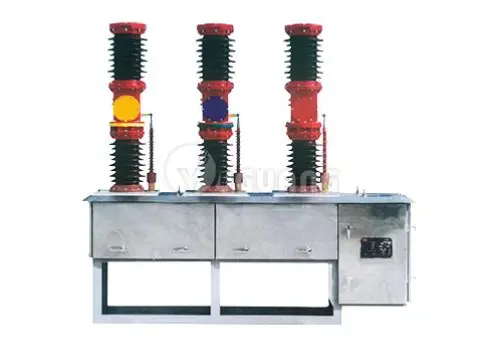
How a Vacuum Circuit Breaker Works and What the Ratings Mean?
How a Vacuum Circuit Breaker Interrupts a Fault?
The contacts of a vacuum circuit breaker are sealed inside a vacuum interrupter. The mechanism pulls the moving contact away from the fixed contact when the protection relay sends a trip direction. If you heat up the contact metal, a short arc forms. There is no air in the gap to keep the arc going, so it ends near the natural current zero. The gap quickly returns to its dielectric strength. This is only a part of the breaker which is the interrupter. The working part, the insulation, the control circuit, the extra contacts, and the terminals all need to work together. Designs that can be pulled out add racking and interlocking features. In his 2008 book on vacuum interrupters, Paul Slade goes into great detail about the physics.
Ratings to Check Before You Request a Quote
Ratings let you know if a breaker works with your system. To begin, check the rated voltage. Next, look at the rated normal current, short-circuit breaking current, short-time withstand current, and insulation levels. IEC 62271-100 spells out these ratings and the tests that go with them. The Yuguang ZN39-40.5 has a rated voltage of 40.5 kV, a rated current of 1,250 A to 3,150 A, and a breaking current of 25 kA to 31.5 kA. It also says that it can handle a 185 kV lightning impulse and a 95 kV power frequency for one minute. Site conditions are also important. Standard units work at elevations up to 1,000 m, but for higher sites, you need either longer distances between the poles or poles that are solidly embedded. Both IEC and IEEE C37.04 ratings should be looked at by U.S. teams, as they use different voltage classes.
Vacuum, Air, SF6, and Oil: Which Technology Fits?
Different technologies interrupt arcs in different ways. Breakers for oil pose a fire risk and need to handle oil. When the voltage is low, air breakers are more common, but they take up more space. SF6 breakers work well, but the IPCC says that SF6 has a global warming potential of about 25,200 times that of CO2 over 100 years. This means that managing gas and stopping leaks are more work. The interrupting chamber doesn't need oil or SF6 when vacuum technology is used. It also has a small footprint and can handle frequent switching in medium-voltage industrial distribution. SF6 or oil may still be used in older fleets or for jobs that require higher voltage. I think that the type of technology should be matched with the system voltage, fault level, load type, environment, and service capability, not just the price.
Advantages, Limits, and Applications of Vacuum Circuit Breakers
Advantages and Limits of Vacuum Technology
Vacuum breakers like a vacuum circuit breaker are small, stop an arc quickly, last a long time, don't need much regular maintenance, and don't pose a risk of oil fire. These traits work well for medium-voltage distribution, where uptime and space are important. There are limits, though. Transients can be made by switching motors, transformers, or capacitor banks. To fix this, engineers often add overvoltage protection and check how well the relays work together. For capacitor bank duty, I suggest specifying a Class C2 breaker, which has been tested to have a very low chance of resetting. Changing out interrupters is also part of long-term planning. If you look at these points in a fair way, you can decide if a vacuum breaker works for each feeder.
Applications in Power, Metallurgy, and Mining
On substation feeders, transformer incomers, bus couplers, motor feeders, generators, and solar and wind plants that use medium voltage, vacuum breakers are used. Yuguang's ZN12-12 is aimed at mining and industrial companies as well as those that do frequent operations. In the field of metallurgy, arc furnaces and rolling mills can change roles thousands of times a year, so mechanical endurance is very important. Yuguang also sells combined electrical appliances that use wind power. There are different checks that need to be done for each application, such as continuity requirements, motor starting current, relay coordination, and transformer inrush. Let us know what kind of load you have, and our engineers will find the right breaker for you.
Indoor, Withdrawable, and Harsh-Environment Configurations
Fit and safety are affected by the type of installation. For KYN28 cabinets, the VS1-12 comes in the form of a handcart. For cabinets like the XGN15, it hangs on the side. For 24 kV cabinets, the VS1-24 can be fixed or pulled out. Harsh sites have more dust, humidity, pollution, and height. At 24 kV, where air gaps get bigger, solid-embedded poles protect the vacuum interrupter from getting dirty. To keep things from wearing out, Yuguang uses alloys that don't rust, IP67 seals, and ceramic and powder coating. Send us your temperature, humidity, pollution, and altitude data for projects that will be outside or near the coast so we can confirm the configuration.
Yuguang Vacuum Circuit Breaker Solutions for Industrial Projects
Who We Are and What Backs Our Products?
In 2008, Shaanxi Yuguang Electric Co., Ltd. was founded in Baoji, Shaanxi, which is where vacuum circuit breakers are made. The equipment we make, install, and provide service for after the sale ranges from 6 kV to 40.5 kV. We have 39 patents, ISO 9001:2015, ISO 14001, ISO 45001, and Intellectual Property Management Standardization certifications to back up our claims. We also have a number of national inspection reports and are recognized as a High and New Technology Enterprise. These records help procurement managers and chief engineers show that suppliers are good enough to get bids. We do both OEM and ODM work, and our products are used in projects for railroads, petrochemicals, electricity, metalworking, mining, and communication.
Product Range and Permanent Magnet Operation
The ZN12-12, VS1-12, VS1-24, and ZN39-40.5 are some of the models we offer that range from 6 kV to 40.5 kV. Our solutions combine vacuum arc extinguishing with a permanent magnet operating mechanism that works well for heavy use and is made to last a long time without needing any maintenance. Please confirm the type of mechanism for each model when you call. The small size is due to the integrated modular design, and strong sealing keeps the internal parts safe. All of these features work together to fix problems like not being able to connect to older switchgear, being hard to maintain, and not being able to adapt well to specific situations. We don't force a standard model on your project; instead, we make it fit the needs of your industry and the harsh conditions you'll be working in.
From Raw Material to Shipment
There are five steps to our process.
- Step 1: We choose alloys that don't rust and IP67 seals and check them. Structure parts are made by shearing and stamping, and aerospace-grade precision technology and special tools are used to make sure that solid-sealed poles and arc-extinguishing chambers are accurate and seal well.
- Step 2: We use special tools to put together key parts ahead of time and then use a modular design to connect them to the frame and shell.
- Step 3: Units that are almost finished get a ceramic and powder coating, and then they are cured at a constant temperature to make them more resistant to corrosion and aging.
- Step 4: Multiple rounds of tests make sure that the arc extinguishing, insulation, load adaptability, and reliability meet national high-voltage standards and ISO requirements.
- Step 5: We ship qualified units only after they have been checked and packed in wooden cases that keep moisture and shock out.
Full-Chain Service and Cross-Border Support
Service is an important part of what we do. Our team helps with installation and provides technical support during adaptation and commissioning. They also offer maintenance agreements, spare parts, and free plans for making changes. For old equipment that is filled with oil, we can design oil-free transformation plans for free and complete the project. Along with mechanical parts, we also make fuse trucks, arrester trucks, and other trucks used for work and maintenance. Customers outside of the United States can get cross-border supply, repair, and technical support based on our experience with projects in the United States. This full-chain approach means that from R&D to after-sales, operations and maintenance teams only have to talk to one person.
How to Choose and Buy a Vacuum Circuit Breaker?
Step-by-Step Selection Using Verified System Data
Not a product title, but checked data is the first step in making a good choice. Get the minimum and maximum voltages of the system, as well as the frequency, the earthing method, the load profile, and the continuous current and prospective fault current. Include information about the transformer, motor, or generator, as well as the safety plan. Then go with those numbers to find the breaking capacity, insulation level, withstand current, control voltage, and installation type.
Just as important is how well the parts fit mechanically. The switchgear must have the same dimensions, terminals, secondary plugs, racking, interlocks, and relay interfaces. Lastly, make sure you know which standard applies, like IEC 62271-100 or IEEE C37.04, and ask for test documents. This order stops the compatibility issues that cause commissioning to be held up.
Preparing an RFQ and Comparing Suppliers
A full request for quotation (RFQ) makes the pricing process go faster. Give a one-line diagram, information about the system, the control voltage, the standards, the destination, the Incoterms, the inspection needs, and the schedule. The price is based on the voltage, current, interrupting capacity, mechanism, accessories, testing, quantity, customization, packaging, and location of delivery. When you compare a vacuum circuit breaker manufacturer to a trading or distributor supplier, make sure to look at their engineering support, lead time, spare parts, warranty, and ability to export. Early research is helped by online prices, but medium-voltage projects need to be checked out technically first before placing an order. At Yuguang, we take orders as low as one unit and can handle both small purchases and bulk customization.
Selection Mistakes to Avoid
There are a lot of mistakes. People who are buying don't look at the system short-circuit level, use the vacuum interrupter as the full breaker, or check the interface between the switchgear. Instead, they only look at the voltage. Others don't think about things like altitude, pollution, humidity, vibration, or needs that overlap. When the site is 3,000 m away, a unit that works at 1,000 m away might need more insulation. Picking the cheapest price at first can lead to higher costs later on because of delays in commissioning, extra costs for parts, and downtime. I suggest looking over the whole assembly, getting confirmed drawings and fault data, and judging the quality of the documentation. Then, look at the total cost of ownership for each supplier, which includes service response and maintenance.
Installation, Maintenance, and Delivery Support
Installation and Commissioning Checks
Installing things carefully keeps people and equipment safe. Before you mount it, you should look at how it was shipped, make sure the nameplate data is correct, check the control voltage, look at how it was stored, and compare the breaker to the switchgear compartment and drawings. When something is being commissioned, it is usually checked for timing, pole simultaneity, trip and close operation, interlock checks, and relay testing. If a breaker won't close, check the stored closing energy, make sure the secondary control voltage is between 85% and 110% of its rated value, and look for a mechanical interlock from the cabinet door or earthing switch. Our team helps with installation and offers technical support at the same time during adaptation and commissioning.
Maintenance Planning and Spare Parts
Planning for maintenance cuts down on long-term costs. NFPA 70B tells you how to make an electrical equipment maintenance plan and keep track of it. When you regularly check a vacuum breaker, you should clean the insulation, look at the terminals, check the auxiliary circuits, operation counters, and fault records. Our permanent magnet mechanism is made to not need any maintenance. This means that it doesn't need to be oiled like spring mechanisms do, but visual and electrical checks are still part of a safe program. Also, critical facilities should keep spare parts on hand, train their staff, and plan for controlled outage windows. We sell spare parts and offer maintenance contracts to make sure that when something goes wrong, we can fix it quickly.
Delivery Time, Packaging, and Order Size
The thing that worries project managers the most is schedule risk, so I'll be clear about our lead times. It takes 7 to 15 days to ship standard items, and 30 to 60 days to ship custom items. One unit or set is the least you can order at once. We pack qualified items in wooden cases that are resistant to moisture and shock, and we follow international packaging standards for orders going outside of the country. Before they go into the warehouse and are shipped, units are checked. Tell the RFQ what date you need the package delivered by, and our team will let you know if a standard route or a custom route works for you.
Conclusion
A vacuum circuit breaker stops faults by putting out the arc in a sealed vacuum interrupter. Its performance depends on the mechanism, insulation, and control circuit all working together as a single unit. Some of the things that determine whether a unit fits are its voltage, current, breaking capacity, and insulation level, as well as its altitude and environment. Vacuum technology doesn't involve handling SF6 gas or oil fires, and it works well for frequent switching. However, motor, transformer, and capacitor duties need to be checked for transients. A good choice starts with checked system data, a full RFQ, the right switchgear interfaces, and the total cost of ownership. Clear delivery terms, installation checks, commissioning tests, and scheduled maintenance will protect uptime and make the project less uncertain.
FAQ
Q1: What is a vacuum circuit breaker used for?
A: It keeps medium-voltage circuits safe from short circuits and overloads. In substations, factories, mines, and renewable plants, it also changes the connections between feeders, transformers, motors, and generators.
Q2: Which ratings should I review first?
A: Look at the altitude, rated voltage, rated current, short-circuit breaking current, insulation level, control voltage, and rated voltage. Check to see if the 12 kV ratings match up with the voltage and insulation needs of your system.
Q3: Is a vacuum circuit breaker maintenance-free?
A: The vacuum interrupter doesn't need much maintenance, and Yuguang's permanent magnet mechanism is made to not need any. Still necessary are regular checks of the terminals, insulation, and records.
Request a Yuguang Vacuum Circuit Breaker Quote
To Yuguang at ygvcb@hotmail.com, send your single-line diagram along with the voltage class, current, fault level, and delivery location. We make vacuum circuit breakers and have 39 patents, ISO 9001:2015 certification, and full-chain service. We will look at your needs and get back to you with a configuration plan.
References
1. IEC 62271-100: High-voltage switchgear and controlgear – Part 100: Alternating-current circuit-breakers, 2021
2. IEEE Std C37.04: IEEE Standard for Ratings and Requirements for AC High-Voltage Circuit Breakers with Rated Maximum Voltage Above 1000 V, 2018
3. IPCC, Climate Change 2021: The Physical Science Basis, 2021
4. Paul G. Slade, The Vacuum Interrupter: Theory, Design, and Application, CRC Press, 2008
5. NFPA 70B: Standard for Electrical Equipment Maintenance, 2023
6. IEEE Std C37.20.2: IEEE Standard for Metal-Clad Switchgear, 2015

Send Inquiry
You may like
